
Terminally ill people will have the legal right to end their lives in New York starting August 5.
Thanks to a new law that allows medical assistance in dying, patients whose doctor’s prognosis less than six months of life They may take a lethal prescription drug that puts them to sleep and eventually stops their heart.
New York is the twelfth state in the United States to enact such a policy.
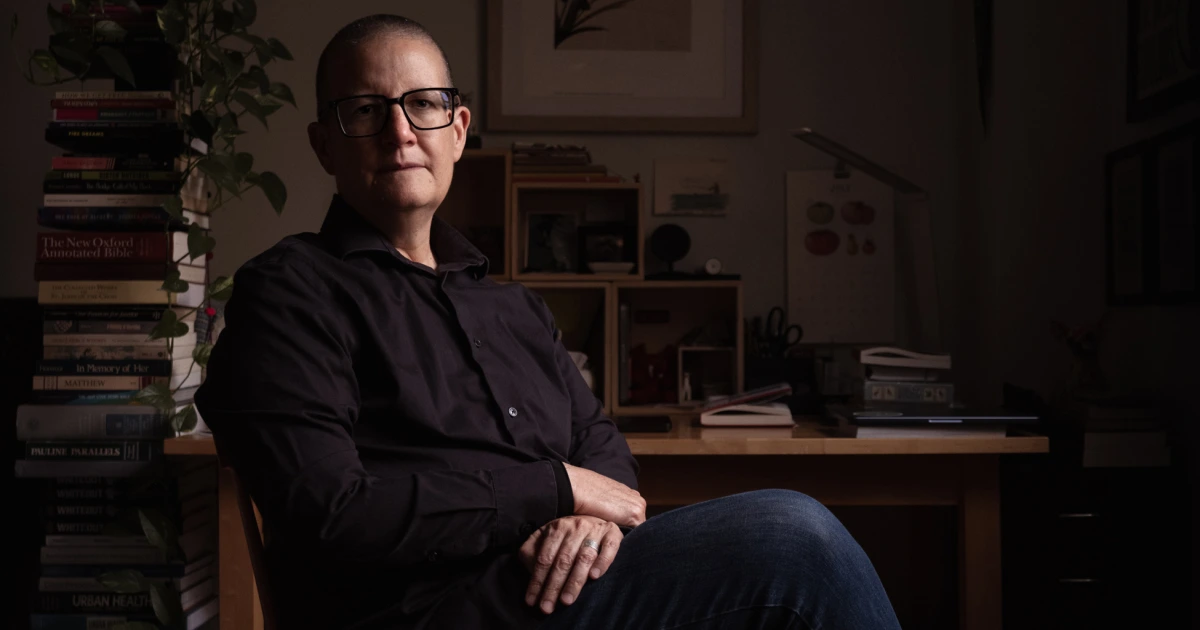
Politics is a relief for Jules Netherland, a 59-year-old drug policy researcher who lives in the Bronx and suffers from breast cancer.
“I can have some assurance that if the suffering is unbearable, I have an option. And that peace of mind is priceless,” said Netherland, who has been an advocate for medical aid in dying for years.
It has been almost four years since his cancer entered the metastatic stage, the most advanced. Knowing that medically assisted dying will be an option, she said, has eased her fears of a painful and prolonged end in a hospital.
She is not expected to die in the next six months, but if she reaches that point and wants to end her life, a small group of New York doctors, pharmacists and psychologists are prepared to help her.
“I’ve talked to several people who probably already qualify and want to use this option,” said Mandi Zucker, executive director of End of Life Choices New York, an advocacy group that supports access to medical aid in dying. “I wouldn’t be surprised if in August we saw some people” resort to this option, he said.
The New York law comes after decades of pressure from advocates for this option. Oregon was the first state to legalize medical aid in dying in 1997, and Washington and Montana followed in 2009. Generally, patients must be residents of a state where it has been legalized.
The outlook in the US
Public support for medical aid in dying has grown in the United States, although many people still oppose it, either for religious reasons or because they believe such laws could lead sick patients to end their lives before exhausting all available treatments.
(A 25-year-old Spanish woman dies from euthanasia after a long legal battle against her family)
Medical aid in dying, sometimes abbreviated to MAID, is the term preferred by advocates and the one used in New York law, although it is sometimes known as physician-assisted dying or medically assisted suicide.
New York patients who wish to benefit from the new law must be evaluated in person by a doctor, consult a psychologist or psychiatrist, and find another doctor to confirm the terminal diagnosis. Then they must wait five days to get the prescription. The medication costs about $1,000 and is usually not paid for by insurance. Neither Medicaid nor Medicare can cover it.
Patients must self-administer the drug, which usually comes in powder form and is mixed with juice.
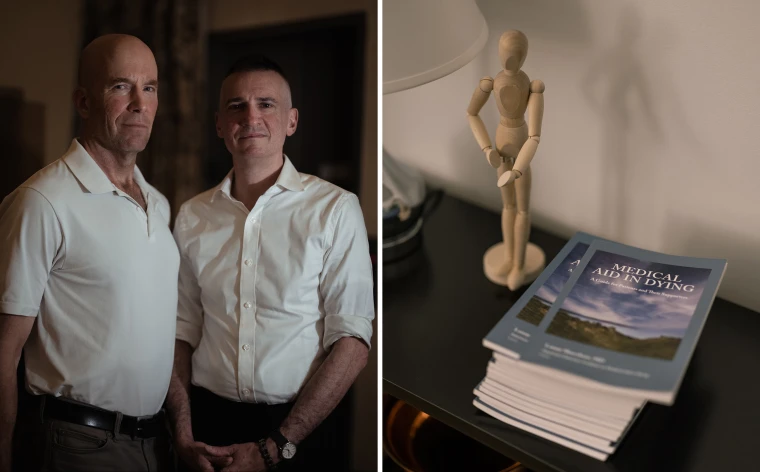
David Atkins, a palliative care social worker, said he has been preparing for such a law in New York for years. He is the co-founder of Quiĕtus, a service that coordinates care for terminally ill New Yorkers who are considering medical aid in dying, which he says is the only service of its kind in the state.
Quiĕtus is already accepting referrals from hospice centers and advocacy groups, and has partnered with four physicians and three psychologists who have completed best practices training. When patients come to him, Atkins said, the priority is helping them decide if this option is right.
While working at a palliative care center, he said, he cared for several patients with the neurodegenerative disease amyotrophic lateral sclerosis (ALS) who voluntarily stopped eating and drinking to hasten their deaths.
“I had patients literally begging me to hasten their death, and it wasn’t that they had pain or uncontrolled symptoms. It was a quality of life issue,” Atkins said. “They had lost their autonomy, and many times they felt like they had lost all control over their lives, so they saw medical aid in dying (MAID) as a way to regain that autonomy.”
Doctors and pharmacists are taking steps to protect themselves legally. A New York pharmacist, who asked to remain anonymous for fear of retaliation that could jeopardize his job or safety, said his pharmacy has consulted lawyers to make sure the business complies with the new law and plans to update its liability insurance.
“We are ready to start production,” he assured. “We have the medications in inventory. Everything is ready. We have the containers. We have the protocols.”
He said he was moved to participate after seeing his father, who was terminally ill, suffer at the end of his life.
Dr. Robert Siegel, a cardiologist who collaborates with Quiĕtus, said he has an appointment on Wednesday — the first day the law will take effect — with a patient who, so far, appears to qualify for medically assisted death. He noted that one of the reasons he feels comfortable participating in the process is that he doesn’t work for a hospital.
“If I were affiliated with a hospital, I would have to discuss this with about four people, and I can assure you that at least one of them would say, ‘I’m not sure this is a good idea,’” she said.
Most medically assisted deaths occur at home, with loved ones present. Some are planned well in advance, others happen quickly, as certain patients cannot predict when they will want to take the medication. Many — up to 39%, according to the advocacy group Compassion & Choices — fill a prescription, but never take it.
“Almost unanimously, people want to live and will exhaust all possible treatments and avenues to continue their lives, so they will turn to medical help to die at the last moment,” explained Michael Cavaiola, national communications director for Compassion & Choices.
Critics are not convinced
José Hernández, a New York City resident who is paralyzed from the neck down, believes he might qualify for medical aid in dying—which he refers to as “assisted suicide”—because he needs help eating, bathing, and going to the bathroom, and says he would die without this support.
However, under New York law, doctors would have to diagnose him with a terminal illness for him to be eligible. He questions whether people in situations like his are making lucid decisions in the face of isolation or the financial burdens of health care.
“Instead of fighting and getting insurance to pay for life-saving treatment, you look at all the burdens and the way society views you, and you say, ‘You know, maybe this world is better off without me,’” he said.
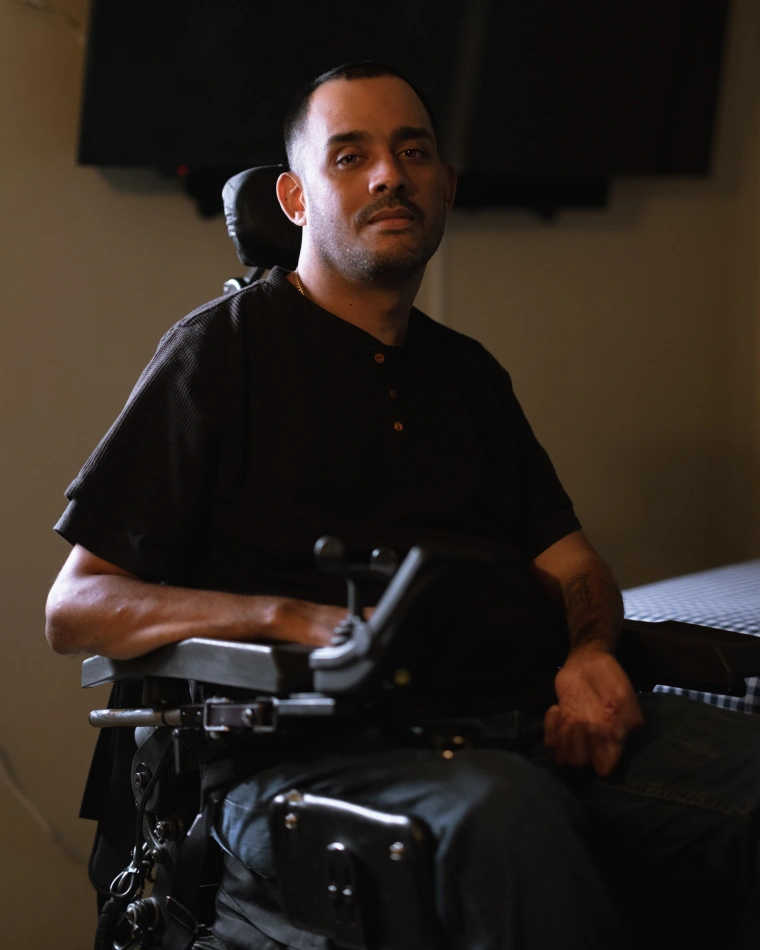
Hernandez and other disability advocates sued New York Gov. Kathy Hochul and state medical agencies in June to try to block the law. A federal judge dismissed the case Thursday, saying they were meritless.
Some doctors are also opposed. Dr. Diane Meier, a palliative care specialist, believes that the decision may be due to patients’ misunderstandings or fears about what awaits them.
“Usually a request for medical assistance in dying is an expression of desperation, and it is an opportunity for doctors and other health care professionals to sit down with the patient and understand what leads them to think they would be better off dead, even before nature takes its course,” he said.
Estimates of how much time they have left to live can also be imprecise, he added.
(Uruguay becomes the first country in Latin America to approve the right to euthanasia through legislation)
Netherland said she became interested in medical aid in dying after an acquaintance opted for it in New Jersey, where it has been legal since 2019.
The woman took the drug at home, surrounded by friends, according to Netherland: “She was able to decide for herself when her suffering was too much, and that really struck me: ‘There is a good way to die. There is a beautiful death.'”
Dr. Robin Plumer, an emergency physician by training, runs a one-on-one support service in New Jersey that handles the administrative aspects of medical aid in dying. He also accompanies people at the time of death and gives prescriptions.

Plumer said he has overseen nearly half of the nearly 570 medically assisted deaths in New Jersey since the law was enacted. She is one of the few doctors in the state who performs this procedure: only 14 did it last year, according to state data. And the spread of this information has been slow, Plumer said.
“I recently saw a woman who was hospitalized with a recent diagnosis of laryngeal cancer, and she asked her doctor at the hospital, ‘How can I go to Oregon?’” she said.
Advocates for this cause hope for a more fluid and transparent process in New York.
“New York can show the country how to do this right,” Netherland said. “For me, it’s not just about having this option at the end of life, which I am very grateful for, but about opening the dialogue about death and dying in this country.”
