
In the 1970s, the U.S. agency that provides health care to Native Americans sterilized thousands of women without their full consent and without informing them, depriving them of the opportunity to start or expand their families.
Decades later, the state of New Mexico is set to investigate that disturbing story and the damage it caused.
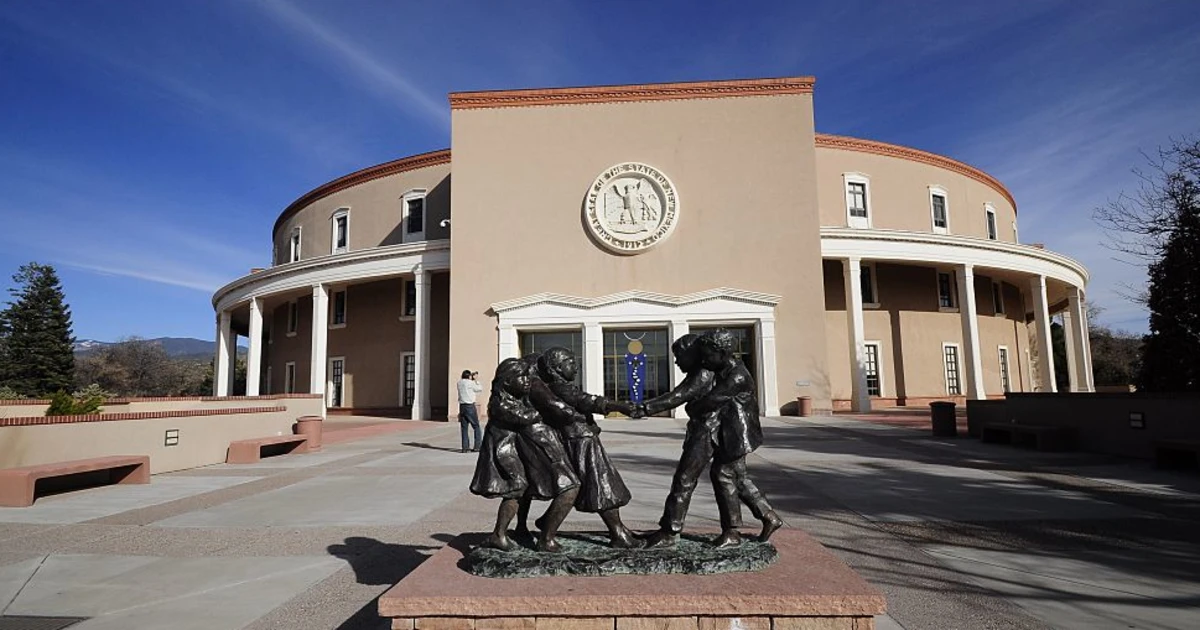
New Mexico lawmakers this week approved a measure to have the state Department of Indian Affairs and the Commission on the Status of Women examine the history, scope and ongoing impact of forced and coercive sterilizations of women of color by the Indian Health Service and other providers. The conclusions are expected to be communicated to the governor by the end of 2027.
“It is important for New Mexico to understand the atrocities that took place within our state’s borders,” said state Sen. Linda Lopez, one of the sponsors of the legislation.
It is not the first state to confront its past. In 2023, Vermont launched a truth commission and reconciliation to study the forced sterilization of marginalized groups, including Native Americans. In 2024, California began paying compensation to people who had been sterilized without their consent in state prisons and hospitals.
(An immigration agent killed a young US citizen during a traffic stop last year)
The New Mexico Legislature also laid the groundwork for creating an independent healing commission and for formal recognition of a little-known episode of history that haunts Native families.
Sarah Deer, a professor at the University of Kansas School of Law, stated that this should have been done a long time ago.
“The women of these communities carry these stories with them,” she said.
Aside from a 1976 U.S. Government Accountability Office (GAO) report, the federal government has never acknowledged what Deer calls a “systemic” sterilization campaign in Native American communities.
The Indian Health Service and its parent agency, the U.S. Department of Health and Human Services, did not respond to multiple emails asking for comment on the investigation in New Mexico.
A disturbing story
In 1972, Jean Whitehorse was admitted to an Indian Health Service (IHS) hospital in Gallup, New Mexico, with a ruptured appendix. Just 22 years old and new to motherhood, Whitehorse said she remembers experiencing “extreme pain” as doctors presented her with a series of consent forms before rushing her into emergency surgery.
“The nurse put the pen in my hand. I just signed on the line,” said Whitehorse, a Navajo Nation citizen.
(Immigrants are victims of ICE impostors in violent crimes amid raids)
Whitehorse said that a few years later, when she was struggling to conceive a second child, she returned to the hospital and learned that He had had his tubal ligated. The news devastated her, contributed to the breakdown of their relationship and led her to fall into alcoholism, she said.
Activists were already raising the alarm about women like Whitehorse who went to IHS clinics and hospitals to give birth or undergo other procedures and then found they couldn’t conceive. The activist group Women of All Red Nations, or WARN, a branch of the American Indian Movement, was formed in part to denounce this practice.
In 1974, Choctaw and Cherokee doctor Connie Redbird Uri reviewed IHS records and reported that the federal agency had sterilized up to 25% of its patients of childbearing age. Some of the women Uri interviewed did not know they had been sterilized. Others said they had been intimidated into giving consent or tricked into believing the procedure was reversible.
Uri’s allegations contributed to a GAO audit, which revealed that the Indian Health Service sterilized 3,406 women in four of the agency’s 12 service areas between 1973 and 1976, including Albuquerque. The agency found that some patients were under 21 years of age and that most had signed forms that did not comply with federal regulations intended to ensure informed consent.
GAO investigators determined that interviewing women who had undergone sterilizations “would not be productive,” citing a single study of heart surgery patients in New York who had difficulty remembering past conversations with doctors. Due to the lack of patient interviews and the narrow scope of the GAO audit, advocates say the scope and impact of what happened is not yet fully known.
A pattern of disenfranchisement
A 1927 U.S. Supreme Court decision in Buck v. Bell upheld the right of states to sterilize people they deemed “unfit” to reproduce, paving the way for the forced sterilization of immigrants, people of color, people with disabilities, and other marginalized groups throughout the 20th century.
According to Lorenzo and Deer, the sterilization of Native American women fits a pattern of federal policies aimed at disrupting Native reproductive autonomy, from the systematic removal of Native children to government boarding schools and non-Native foster homes to the Hyde Amendment of 1976, which prevents tribal clinics and hospitals that receive federal funding from performing abortions in almost all cases.
(Family reports that their baby did not receive adequate medical care in the ICE detention center)
In Canada, several doctors were sanctioned in 2023 for sterilizing indigenous women without their consent.
Deer said the New Mexico investigation could pave the way for accountability. However, Deer said that without the cooperation of the federal government, the commission’s ability to gather information would be limited.
