
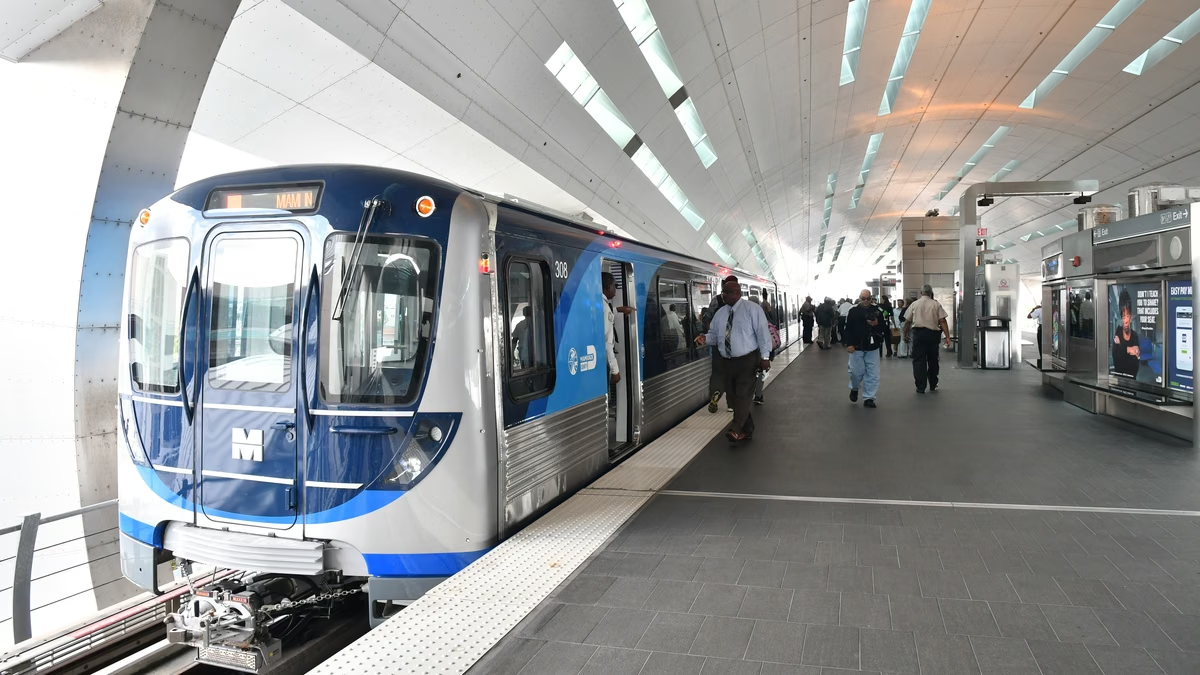
MIAMI.- The Commission of Miami-Dade approved this Tuesday, October 6, to raise the regular Metrobus and Metrorail fare from $2.25 to $2.75, an increase that will take effect in January 2027 and will help preserve bus routes that were going to be eliminated.
The resolution, sponsored by Commissioner Oliver G. Gilbert III, modifies the county’s public transportation fares and charges. The legislative text maintains that a financially sustainable system is essential for Miami-Dade’s economy, mobility and quality of life, and mentions recurring expenses for personnel, fuel and energy, vehicle and facility maintenance, security and technology.
The 50-cent increase will be the first in more than 13 years. According to the Department of Transportation and Public Works (DTPW), along with minor Metrorail operational adjustments, approximately $9.2 million would be generated. The County estimates it will help maintain service for about 4,200 daily riders and more than 1.3 million trips annually.
Students and workers object to the increase
During the public hearing, several residents asked commissioners to reject the increase or find other sources of funding. One full-time student said she uses midday transportation five days a week to get to campus and back home. Although he recognized the need to maintain and improve the system, he warned that an additional 50 cents per trip could affect students, school workers and essential service employees.
Gabriela Russell, who said she uses Metrorail daily to get to and from school, estimated the hike would add $240 a year for someone who takes the train twice a day. He also maintained that the delays and problems at stations and trains call into question the reliability of the system to justify the proposed increase. He asked that the new revenue be allocated to maintenance and repair, and that the county look for alternatives so as not to pass the cost on to passengers.
Other attendees focused their interventions on the night service, such as Geraldine Ordoñez who described the situation of a passenger who depends on the bus to get home after work and said that a cut is not experienced as a budget decision, but as the question: “How am I going to get home tonight?” He also said asking residents to trust local government is difficult when they feel they are receiving insufficient service.
A resident named Santos was grateful that the early morning service was saved and asked to finance the routes with more passengers and without alternatives. He cautioned that the system cannot permanently rely on user fees and asked if students are aware of the reduced fee programs available in Miami-Dade.
They restore 13 routes
After listening to criticism from residents and approving the increase, the Commission approved restoring services that were going to be eliminated starting in March 2027. The measure includes night trips on seven main corridors, the Route 279 service and five routes that serve areas with few or no transportation alternatives. The changes will benefit residents of all 13 Miami-Dade districts.
Among the routes with 24-hour service that will retain their night trips are 11, 79, 77, 3 and 27. The five routes cover areas of 42nd Avenue, Biscayne Park, west Florida City – west of US-1 -, 125th Street and the areas of Nicklaus Children’s Hospital and West Miami.
The DTPW said it prioritized restorations based on ridership and the availability of other transportation options, with priority given to routes where riders would lose access to service.
cuts remain
The increase will not prevent all adjustments approved as part of the fiscal year 2026-2027 budget. To comply with cost-saving measures, the DTPW had identified 17 routes with low ridership for changes from March 2027. Sixteen will continue to operate, but will stop offering service after 10 p.m.
Route 132 will be eliminated in November 2026, as planned, because its passengers have access to other routes. In total, the adjustments will affect about 250 daily users, but will save approximately $1.7 million per year.
The budget also includes reductions affecting just over 3,000 passengers a year: eliminating weekend service on Route 338, limited-stop routes 203, 204, 272 and 288, and night service on 18 other routes. The county estimates it would need an additional $7.7 million to maintain those services.
Levine Cava and Miller defend the decision
Levine Cava thanked residents, commuters and county leaders who voiced their opinions and worked to find a way out. He said public transportation connects people to opportunities, their families and important places, and recognized that every dollar counts for working families.
“The additional revenue will help keep more buses running and preserve the service residents depend on,” said Levine Cava. He added that the decision seeks to protect an essential service for thousands of passengers and strengthen the connection between the county’s communities.
For her part, Stacy L. Miller, director and chief executive officer of the DTPW, stated that the Department worked with the administration and the Commission to protect services that thousands of people use daily and begin providing specific funds for the system. According to Miller, the route restorations will allow more passengers to continue reaching their destinations, including those who rely on public transportation late into the night.
The mayor stressed that Miami-Dade will maintain free or reduced fare transportation programs for eligible passengers, including seniors, veterans, students, people with disabilities and low-income residents. Requirements and the application process can be found on the county’s transportation pass programs page.
