
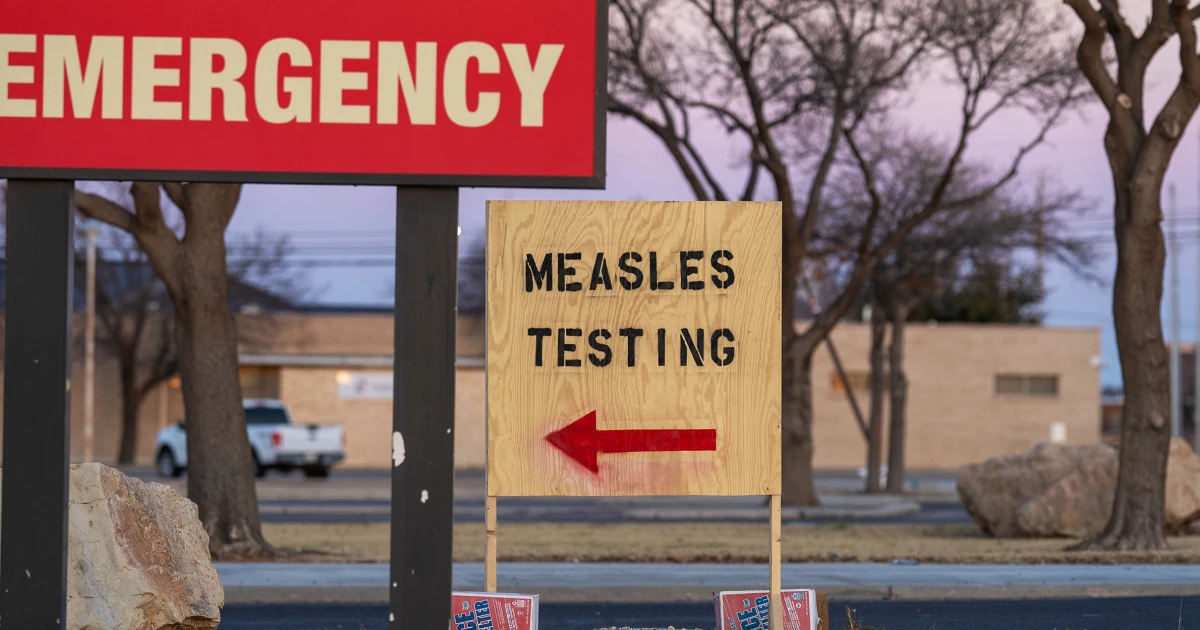
A measles outbreak that has been slowly growing in southern Utah since last summer is beginning to show signs of broader spread, and health officials are imploring people to take the risk of contagion seriously.
“It is not a small infection, it is not a small virus: this disease is very serious,” said Leisha Nolen, the state epidemiological chief, during a press conference this Thursday.
Nolen stated that he has received many reports from people sick with measles that “these cases They are much worse than expected.”
“Many have told me that if they had realized it sooner they would have been vaccinated and their children vaccinated against measles, but they thought it was going to be something minor,” he said.
So far there are 358 confirmed infections in Utah with the current strain of measles, which is the most virulent diseases that exist. The first case in the state was reported in June, and since August infections began to increase in the southwest of the state, especially in areas where a community of exMormons lives almost on the border with Arizona.
(The US is on the verge of losing its measles-free status, which it achieved in 2000.)
The outbreak has since spread to the state capital, Salt Lake City, even affecting students at sporting events.
Nolen said that so far of the 358 infections, 120 people have had to receive medical attention in hospitals, of which 31 were hospitalized for at least one night and three ended up in the intensive care unit.
Amanda Jocelyn, a nursing practitioner, said she has personally dealt with a dozen cases.
“The children I’m seeing in the clinic who have measles are very, very bad. And in several cases their parents or guardians also become seriously ill,” Jocelyn said at the event along with Nolen. He mentioned a case of a young mother who had to be hospitalized because measles caused hepatitis, or severe inflammation of the kidney.
As of this Friday throughout the United States there are more than 1,281 confirmed cases of measles, according to the Centers for Disease Control and Prevention (CDC).
That means that so far 2026 there are already more than half of all the cases that were reported in all of 2025.
Most cases, reported in 30 of the 50 states so far, involve children or adolescents who were not vaccinated against measles. 23% of infections have been seen in children under 5 years old and 54% in people ages 5 to 19, according to the CDC.
99% of people infected with measles had not received the vaccine that can protect them.
