
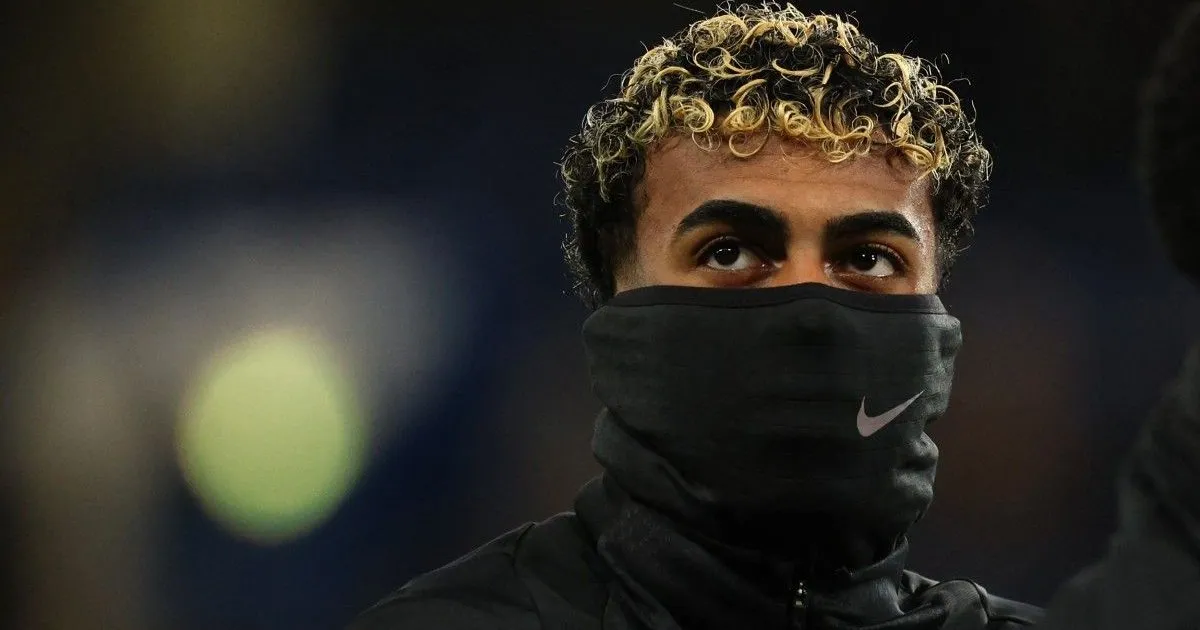
The Spanish footballer Lamine Yamal raised his voice this Wednesday after the Islamophobic chants that were heard during the friendly match between Spain and Egyptplayed in Barcelona and ended with a 0-0 draw. The FC Barcelona attacker, of Muslim religion, described what happened as “something intolerable” and denounced the use of faith as a reason for ridicule in a stadium.
The controversy broke out after a section of the stands sang the chant “he who doesn’t bounce is a Muslim”, an episode that provoked a strong reaction both in those around the soccer as in the Spanish political sphere.
Lamine Yamal’s strong reaction
Through his social networks, Lamine Yamal expressed his indignation at what happened in the match played at the Espanyol stadium.
“It is something intolerable,” the Spanish international wrote on Instagram.
The Barça winger was even more direct in his message and attacked those who starred in the episode:
“Using a religion as a mockery in a field leaves you as ignorant and racist people.”
His words did not take long to generate an impact on social networks and the media, in a context where the debate on racism, xenophobia and Islamophobia in football is once again in the foreground.
What happened in the Spain vs Egypt match
The friendly between Spain and Egypt, played on Tuesday in Barcelona, ended without goals, but the focus ended up moving away from sports due to the behavior of some of the fans.
During several passages of the game, the chant was heard from the stands:
“He who does not bounce is a Muslim.”
The phrase was widely criticized for being considered an expression of religious discrimination and a display of intolerance in an international sporting event.
The fact took on even more relevance as it was a match for the Spanish team, in which footballers from multiple origins, cultures and religions participated.
Pedro Sánchez condemns anti-Muslim chants
The institutional reaction did not take long to arrive. The President of the Government of Spain, Pedro Sánchez, described the behavior of those who carried out the offensive chants as “unacceptable.”
In a public message, the Spanish president regretted that a part of the stands tarnished the image of the country.
“It is unacceptable and should not be repeated. We cannot allow an uncivil minority to tarnish the reality of Spain, a plural and tolerant country.”
Sánchez’s words reinforce the seriousness of the episode and reflect the authorities’ concern to stop any manifestation of hate in the stadiums.
Luis de la Fuente also rejected what happened
The Spain coach, Luis de la Fuente, also joined the rejection of the insults and anti-Muslim chants. Although the main focus was on Lamine Yamal’s complaint, the national team’s coaching staff also condemned what happened.
The coach’s position aligns with the message that Spanish football has been trying to promote for some time: zero tolerance against racism, discrimination and hate speech.
Lamine Yamal, one of the most important voices in Spanish football
Lamine Yamal’s reaction has special weight due to the moment he is experiencing in his career. At his young age, the footballer has become one of the great figures of Spanish football and one of the most influential faces of the new generation.
His statement not only puts the spotlight on Islamophobia in sport, but also reinforces the role of players as social leaders capable of denouncing behaviors that should have no place in modern football.
Islamophobia shakes Spanish football again
What happened in Spain vs Egypt reopens the debate on the limits of the behavior of fans and the need to toughen measures against any type of discrimination in stadiums.
In recent years, European football has tried to reinforce campaigns against racism and xenophobia, but episodes like this show that behaviors that undermine the values of inclusion and respect promoted by federations and clubs still persist.
The public condemnation of figures such as Lamine Yamal, Pedro Sánchez and Luis de la Fuente makes it clear that these types of expressions can no longer be treated as simple “stand chants”, but as acts that must be pointed out and eradicated.
