
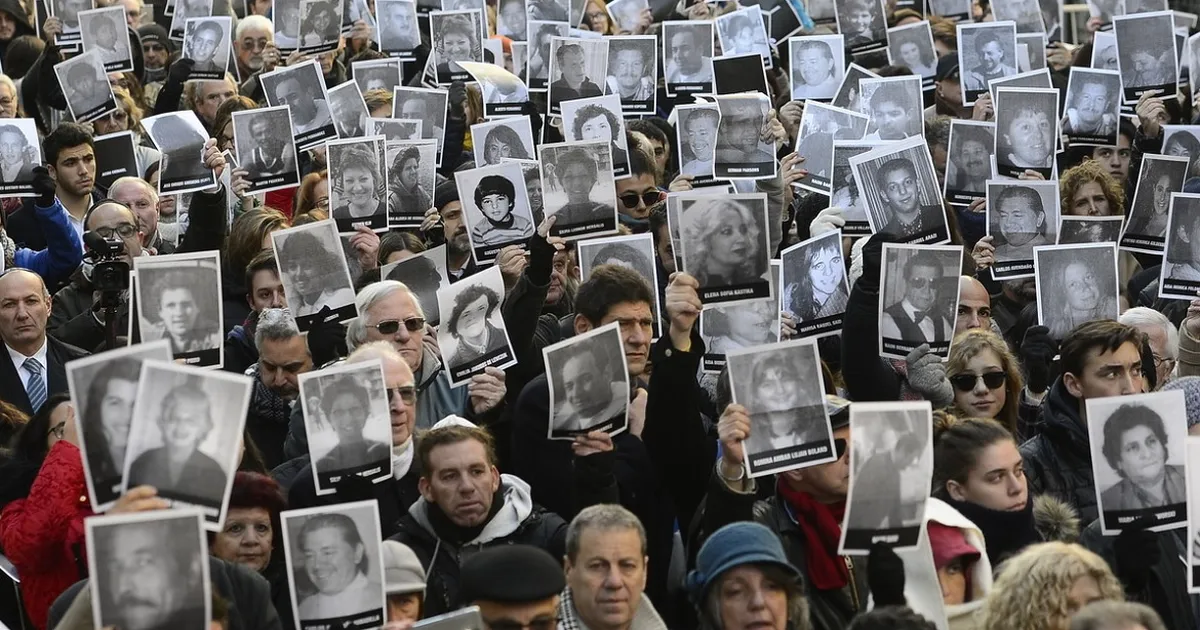
BUENOS AIRES.- He attempt against the headquarters of the Israeli Mutual Association Argentina (AMIA) is heading towards the end of impunity, after almost 31 years of the largest terrorist event in the history of the country.
The federal prosecutor Sebastián Basso, in charge of the Fiscal Investigation Unit (UFI) of the AMIA case, will ask the Argentine courts for the international arrest warrant against the politician of Iran Ali Asghar Hejazi, considered the “right-hand man” of Supreme Leader Ali Khamenei, died in the US and Israeli attacks on Saturday, according to local media reports.
This Wednesday, he also presented accusations in the court of federal judge Daniel Rafecas against ten Iranians and Lebanese involved in the attack, among whom is Ahmad Vahidi, who is at the head of the Iranian Revolutionary Guard, after the elimination of Iran’s hierarchical leadership and against whom an arrest request has been pending since April 2025.
According to the prosecutor, the intellectual and material responsibility for the attack is clear. “It was Hezbollah that carried out the attack, which is a puppet of Iran.” “There is evidence, if not, we would not take him to trial. We have to look for the truth,” he told local media.
The resumption of the judicial process coincides with the attacks by the US and Israel against the Iranian regime, which began last Saturday in search of a change in the political model of the ayatollahs that represses the population and is considered a threat to the Middle East and the world.
Accusations in the AMIA case
According to the investigation carried out by prosecutor Basso, Hejazi chaired the so-called Vijeh Committee, an organization that collected information, analyzed the objective and developed the plan to destroy the AMIA headquarters, in Buenos Aires, on July 18, 1994.
More than 80 people were killed in this attack.
The plan was put together once Hejazi traveled to Buenos Aires in March 1993 to study whether the attack on the AMIA was possible, which was finally carried out, according to the evidence collected.
Prosecutor Basso also accused Hejazi of actively collaborating in sponsoring the Shiite organization Hezbollah, accused of carrying out the attack on the AMIA, for which he asked the judge to prosecute him as the author or participant in homicide qualified by racial or religious hatred.
The Iranians charged until this Wednesday for the attack against AMIA are, in addition to Vahidi, Moshen Rezai, who was the head of the Iranian Revolutionary Guard for 16 years, a period in which the attack against AMIA was perpetrated, according to reports.
Also charged are Ali Fallahijan, Iran’s Minister of Intelligence and Security between 1989 and 1997; Ahmad Reza Asghari, third secretary of the Iranian Embassy; Ali Akbar Velayati, Minister of Foreign Affairs of the regime; Moshen Rabbani, cultural advisor in the diplomatic delegation; and Hadi Soleimanpour, ambassador in Buenos Aires.
There are arrest warrants for all of them and they have been on “red alert” by Interpol since 2006.
Also on the list of accused are Lebanese Salman Raouf Salman, Abdallah Salman and Hussein Mounir Mouzannar.
Evidence of the attack
The prosecutor told journalists why the process went through complications for years, conditioned by the situation of the accused.
“Until last year, when the law of trial in absentia was not in place, it was not possible to move forward against the indictment of specific people, because they are fugitives outside the country and did not turn themselves in,” he said.
The criminal law, enacted in 2025, gave a boost to the investigation.
“What I asked was to move quickly against the ten accused that we have to see if we can hold a trial in absentia as soon as possible and we can show society what evidence the Argentine State has gathered in these thirty years,” said prosecutor Basso in statements reported by local reports.
