
The framework agreement is intended to end the Iran war, which began on February 28 with attacks by the USA and Israel on the Islamic Republic. Thousands of people died in the conflict, particularly in Iran and Lebanon. In addition, the consequences of the war caused oil and fuel prices to skyrocket around the world.
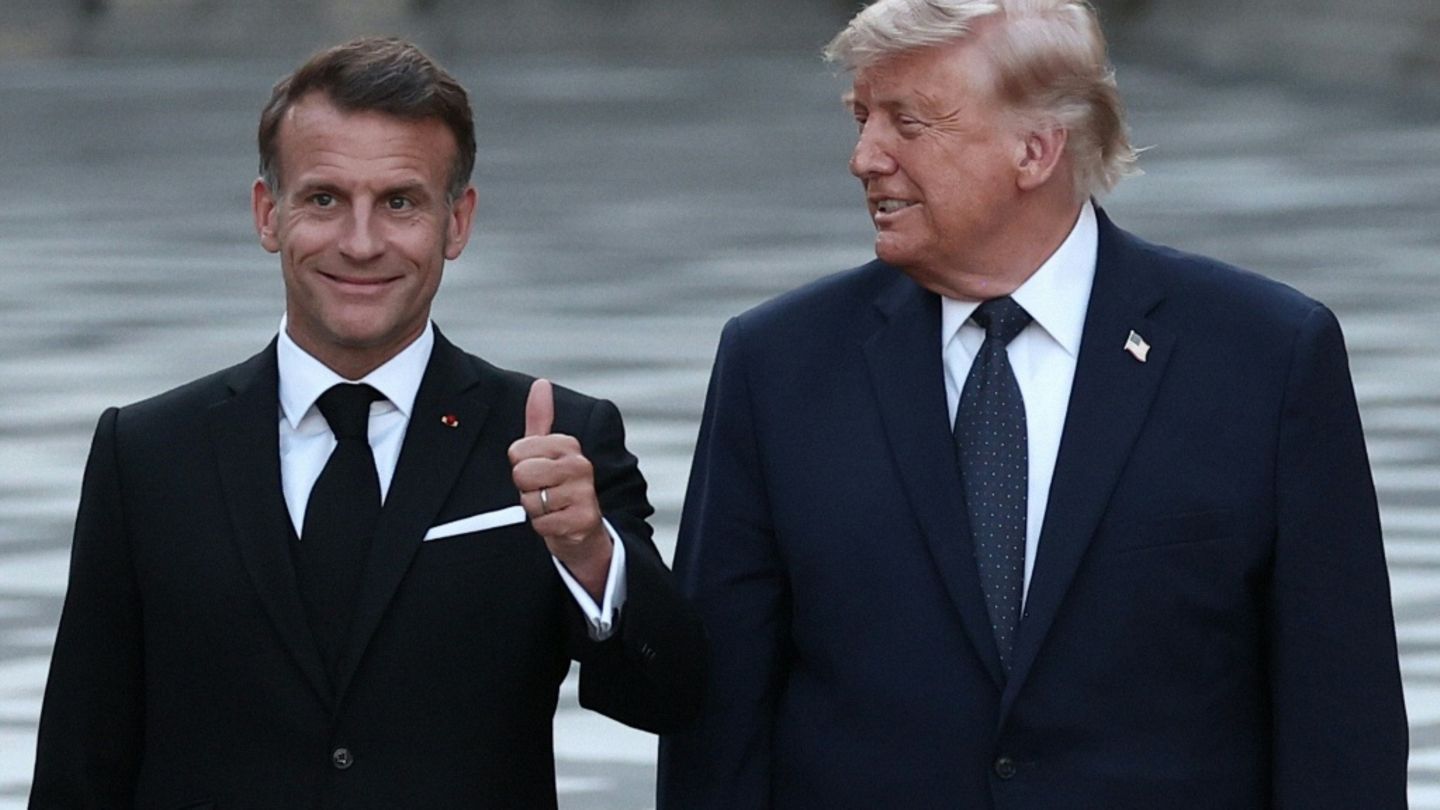
“Just signed it,” Trump said of the framework agreement after dinner at the Palace of Versailles. French head of state Emmanuel Macron invited him there after the conclusion of the G7 summit in Evian, France. After the three-hour visit to the castle, Trump left.
Iranian President Massoud Peseschkian signed the framework agreement in electronic form, Iranian Foreign Ministry spokesman Esmaeil Bakaei announced, according to the Irna news agency.
After the framework agreement was agreed on Sunday, it was said that it would be signed on Friday in a luxury hotel near the Swiss city of Lucerne by US Vice President JD Vance and the Iranian chief negotiator and parliament speaker Mohammed Bagher Ghalibaf. This now appears to be irrelevant, explained Bakaei.
This was contradicted by the head of government of the mediating country Pakistan, Shebaz Sharif. He wrote on
Sharif also said that after signing the framework agreement, Iran would “immediately” reopen the Strait of Hormuz to shipping traffic. The US would also “immediately” end the blockade of Iranian ports. The price of crude oil fell by another percent on Thursday.
The agreement on the framework agreement was greeted with great relief internationally. However, difficult questions – including the future of Iran’s nuclear program – will only be addressed after the signing. A 60-day negotiation period is planned for this.
However, Ghalibaf reiterated his intention to include fees for passage through the Strait of Hormuz in the final peace agreement that is now being negotiated. After the 60-day negotiation period, his country “will not return to pre-war conditions” in the strait that is important for global oil trade, he said in an interview broadcast on state television on Wednesday evening.
“Iran has the right to sovereignty over the Strait of Hormuz and of course we will receive a service fee,” assured Ghalibaf. According to the framework agreement, shipping traffic through the Strait of Hormuz must be fully restored for 30 days. Overall, Ghalibaf assessed the framework agreement as “evidence of the failure of the USA”.
Another point of conflict is the planned inclusion of Lebanon. Iran ensured that the framework agreement also provided for an end to Israeli attacks on its allied Lebanese Hezbollah militia. However, Israel also carried out new attacks on targets in southern Lebanon on Wednesday.
The US government claims that Tehran has committed to diluting its reserves of highly enriched uranium so that the construction of nuclear weapons, as demanded by Washington, becomes impossible. This is to happen under the supervision of the International Atomic Energy Agency (IAEA) in Iran.
In return, Iran should be allowed to sell its oil again after decades of sanctions imposed by the USA and allied countries. Further economic sanctions are expected to be lifted if Tehran and Washington agree on a final peace deal after the 60-day negotiation period.
The declaration of intent also promises Iran a reconstruction and development fund worth “at least $300 billion” (around €260 billion) in the event of a final peace agreement. Washington does not want to participate financially in this, emphasized a US representative.
Before the agreement was signed, Trump threatened the Iranians with renewed attacks if they violated it. “If they don’t behave, we will immediately drop bombs right on their heads again,” he said on the sidelines of the G7 summit.
China and Russia called for full implementation of the framework agreement. Several EU states – including Germany – have agreed to take part in a mission to secure the Strait of Hormuz under certain conditions. However, Chancellor Friedrich Merz (CDU) emphasized at the G7 summit that a German contribution would be “under the auspices of a whole series of prerequisites that have not yet been met.”
