
The 2026 season of the Formula 1 suffered an unexpected slowdown just as it was beginning to take shape. After the first three races of the year, the calendar was abruptly interrupted by the cancellation of the Grand Prix of Bahrain and Saudi Arabia due to the instability generated by the war in Irana decision made for security reasons that left the championship on pause for five weeks.
The determination, confirmed in mid-March, was not easy in logistical terms, but it was inevitable. The transfer of equipment, cars and material to Middle East It requires millimeter planning weeks in advance, and faced with an uncertain geopolitical scenario, the organization chose not to take risks. Rescheduling the tests was also not feasible: the calendar was already too tight and there were no guarantees of being able to hold the races later without significantly altering the rest of the season.
The result is an unusual 35-day competitive gap between the Japanese Grand Prix and the next appointment. A break that breaks the natural rhythm of the championship, cools the first narratives and forces teams and drivers to rethink strategies at the beginning of a new regulatory era. While this break offers an opportunity to analyze data and adjust cars, it also creates a feeling of disconnection in a sport that lives on its continuity and constant tension.
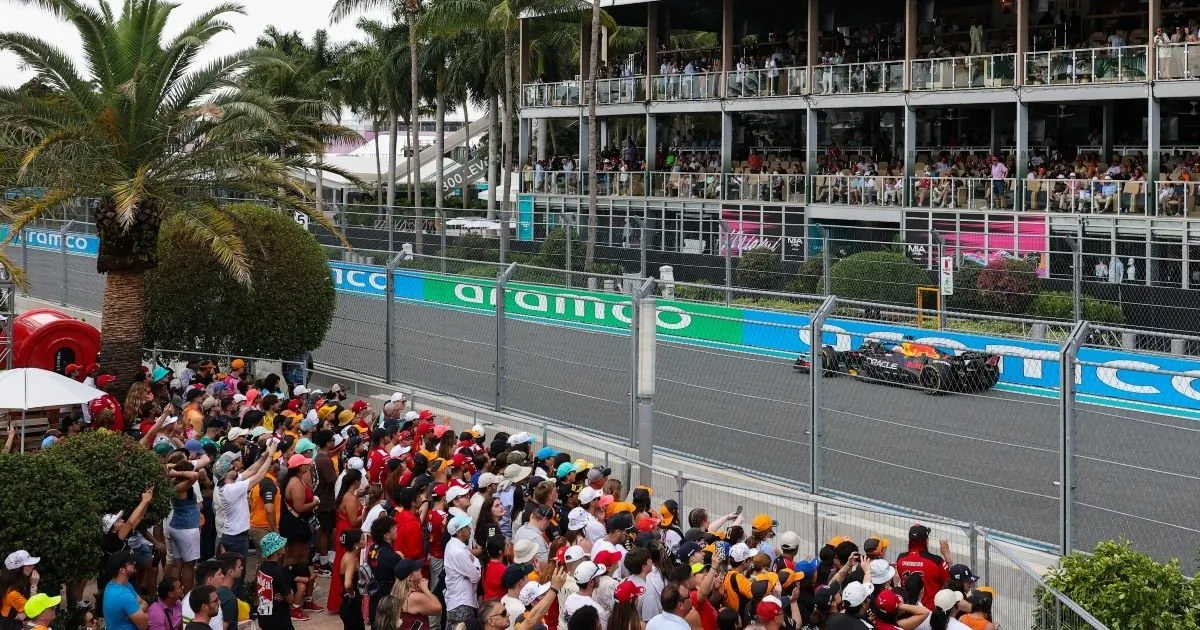
In this context, the return to Miami Grand Prix takes on a special meaning. It will not simply be the next race, but the restart point of a season that seemed launched and was left on hold. The “City of the Sun” thus appears as the ideal setting to reactivate emotion, at a time when sports fighting risks cooling down.
Since its incorporation into the calendar in 2022, Miami has established itself as one of the most media-friendly and attractive events in Formula 1. Its combination of spectacle, celebrities, festive atmosphere and a demanding circuit have quickly made it a key event in the championship. It’s not just a race: it’s a global showcase that connects the sport with new audiences and amplifies its impact.
The ideal scenario
Furthermore, the urban layout around the Hard Rock Stadiumwith long straights, overtaking areas and changing conditions due to the heat, usually offers unpredictable and strategically intense races. Just what the season needs after such a long break.
With the teams ready to return to action and the first differences still to be consolidated, Miami will not only mark the return of Formula 1. It can also be the turning point that reignites the battle for the championship and restores the spark to a season that, for a moment, was paused.
