
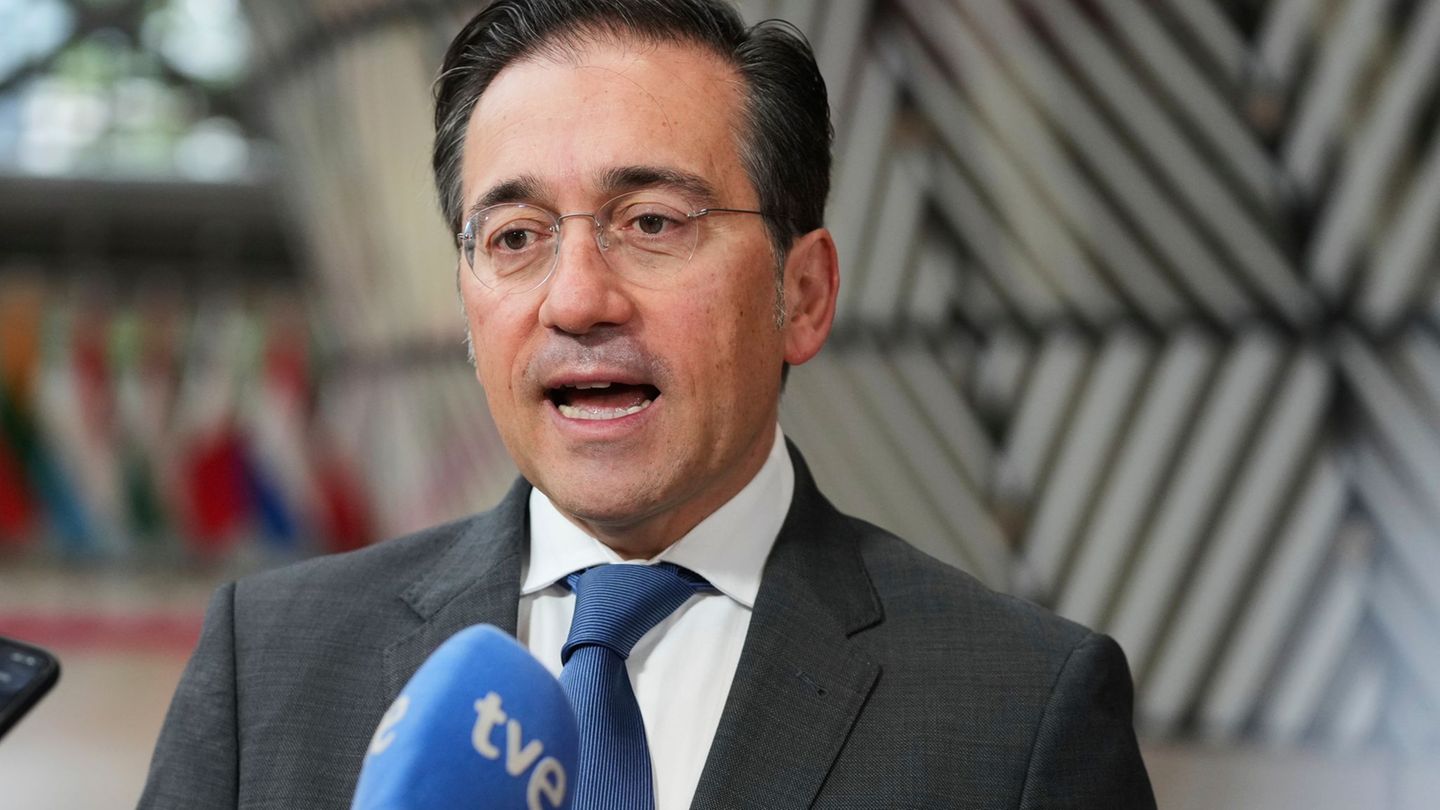
The silence of Chancellor Friedrich Merz (CDU) in the face of US President Donald Trump’s harsh criticism in the White House of Spain’s resistance to the Iran war has angered the government in Madrid. Spanish Foreign Minister José Manuel Albares said diplomatically politely that he had conveyed to Germany his “surprise” at the Chancellor’s lack of solidarity.
Foreign Minister Johann Wadephul emphasized that the EU member states stand together and will not allow themselves to be divided. “And we will not allow a single member state to be threatened in terms of competition law or market access,” said the CDU politician after a meeting of the Baltic Sea Council in Warsaw. He added: “We stand together in the European Union. And that naturally also applies to Spain.” There were allegations from the American side, but Merz also discussed them with Trump.
Spain is one of the harshest critics of Trump’s policies within the EU and clearly sets itself apart from the damage limitation course of other European heads of state and government such as Merz.
Sánchez has often drawn anger from Trump
The left-wing head of government Pedro Sánchez doubts whether the attacks on Iran are covered by international law and therefore banned the use of Spanish military bases by the US military for operations against Iran.
He had repeatedly clashed with Trump in the past by rejecting an increase in military spending to five percent of gross domestic product, wanting to rein in US tech companies or criticizing the arrest of Venezuelan President Nicolás Maduro.
Merz initially left Trump’s attacks unrequited
At the meeting with Merz on Tuesday in the White House in Washington, Trump harshly criticized the governments in Madrid and London. “Some European countries like Spain have behaved terribly,” he said, referring to the US attacks on Iran. “Spain actually said we can’t use their bases,” Trump complained.
“They were rude.” And that’s why he instructed his finance minister, Scott Bessent, to stop “all deals” with Madrid. Which agreements Trump was referring to remained unclear at first. Merz did not respond to Trump’s attacks in front of the cameras in the White House.
The Chancellor later countered Trump’s threat to cut economic relations with Spain. With a view to the US customs conflict with the EU, he emphasized that Spain is a member of the EU. “And as such, we only negotiate a customs agreement with the USA together or not at all,” Merz made clear.
Government spokesman Stefan Kornelius said on Wednesday in Berlin in response to a question about Merz’s behavior in Washington: “The Chancellor did not react to Spain in the Oval Office and then in the conversation – as he himself announced yesterday – took up this situation again and made a clarification.”
Sánchez warns against naivety
These statements were seen in the Spanish media as an attempt by the Chancellor to correct his initial silence towards Trump. Sánchez didn’t mention Merz directly, but said it was “naive to believe that blind and submissive obedience means leadership.”
French President Emmanuel Macron, who also sees the attacks against Iran as not covered by international law, assured Spain of “France’s European solidarity” in a telephone conversation with Sánchez.
The EU warned Trump against imposing a trade embargo on Spain. “We stand in full solidarity with all member states and their citizens and are ready to act within the framework of our common trade policy if necessary to protect the EU’s interests,” said an EU Commission spokesman Ursula von der Leyen. It is expected that the USA will stick to the trade agreements.
Clarification also from Spain: No military cooperation with the USA
Madrid immediately denied statements by US government spokeswoman Karoline Leavitt that Spain had now agreed to work with the US military. “The position of the Spanish government regarding the war in the Middle East, the bombings of Iran and the use of our bases has not changed. I have no idea how it comes to this,” Albares said.
Starmer dismisses Trump criticism as irrelevant
At the weekly question time in Parliament in London, British Prime Minister Keir Starmer tried to dismiss Trump’s biting criticism from the previous day as irrelevant. The Iran war is sensitive for Starmer, who has been badly hit domestically. This is mainly because the British still hold a grudge against former Labor Prime Minister Tony Blair for following the USA into the Iraq War in 2003. The invasion is now considered a disaster in Great Britain.
