
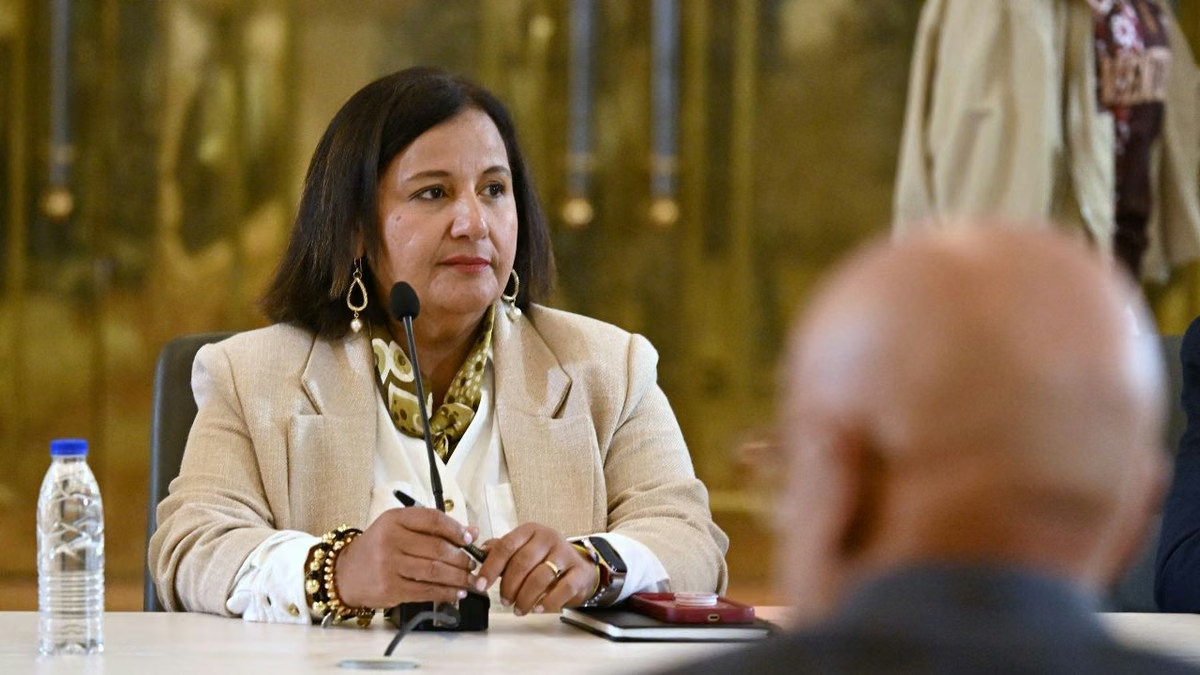
CARACAS.- The head of the opposition delegation for dialogue with Chavismo in Venezuela, Dinorah Figueracelebrated the participation of more than 1,000 candidates to form the new Supreme Court of Justice (TSJ), in the process that seeks the renewal of the Judicial power, but that already faces increasing reviews.
“It is a first step on the roadmap (of the) path to freedom, the next steps will be established in due course,” said Figuera in his X account, referring to the fact that it is part of the conversations promoted by the US government.
In his message he asked to raise the flags of faith and hope for a TSJ that lives up to the demands and expectations of Venezuelans, in search of a democratic project for future generations.
This Friday, the National Assembly, with a Chavista majority, published the list of 1,343 candidates for the positions of magistrates of the TSJ, the General Inspectorate of Courts and the Directorate of the National School of Judiciary, emanating from the Nominations Committee.
Questioned candidates?
According to information, the list of candidates includes more than 80% of the judges who make up the current Supreme Court, despite the prohibition indicated by the process bodies, which casts doubt on the transparency of the procedure.
Included in that percentage is its president, Caryslia Beatriz Rodríguez, also a member of the Electoral Chamber that validated the illegal re-election of Nicolás Maduro in 2024, amid complaints of fraud by the opposition.
There is also the name of Judge Tania D’Amelio, who read the sentence that ordered in January the swearing-in of Delcy Rodríguez as the president in charge of the country after the capture of Maduro by the United States.
In addition, there are the two judges who convicted former judge María Lourdes Afiuni without any evidence and also for the alleged crime of “spiritual corruption” that does not exist in criminal laws, and a prosecutor to whom they attribute the persecution ordered by the Hugo Chávez regime.
Among those questioned are also mentioned a former prosecutor sanctioned by the European Union and a former first instance judge of Terrorism, a jurisdiction created by the Chavista regime to persecute dissent.
According to deputy Luis Florido, starting next Monday The review of credentials begins based on a scale approved by the Judicial Nominations Committee with the unanimous vote of its 11 deputies and 12 members of civil society.
Criticism for dubious transparency
Faced with this situation, several lawyers and human rights NGOs expressed their rejection of many of the candidates, considering that they do not meet the ethical and independence conditions that must be met in the service of justice.
The NGO Encuentro y Perdón (JEP) invited this Saturday to begin, before the appointment scheduled for December 11, challenges to candidates who do not comply with constitutional requirements.
“Today more than ever, the active participation of victims is essential to exercise social oversight and ensure that justice is truly fair,” the NGO said in a statement published in X.
“As a society, we all have the responsibility to contribute to this process, but the participation of those who have been victims of violations of their human rights is essential to ensure that those who deliver justice do not have any responsibility for the pain they have suffered,” he stressed.
The period for challenges covers from November 21 to December 5, 2026, according to the reformed Organic Law of the TSJ, which also establishes that they be presented in writing and in person.
