
NBC News
Las Vegas – This city is the best current example to deny the idea that mosquitoes cannot survive in the desert. Although these insects usually prefer more tropical and humidity conditions, they have begun to proliferate in Las Vegas in recent years.
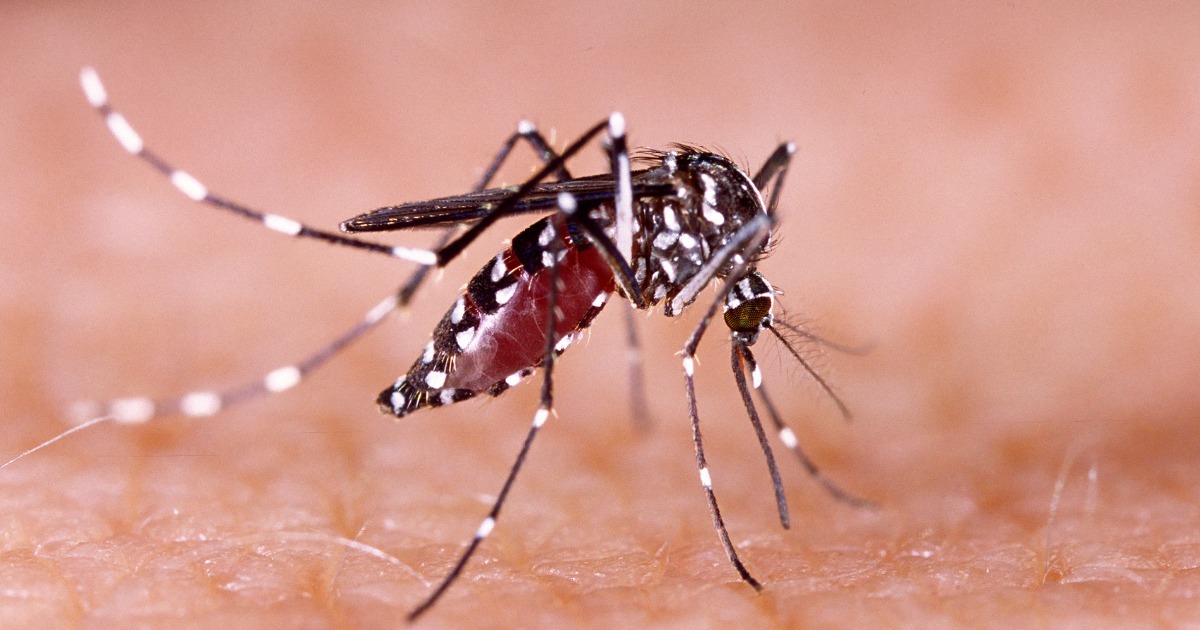
It is due to changes such as greater urban development, climatic emergency, growing resistance to certain insecticides and genetic adaptations that have made southern Nevada a more cozy habitat for these mosquitoes Aedes aegypti.
Las Vegas is not the only place pouring a new battle against these insects. The highest temperatures in areas of the northern hemisphere and changes in climatic patterns have expanded the geographical limits of the entire planet where mosquitoes can live and reproduce.
(A zancuda hope: how mosquitoes can help in the fight against Dengue, Zika and Chikunguña)
That change not only means the discomfort of pickets, but the great threat of diseases such as dengue or the western Nile virus. And the people in Las Vegas and the rest of Clark County have been taken by surprise.
“It is not wrong to think that mosquitoes should not really survive in desert conditions, but clearly this particular species that we have in Clark County already adapted to local ecology,” said Louisa Messenger, a professor in the department about global and environmental health of the University of Nevada, Las Vegas Campus.
“Only a couple of pickets are required”
The species present in the county include mosquitoes Culexthat transmit the western Nile virus, and the Aedes aegyptiwhich contribute to the recreation of dengue, Zika and Chikungunya.
Messenger and his colleagues have found that the mosquitoes present in Las Vegas have developed a resistance to insecticides, thus posing a threat to public health especially in a city so marked by tourism.
“It’s like a bomb about to explode,” Messenger said. “In Las Vegas there are more than 48 million visitors who arrive from the entire planet, and only a couple of pickets are required so that a local contagion is unleashed.”
Dengue in particular has gone up in the American continent in the last two years, with more than 13 million cases reported in 2024, according to data from the Pan American Health Organization and the Centers for the Control and Prevention of Diseases (CDC).
(What are the best mosquito repellent)
Last year, 26 cases of the western Nile virus in Las Vegas were reported, according to the health authorities of southern Nevada, and the scientists discovered that there was a record number of mosquitoes that positively gave the virus around the city, which suggests that the risk of more cases was very high.
So far from 2025 no infections have been reported in humans of this virus, but in several postal codes the mosquitoes studied have given positive for the disease. Messenger said that there is still no clarity about which factors contribute to a given year in a year than in others.
“What can be said with certainty is that we have years of increases and years in zeros, and it is difficult to predict how each one will be,” he said.
Zancudos “without truce” that spread
The Sanitary District of Southern Nevada has been making mosquito surveillance since 2004, so there are meticulous records of which species are present every year and what viruses or diseases do.
These data realize that mosquitoes Aedes aegypti In particular they have proliferated since 2017, according to Vivek Raman, Environmental Health Supervisor of the Southern Nevada Health District.
“In 2017 this mosquito was in just a couple of areas,” said Raman, heading the mosquito monitoring program. “A few years later it was already reported in six postal codes. Then in 12, then in 20, and is currently in 48 zones of postal code throughout the valley.”
Even when they do not spread dengue or other diseases, Raman points out that these insects are very annoying.
“The Aedes aegypti They are very aggressive mosquitoes that bite even the day. They are spoiled without truce, “he said.
(How to prevent dengue and what are your symptoms? Experts share tips)
These mosquitoes can also be reproduced in shallow watertight waters, such as puddles, unlike Culex mosquitoes that usually put eggs in larger areas such as swimming pools.
“One of the reasons why they are expanding so much is that this mosquito can spawn in very small containers, even if they are drops of water that stayed in a childish or tire toy,” Raman said. “A few fleas of water are enough.”
Messenger explains that the urban development of Las Vegas has also contributed to the recreation of more of these mosquitoes: golf courses, artificial lakes and other forms of unnatural irrigation have become a good shelter for these insects in the middle of the Nevada desert.
Greater moisture due to global warming
The impacts of climate change are also a probable factor behind the proliferation of mosquitoes, something Messenger and their colleagues are investigating.
For example, analysis in other parts of the world have shown that when the average temperatures rise then the atmosphere, being warmer, retains more moisture, which can also unleash more rains. In sum, it is a good culture broth for these mosquitoes.
(They update treatment recommendations for hypertension patients)
In Las Vegas it is not yet studied as much as local environmental factors and climatic emergency are having an impact on the presence of Aedes aegyptibut reviewing it is considered of the utmost importance.
“The city is like a case study on how climate change will be perceived in different parts of the planet,” Messenger said. “Here we are seeing temperatures that break records, everything is becoming more arid, rainfall is more erratic and unpredictable. And this is how many parts of the world will be seen within the next 15 to 25 years.”
Health authorities have been doing some campaigns so that people identify and get rid of possible mosquito reproduction sites, such as rainwater tires, but Messenger emphasizes to control the amount of these insects throughout the city will require a much more coordinated effort and that does not yet exist in Las Vegas.
“There are private companies that test and you can call them in case of severe infestations, and there are some preventive work in wetlands, but we do not have what many other jurisdictions: a centralized and coordinated reduction policy,” said the professor at Las Vegas University.
He said that this has turned out that local mosquito populations are developing greater resistance to insecticides, because if there were a centralized campaign it would be easier to identify which chemicals have greater effectiveness to study and apply the appropriate concentrations of pesticides.
Messenger added that in the following years it will be especially key that there are prevention and control tools to protect the people who live in Las Vegas and the many people who visit the so -called city of sin.
“In summary, all this can be prevented,” he said, “and no one in southern Nevada, in Clark County, should end up contracting a virus for a mosquito sting.”
