
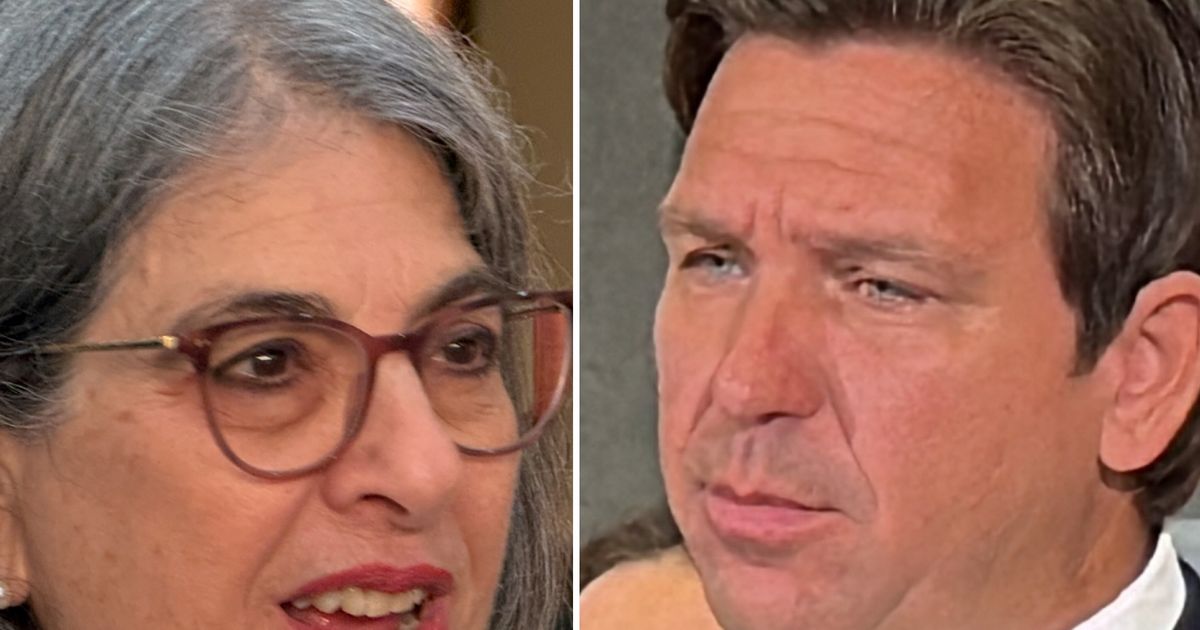
Miami.- The recent letter sent by the government efficiency department of the Executive Office of the Governor of Florida (Dogefor its acronym in English) to the mayor of Miami-Dade, Daniella Levine Cava, in which she requests more information about public spending has generated political and media reactions.
The letter, dated August 4, formalizes the beginning of an exhaustive audit on public spending in Miami-Dade, promoted by Governor Ron Desantis as part of his state program to combat waste and demand transparency to local governments.
The document emphasizes that property tax revenues in Florida County increased by 29% between fiscal years 2020-21 and 2023-24, representing more than 430 million additional dollars for the arcs. In addition, it underlines the 56% increase in income from local taxes on food and beverages, adding almost 3 billion more compared to the previous three years.
Given this fiscal bonanza panorama, the Desantis office expressed concern about a budget deficit of more than 400 million recently announced by the Miami-Dade government for fiscal year 2025-2026.
The letter requests the Administration of Levine CAVA a wide range of documents and additional details on the use of funds, including projects related to the “Green New Deal”, diversity, equity and inclusion policies (DEI), and possible obstacles in access to public information. The text warns that financial penalties could be applied if the required documents are not met.
Mayor’s reaction: cooperation, but criticism of the approach
Mayor Daniella Levine Cava said that the county is fully collaborating with state orders:
“We are cooperating with the delivery of the requested information, as we have always done in the name of transparency, but Miami-Dade does not need an investigation with political motivations.”
Levine Cava points out that the Doge initiative responds more to a political agenda than a true concern for the efficiency of public spending, highlighting that the county has already made significant efforts to control the budget and guarantee essential services.
Carlos Giménez position
The federal and former mayor of Miami-Dade, Carlos Giménez, celebrated the state audit in his X (formerly Twitter) account, where he wrote:
“As mayor of Miami-Dade I worked to eliminate unnecessary expenses and keep property taxes low. In a few years, the current mayor has turned our good administration into a massive deficit. The audit of the Governor Desantis applaud to protect the money from the taxpayers. Thank you!”
Giménez’s support revives the debate on fiscal management in Miami-Dade and looks at the current administration, which faces the challenge of justifying its budgetary decisions before public opinion and now, before state scrutiny.
Doge and the struggle for transparency
The creation of the Doge program by Governor Desantis has been presented as an initiative to ensure that public funds are used efficiently and transparently. However, local leaders and civil rights organizations have expressed concern about the possible political use of audits, especially when they involve policies such as the Green New Deal or the initiatives ofi.
In the next few days, the attention will be placed in the official response of Miami-Dade to the requests of the State and in the development of an audit that will undoubtedly have repercussions both administrative and political in the south of Florida.
In this context, Commissioner Condal Roberto González met with representatives of Doge Florida whom he invited to “explore more thoroughly.”
“It is time to guarantee that all the resources of the County pay the best service to our taxpayers. Transparency is key to a balanced budget and to prioritize the needs of residents.”
On July 22, Desantis announced the start of state audits in Broward counties, and Jacksonville. Later he added to Manatee County, a republican bastion, whose property taxes increased 86% in the last six years.
