
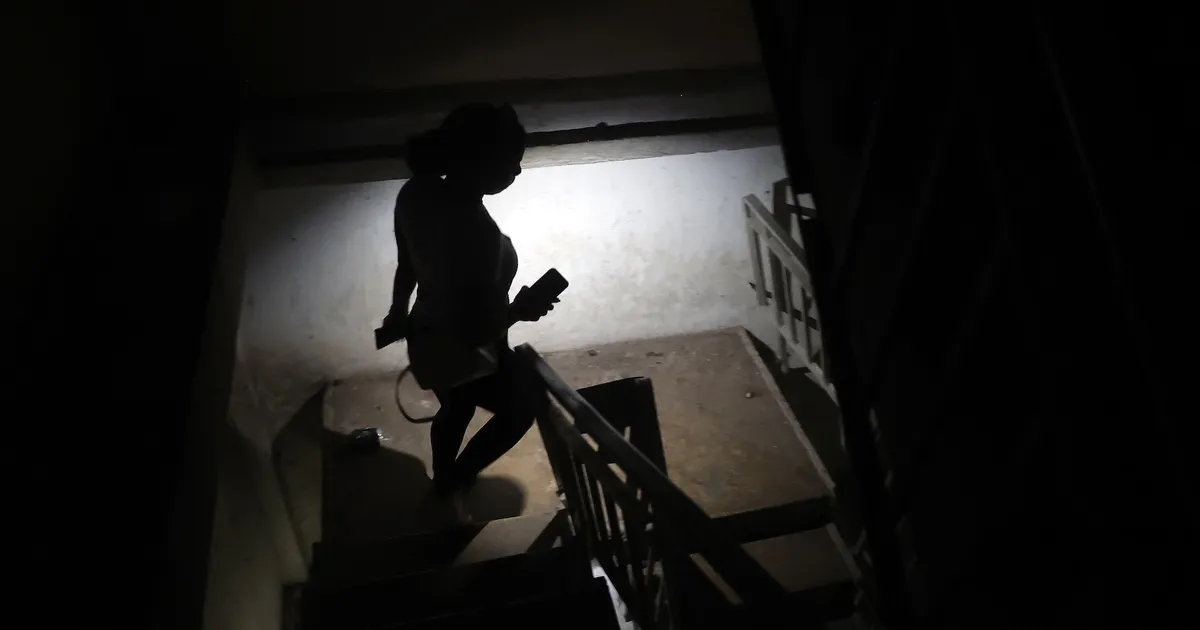
Havana– Cuba will have a new day of blackouts this Sunday, which will simultaneously affect 54% of its territory during “peak” hours, the time of highest energy consumption, according to the daily forecast of the state company Unión Eléctrica (UNE).
The energy generation crisis on the island, which has worsened since mid-2024, is presenting one of its worst moments with rates that have exceeded 60% impact.
The serious energy crisis that Cuba has had since mid-2024 has been complicated since last month after the fall of dictator Nicolás Maduro when the US cut off the supply of Venezuelan crude oil to the island and also decreed the imposition of tariffs on countries that sell or provide oil to the Caribbean country.
Given the fuel shortage, the Cuban regime has rationed the sale of fuel, and has established an emergency plan that includes – among other measures – teleworking, blended classes at universities and has suspended activities such as the Havana Book Fair, international conferences and the Habano Festival.
The frequent breakdowns in Cuban thermal power plants, which operate in a poor technical state and with accumulated decades of exploitation, and the lack of foreign currency to import fuel to produce energy are the main causes of the energy crisis of recent years, as recognized by the regime on the island.
In such circumstances, the UNE, attached to the Cuban Ministry of Energy and Mines, foresees for the afternoon-night schedule of this Sunday a generation capacity of 1,457 megawatts (MW) and a maximum demand of 3,130 MW.
This means that the deficit – the difference between supply and demand – will be 1,673 MW and the estimated impact – what will actually be disconnected to avoid disorderly blackouts – will reach 1,703 MW.
Currently, eight of the 16 operational thermoelectric production units are out of service due to breakdowns or maintenance, including two of the three largest. This energy source represents on average around 40% of the energy mix in Cuba.
Since mid-January, the UNE report has stopped specifying the number of distributed generation plants (engines) not operational due to lack of fuel (diesel and fuel oil) and lubricant.
Independent experts point out that the energy crisis in Cuba responds to chronic underfinancing of this sector, in the hands of the State since the triumph of the Castro revolution in 1959.
For its part, the Cuban regime points to the impact of US sanctions on this industry and accuses Washington of “energy asphyxiation.”
