
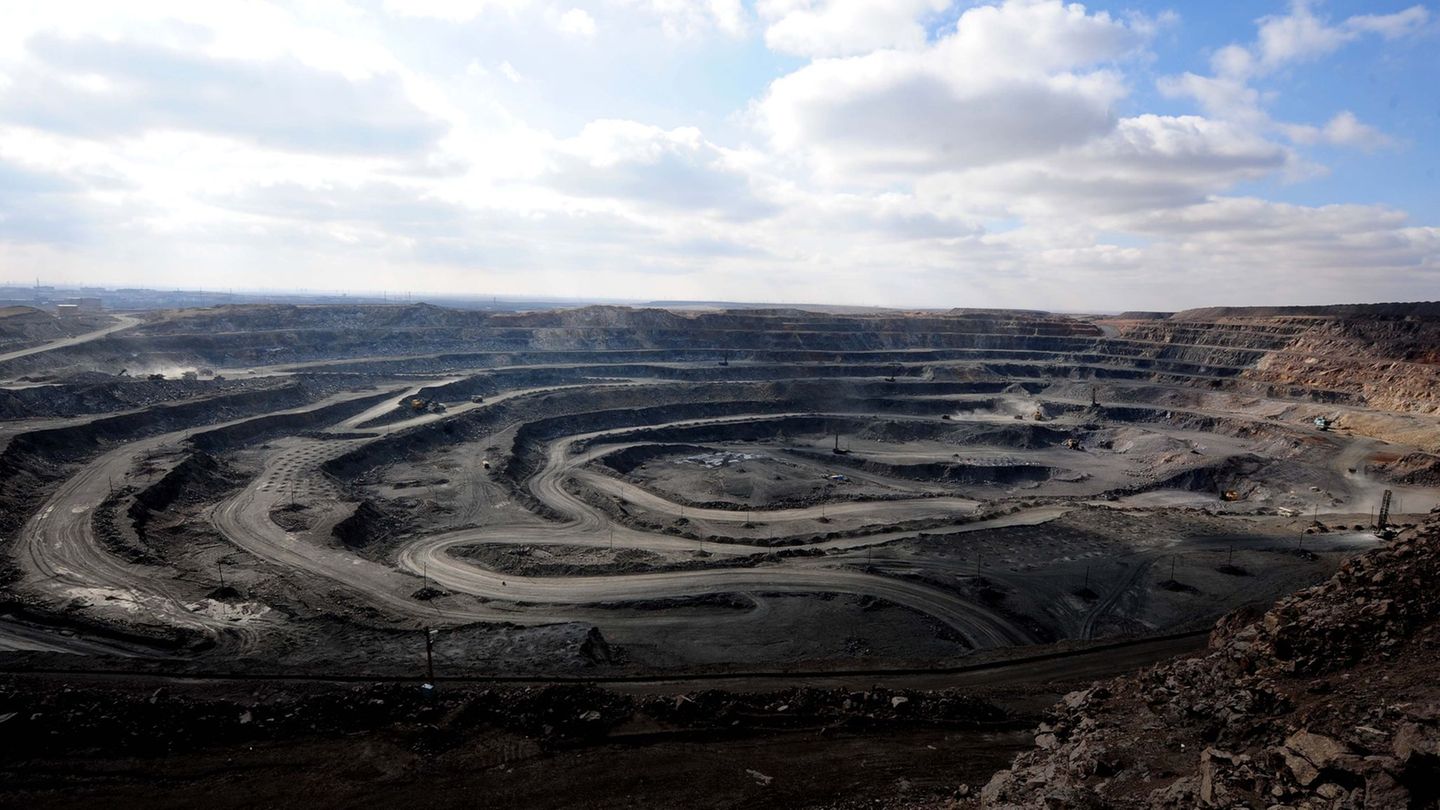
The rare earths, which are important for industry, have been strongly more expensive after the tightening of the Chinese export hurdles. The prices for the 17 metals summarized under the generic term rose by an eight percent in May on a dollar basis, as the Association of the Bavarian Business (VBW) determined in their monthly raw material price index. DZ Bank’s economists assume that the dependence on Germany, the USA and other Western countries cannot be reduced quickly by Chinese deliveries and Beijing will be preserved.
German industry suffers from the US dispute with China
The Beijinger leadership had imposed the punitive tariffs announced by US President Donald Trump in export controls for seven rare earths. According to the VBW index, the prices of these metals have increased much more. Terbium was therefore almost 19 percent, gadolinium by almost 17 percent and Samarium by over 15 percent. “The trade conflict between the USA and China is jointly responsible for this development, as a result, the Chinese government introduced export controls for many important rare earths and magnets,” said VBW general manager Bertram Brossardt.
China has a quasi-monopoly when processing rare earth
The metals are important for the production of electronic components and magnets in the electronics, auto and armaments industry. According to various estimates, the People’s Republic will be dismantled to the two thirds of the rare earths and 90 percent are processed for industrial use.
Beijing’s sharpest sword in trade conflicts
With the export restrictions for rare earths and magnets, China apparently successfully pulled its well-being sharpened in the trade dispute with the United States, according to the analysis of the DZ Bank, with a view that the Trump government then showed a lot of compromise. “However, the rapidly created bottlenecks and impending production interruptions in German key industries should be a wake -up call that Germany urgently has to prepare for comparable situations in the future,” write the economist Monika Boven and her employee Bastian Reßing.
They recommend building a strategic raw material reserve, recycling and free trade agreements or partnerships with other delivery countries. The Federal Association of German Industry (BDI) had previously warned against growing dependence on China in critical raw materials.
