
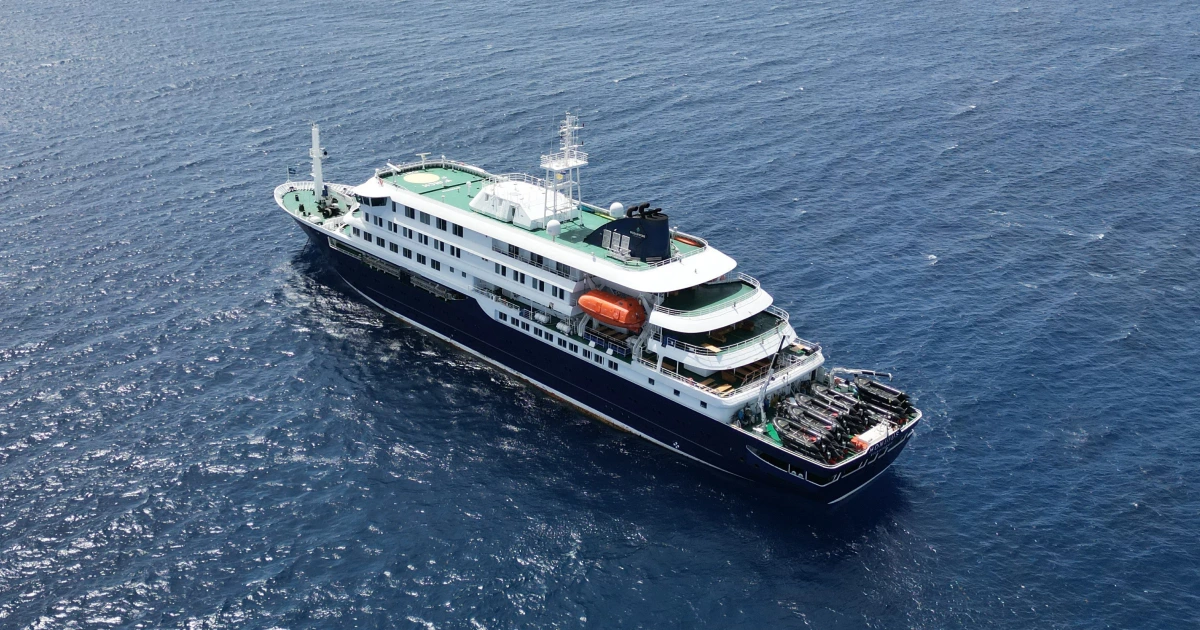
The cruise ship at the center of a suspected deadly hantavirus outbreak has been denied permission to dock, with 149 people still on board, two of them seriously ill.
The virus is suspected to have killed three people and sickened three others, with one patient hospitalized in critical condition.
The World Health Organization (WHO) stated this Monday that the current risk to the general population from the disease – which is rare in humans and is not easily transmitted – was low and that there was no reason for panic.
The remaining passengers, coming from 23 different countries, including 17 Americansmust follow strict precautionary measures, which include isolation and medical monitoring, reported the cruise operating company.
The West African nation of Cape Verde said it had decided not to allow the cruise ship, the Hondius, to dock at the port of Praia as a precaution, the Reuters news agency reported.
The cruise operator, Oceanwide Expeditions, said in a statement Monday that the ship could set sail from Cape Verde to Las Palmas or Tenerife, in the Canary Islands, and dock there.
A person, a British national, is in the intensive care unit of a hospital in Johannesburg, South Africa, the Ministry of Health of that country detailed in a statement. It was indicated that the patient, whose identity was not revealed, was in “critical condition.”
So far, this remains the only confirmed case of hantavirus; the other five are suspects.
Two crew members, one British and the other Dutch, were sick and needed “urgent medical attention” aboard the Hondius, the cruise operating company added. The WHO indicated that it was assisting in planning the medical evacuation of these patients, and a Cape Verde official said that an air ambulance was being prepared to be used if necessary.
Oceanwide reported Sunday evening that local health officials had come on board to evaluate the two people with symptoms, but had “not yet made a decision regarding the transfer of these people to healthcare facilities in Cape Verde.”
The WHO stressed that there was no cause for alarm.
“The risk to the general public remains low. There is no need for panic or travel restrictions,” Dr. Hans Henri P. Kluge, WHO regional director for Europe, said in a statement Monday.
“We are acting urgently to support the response to the hantavirus outbreak aboard a cruise ship in the Atlantic, following the tragic loss of life,” he said.
Kluge said he was in contact with authorities in Europe and South Africa to ensure a “science-based response.”
Kluge’s statement also noted that hantavirus infections can be “severe in some cases, although they are not easily transmitted between people.”
A State Department spokesperson explained this Monday that the Government was closely monitoring the situation and was “ready to provide consular assistance.”
It is not yet clear how the Hondius passengers became infected, but Kluge indicated that “infections are usually related to exposure to infected rodents.”
Two of the deceased victims were a married couple: a 70-year-old man who died on board on April 11 and was pronounced dead upon arrival at the remote Atlantic island of St. Helena on April 24, and a 69-year-old woman who collapsed at Johannesburg International Airport while trying to fly back to the couple’s native Netherlands.
Oceanwide said the third fatality was a German citizen, although the official cause of death was unknown.
The Hondius left Argentina for the Canary Islands, an archipelago under Spanish control located off the western coast of Africa, about three weeks ago, with about 150 passengers on board.
Kluge said the incident was an example of the need for international collaboration in health.
“I have just returned from the African continent, where I discussed closer collaboration on health emergencies, and this is a timely reminder: health threats do not respect borders. Working together is how we protect people,” Kluge added.
In January, President Donald Trump terminated the United States’ membership in the WHO, citing alleged failures during the COVID-19 pandemic.
Hantavirus made headlines last year when a medical researcher confirmed it had caused the death of Betsy Arakawa, wife of actor Gene Hackman, at the age of 65.
