
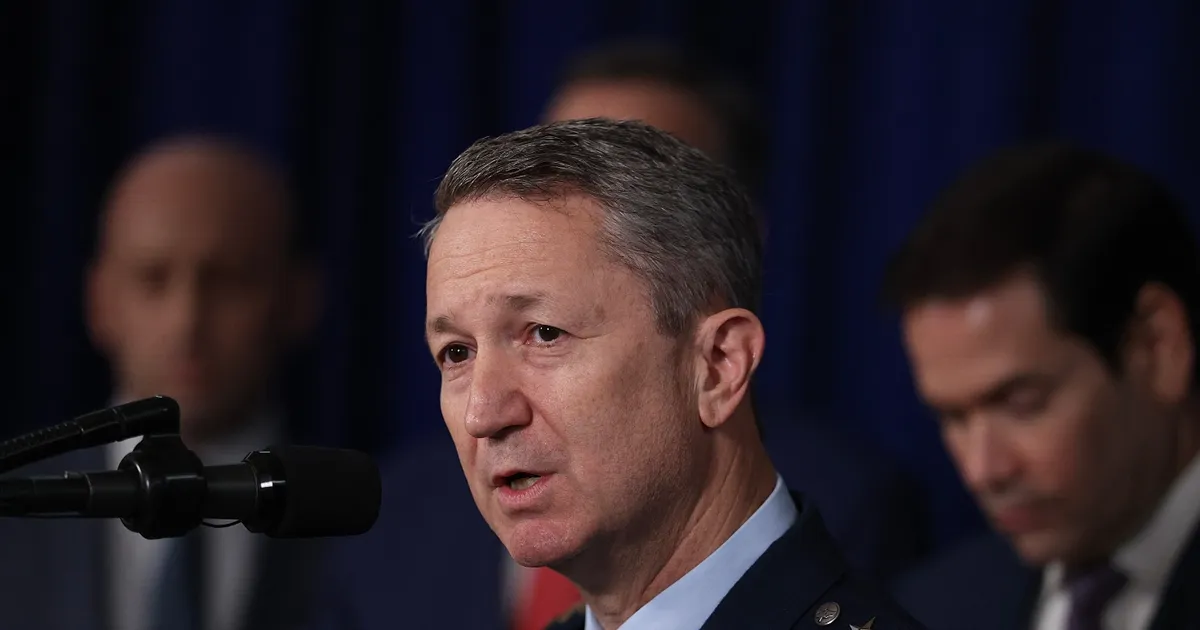
MIAMI_ The recent visit to Caracas by General Dan Caine, chairman of the United States Joint Chiefs of Staff, opens a new debate on the role that Venezuela could play within Washington’s regional security strategy, especially at a time of growing international pressure on the regimes of Cuba and Nicaragua.
Various analysts consulted by Venezuelan media consider that the rapprochement between the United States and the leader of the Chavista regime could transform the South American country into a key ally for the stability of the Western Hemisphere, due to its geographical location, its extensive maritime façade and its proximity to the Caribbean.
The Venezuelan news portal The reasonpublished an analysis of the geopolitical implications of the visit, pointing out that Venezuela could acquire increasing relevance within Washington’s hemispheric security plans. The publication also highlights that cooperation between both countries could extend beyond bilateral issues and be projected towards broader regional scenarios.
“The capture of Nicolás Maduro by US forces in January 2026 completely changed the strategic balance of the region. For the first time in more than two decades, Washington has direct political influence in Caracas and maintains growing cooperation with the new Venezuelan authorities,” reported La Razón.
“Surveillance operations”
Although there is no official information that indicates the preparation of military actions against Cuba, experts maintain that Venezuela could become a relevant support point for surveillance, intelligence, logistics and regional coordination operations promoted by Washington.
According to The reasonCaine’s visit represents an example of the strengthening of strategic cooperation between both countries. The media also points out that currently “there are no known official plans” for military action against Cuba, although it considers that the evolution of the regional scenario is modifying the security dynamics in the Caribbean.
The debate arises in a context of tightening US sanctions against the Cuban regime. President Donald Trump’s administration increased pressure on Havana through measures directed against the military conglomerate GAESA and other economic structures controlled by the Cuban power apparatus.
At the same time, the tenant of the White House maintains a critical stance towards the human rights violations denounced by international organizations in Cuba and Nicaragua, countries whose leaders continue to face questions for the persecution of opponents and restrictions on fundamental freedoms.
Geopolitics specialists point out that Venezuela’s location gives it strategic advantages for the control of maritime and air routes in the Caribbean, in addition to facilitating coordination with regional allies in matters of security and the fight against transnational threats.
“Hemispheric alliances”
Caine’s visit also occurs at a time of reconfiguration of hemispheric alliances with the United States, strengthening cooperation with like-minded governments in Latin America to confront challenges linked to organized crime, drug trafficking and the influence of extra-regional actors.
According to the analysis of The reasonthe presence of the US military high command in Caracas fuels speculation about an eventual reconfiguration of the geopolitical balance in the region. However, the publication indicates that the scenarios proposed correspond to prospective analyzes and not official decisions announced by Washington.
Beyond interpretations, the visit of the US military chief confirmed the growing importance that Venezuela has acquired within the strategic priorities of the United States for Latin America and the Caribbean, in a context marked by tensions with the regimes of Cuba and Nicaragua and by Washington’s interest in strengthening its presence in the hemisphere.
