
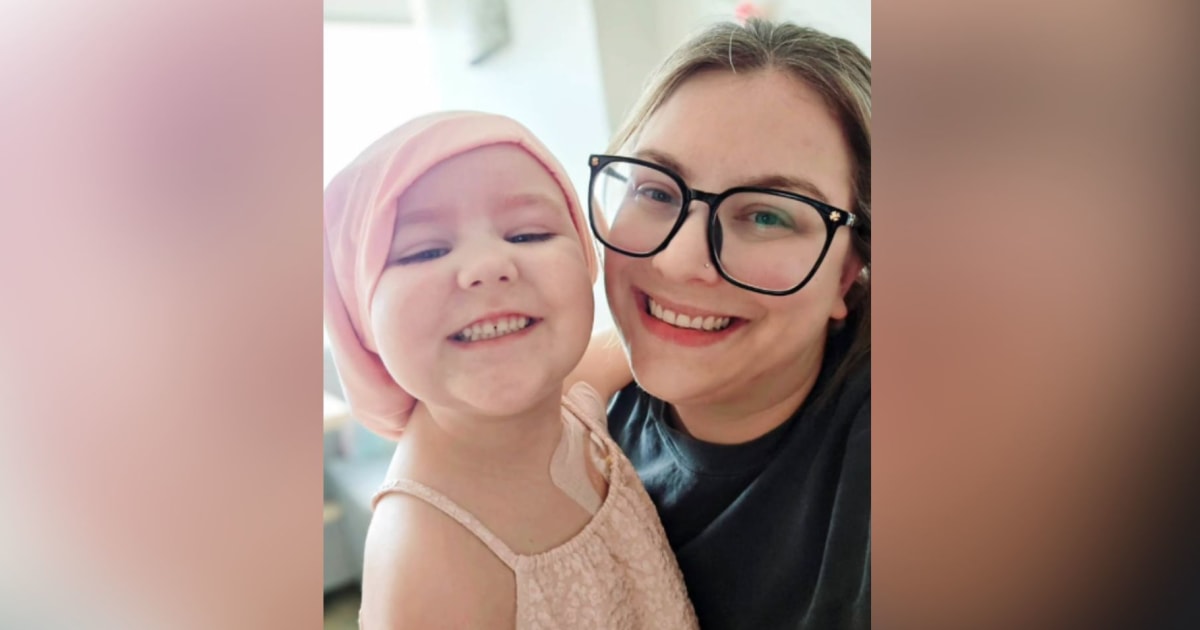
Today
With 4 years, Bryn Ailinger loved to dance and do gymnastics, and “he was always running.” But suddenly, in April 2024, he began to complain about his legs.
“In two weeks the pain progressed to such an extent that he did not even want to walk and ended up asking her to take her in his arms,” says her father, Justin Ailinger, 40 years old and a neighbor of Buffalo, in New York. “We were at a birthday party (and) there was a skating track, but she didn’t want to participate,” he explains.
Her parents knew that something happened to her child, always active, so they took her to the pediatrician, who made her a blood test. Upon receiving the results, the family immediately received the doctor’s call: “They have to go to the hospital immediately because the results are alarming,” says Ailinger who told him.
His daughter suffered acute lymphoblastic leukemia.
Leg pain and diagnosis
When Bryn began to feel pain in his legs, his parents thought it was something unusual but they didn’t worry much.
“We thought that it was about growth pains or something like that,” says Ailinger, “but the severity with which she began to complain made us think it was something more serious.”
The doctor’s call ordered him to go to the emergency room. At first the family did not know what to expect, but several doctors, including an oncologist, entered the room and not long after they had a clearer idea of what was happening to Bryn.
(Costco will sell Ozempic and Wegovy with discount to people without medical insurance)
“Once (the oncologist) appeared we realized what was about to happen and the path we were going to follow,” says Ailinger, “was the beginning of the trip of the last year and a half.”
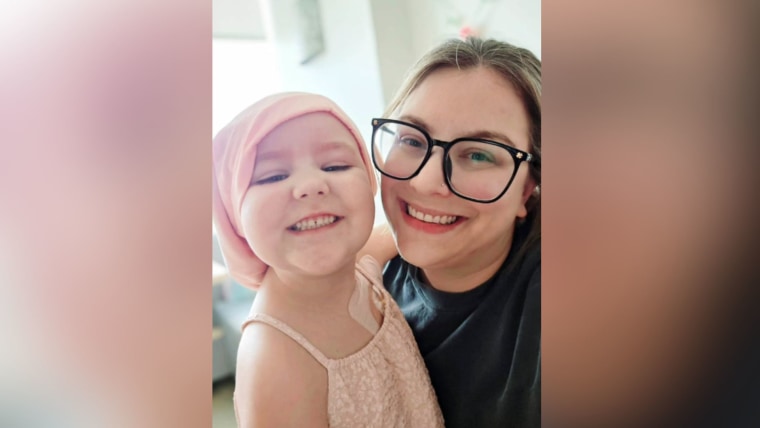
The doctors immediately entered Bryn and placed a port so that chemotherapy could begin immediately. For Ailinger it was very hard to know that his daughter had cancer and see how treatment began immediately.
“It’s scary. It’s not something that no father can be prepared. It’s not something you really think is going to happen to you, much less your children,” he says, “the world turns you a turn.”
Bryn was at the hospital for a month; He received chemotherapy and was subjected to testing. The doctors discovered that he had a “rare mutation” that implied that his cancer did not respond well to traditional treatments such as chemotherapy. It seemed to help a little, but doctors wanted to try other options to make sure the girl could heal.
“We went home for a weeks and then began another immunotherapy treatment,” Ailinger says: “They enter you another week and then return home with a bag of medicines connected to an intravenous route, as they are administered 24 hours a day for approximately for approximately one month.”
Doctors believed that Car therapy with T cells could make Bryn’s cancer enter effectively.
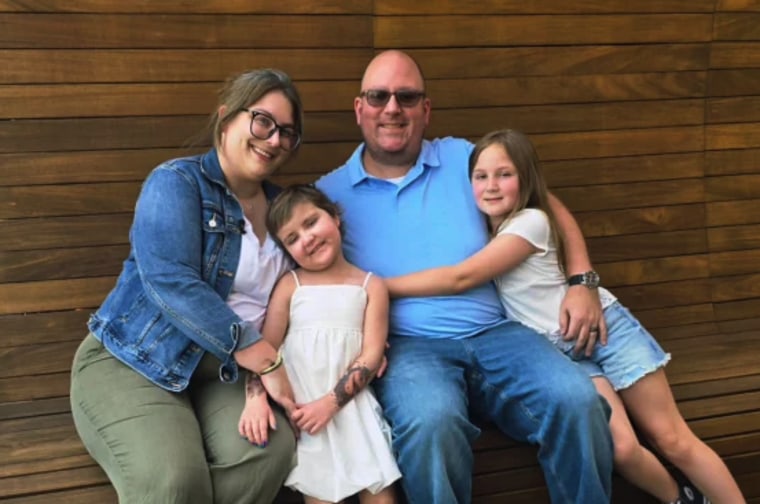
“(Es) Another long process,” says Ailinger. “They collected my daughter cells and then sent them to a laboratory,” he says. Doctors use cells to create a specific treatment for Bryn.
“When they were ready, we returned to get them back into the body,” he explains. After being subject to treatment in September, Bryn spent a month in the hospital with side effects. In October he received a stem cell transplant.
(The FDA approves a new version of the abortive pill)
“His main treatments had ended practically,” says Ailinger, “we had other rooms in the hospital due to fevers and there are many precautions that must be taken with a transplanted patient for a whole year later.”

During the first 100 days after the transplant, Bryn remained isolated at home. “He could not receive visits or go anywhere,” because his immune system needed to strengthen himself and was more susceptible to infections. Despite staying in the hospital on multiple occasions and having to stay away from their friends, family and other children, Bryn was happy.
“Being in the hospital is a huge change, but she remained very optimistic, more than us, throughout the process,” he says.
Therapy for acute lymphoblastic leukemia
Acute lymphoblastic leukemia is “the most common type of children’s leukemia,” explains Meghan Higman, a pediatric oncologist at Roswell Park Comprehensive Cancer Center in Buffalo and one of Bryn’s doctors.
“Pediatric cancers are relatively rare,” he says, “but this is one of the most common types.” The symptoms are:
- Frequent and unusual bruises.
- Pale skin.
- Leg pain.
- Fever that does not disappear.
- Unusual bleeding.
- Fatigue.
When genetic tests revealed that Bryn had a high -risk mutation that did not respond to standard treatment, Higman and his team analyzed several treatment protocols to ensure that the girl obtained the best results.
They decided on the therapy Car with T cells. “Now we can say: ‘Hey, we have an idea of how to treat it,” says Higman.
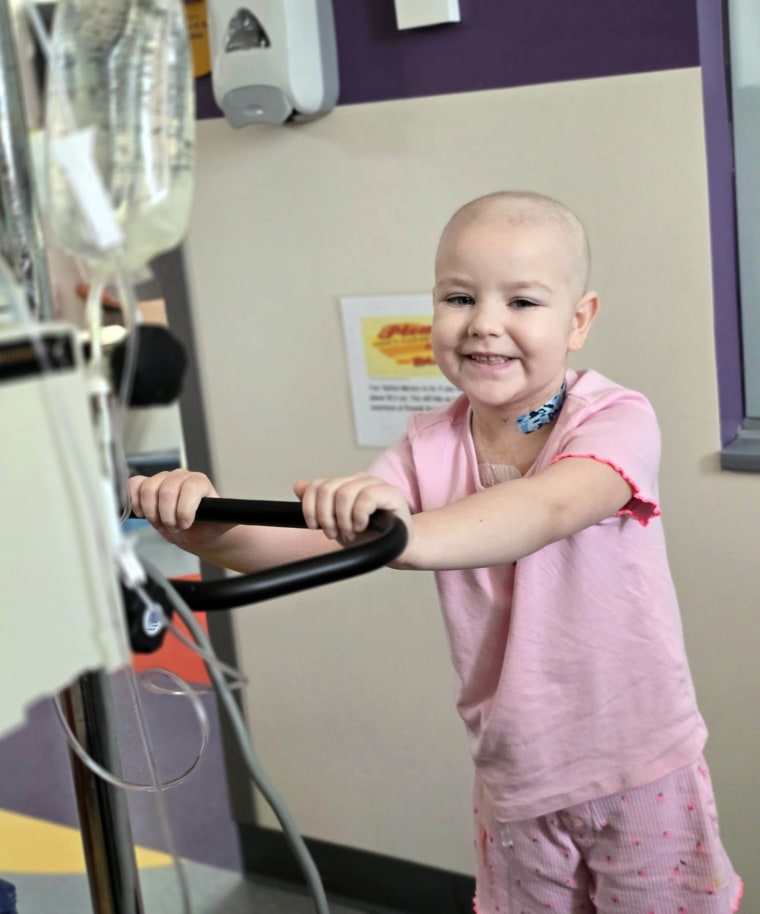
For this therapy doctors extract T cells, which are white blood cells that help fight diseases, and send them to a laboratory where researchers modify them to reinforce the immune system. “We extract their T lymphocytes, we manipulate them and then we will return them with the order to look for cancer,” Higman explains.
“They constantly seek those leukemic cells without damaging the body of the person, as chemotherapy would do,” he says.
(A doctor indicates which is the best position to sleep and have a better break)
The therapy also has less side effects. “It works very well, especially in the pediatric population,” he says.
Bryn received chemotherapy to prepare his immune system for cells and then an infusion of T cells while he was in the hospital. “We wanted to be cautious with her to make sure she didn’t have an adverse reaction,” he says.
To ensure that Bryn enters into a “deep” remission, doctors also made a bone marrow or stem cell transplant, which gave him “a new immune system.”
“We are cautiously optimistic, since it has evolved well and has a lot of strength,” says Higman, “we watch it very closely.”
“A very strong girl”
During his hospital stay, Bryn was interested in temporary tattoos. When he lost his hair, he placed them in his head and began to distribute them among doctors, nurses and other patients. Even today it still distributes temporary tattoo packages when it is at the Oishei Children’s Hospital.
“He distributed a lot to other children,” says Ailinger, “when he goes to the Rosewell Park clinic, he continues to carry tattoos and gives them to others.”
In addition to flower or heart tattoos, he likes dragons and wolves. “It is very interesting to see what occurs in his arms every week,” says his father, impressed by the strength of his daughter. “He never complained about anything,” he says, but “nobody should go through what she has happened, much less a little girl.”
Bryn, who is now 6 years old, is in the first degree – he was not preschool – and loves school. The family wanted to share their history so that others with children with the same mutation know that they are not alone. In addition, they hope to raise awareness about the therapy she received.
