
South America has won 10 of the 22 editions of the World Cup since its dispute began in 1930. For the 2026 World Cup in Canada, the United States and Mexico, Argentina and Brazil appear as favorites alongside Spain, France, Germany, England and Portugal.
Because for the first time 48 teams will play in the Cup with a total of 104 games, not only the quality of the participants but their resistance must be considered. This fact in a way evens out the possibilities of all the teams.
Fire test
It will not be easy for the five-time Auriverde champion or the three-time Albiceleste champion, nor for the two-time champion Uruguay to add a new award to its rich history.
Brazil bets on the Italian Carlo Ancelotti to win the Cup for the first time with a foreign coach.
The biggest problem for the canarinha is that now it does not have different players who in the past allowed it not only to win five world titles but also to put its stamp with the beautiful game.
Neymar, the last great figure of Brazilian football, was injured with his new club Santos de Sao Paulo. Only Vinicius Junior and Raphinha remain in the gold-green squad as their only stars who can change the course of a match.
The big question is whether Ancelotti will be able to assemble his few stars and his many workers into a team that is capable of fighting as equals against the best teams in the Cup.
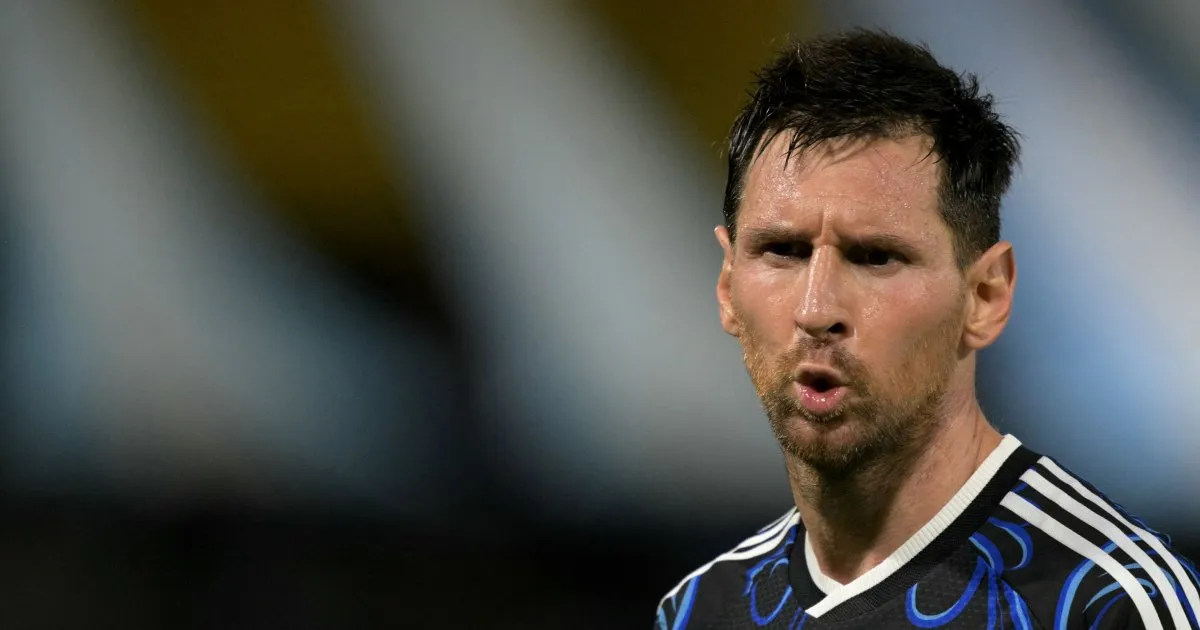
For his part, Lionel Scaloni played it safe and summoned most of the heroes who won the crown in the last edition. That gives the albiceleste an advantage: it maintains experience and quality. It is true that his guide Lionel Messi will turn 39 during the Cup and is no longer the same as he was four seasons ago, but if the coach uses him wisely he can be his ace up his sleeve.
Of the South American champions, Uruguay has the longest drought, having not won the Cup for 76 years. Now under the command of Argentine Marcelo Bielsa it faces an enormous challenge.
Cards up your sleeve
The other three South American teams qualified, Ecuador, Colombia and Paraguay, can become great cheerleaders for the championship.
Ecuador finished in second place in the World Cup qualifiers with one of the best defenses in the region. Two of their defenders played in the Champions League final. Willian Pacho with champion PSG and Piero Hincapié with Arsenal.
If Ecuador finds more effectiveness in attack, it can go very far in the World Cup.
Colombia, for its part, has a different player in Luis Díaz, but the coffee team needs good collective functioning and for James Rodríguez to respond in his last World Cup when he is 34 years old. For now, the ace announced his retirement from football after the Cup.
Finally, Paraguay is a tough rival and can complicate even the most painted.
South America could have had seven teams in the World Cup, but Bolivia lost to Iraq in the last qualifying match and was left out.
The groups of the South American teams
Group C
Brazil
Morocco
Haiti
Scotland
Group D
USA
Türkiye
Paraguay
Australia
Group E
Germany
Curacao
Ivory Coast
Ecuador
Group H
Spain
Cape Verde
Saudi Arabia
Uruguay
Group J
Argentina
Algeria
Austria
Jordan
Group K
Portugal
DR Congo
Uzbekistan
Colombia
