
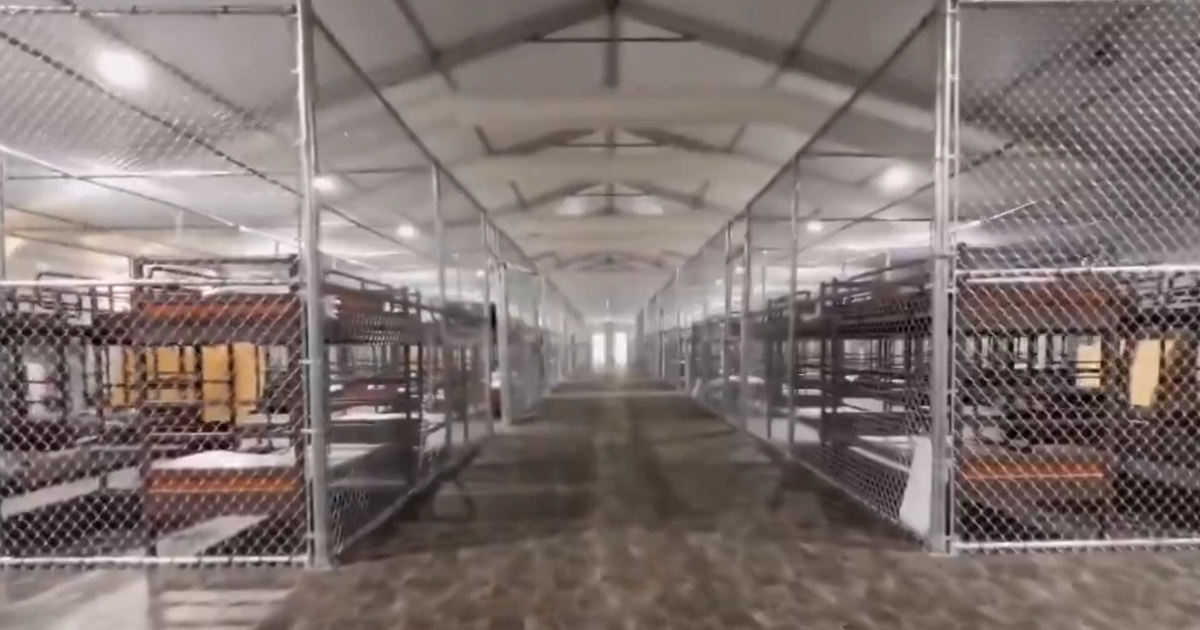
Miami– A Federal Court of Appeals authorized on Thursday the continuity of the operations in the controversial detention center “Aligator Alcatraz” in the Everglades of Florida, which thus reversed a prior court order that required the closure of the facilities.
The decision of the eleven circuit suspends the mandate of a federal judge who had determined violations of the National Environmental Policy Law (NEPA), which allows the state and federal administration to keep the center active while the final appeal is resolved.
Oncen Circuit verdict
Judge Elizabeth Branch and Barbara Lagoa, together with a third magistrate of the eleven circuit, concluded in their verdict that “the balance of damages and our consideration of the public interest favor a suspension of the preliminary court order.”
Judicial determination not only slows the closing order, but also prevents Judge Kathleen Williams to advance with the case until completing the appeal process.
The verdict represents a triumph for the administration of Ron Desantis and the Department of National Security, who urgently appealed the decision of the lower court that ordered the dismantling of the center within 60 days.
Reactions and confirmation of the mission
Florida’s attorney general James Uthmeier held the decision on social networks as a “victory against an activist judge”, and said: “The eleven circuit not only blocked the order of the judge (Kathleen) Williams to close Aligator Alcatraz, but also prevented him from proceeding with the case until the appeal is completed.”
To which he added: “A victory for Florida and the agenda of President Trump!”
For his part, Governor Ron Desantis confirmed in X: “The mission continues in Aligator Alcatraz. The media were wrong. The leftist judge has been revoked. Florida will continue to lead.”
Origin of legal controversy
The detention center faced a preliminary order of federal judge Kathleen Williams on August 21, who ruled that both Florida and the federal government had allegedly breached the National Environmental Policy Law (NEPA) by not carrying out an environmental impact assessment before building the facilities in the wetlands of the Everglades.
Williams’s original decision ordered to suspend the arrival of new detainees, cease all additional construction and dismantle temporary fences, lights and generators within a two -month peremptory period.
Operational and financial implications
The decision of the Court of Appeals allows Florida to resume the reception of detainees in the facilities, according to judicial documents that indicate that the State planned to “intensify the operations in the installation if a suspension was issued.”
The center, with an approximate cost of $ 245 million in its construction and annual operating expenses estimated at $ 450 million, had seen significantly reduce its detainees after the initial order.
Dissident voices and future of litigation
The environmental groups, which had celebrated the initial decision as a “historical victory for the Everglades,” now face a significant setback. Eve Samples, Executive Director of Friends of the Everglades, had previously declared that the court order “sends a clear message that environmental laws must be respected by leaders at the highest levels of our government.”
The Miccosukee tribe, which joined the lawsuit under the argument that the center was built in Tribal Sacred Land, expressed its determination to continue the struggle for their rights and the protection of Everglades.
After the ruling on Thursday, the legal battle continues, while the environmental groups and the Miccosukee tribe evaluate their next steps in this controversy that has divided opinions on immigration, environmental rights and the federal jurisdiction versus state.
