
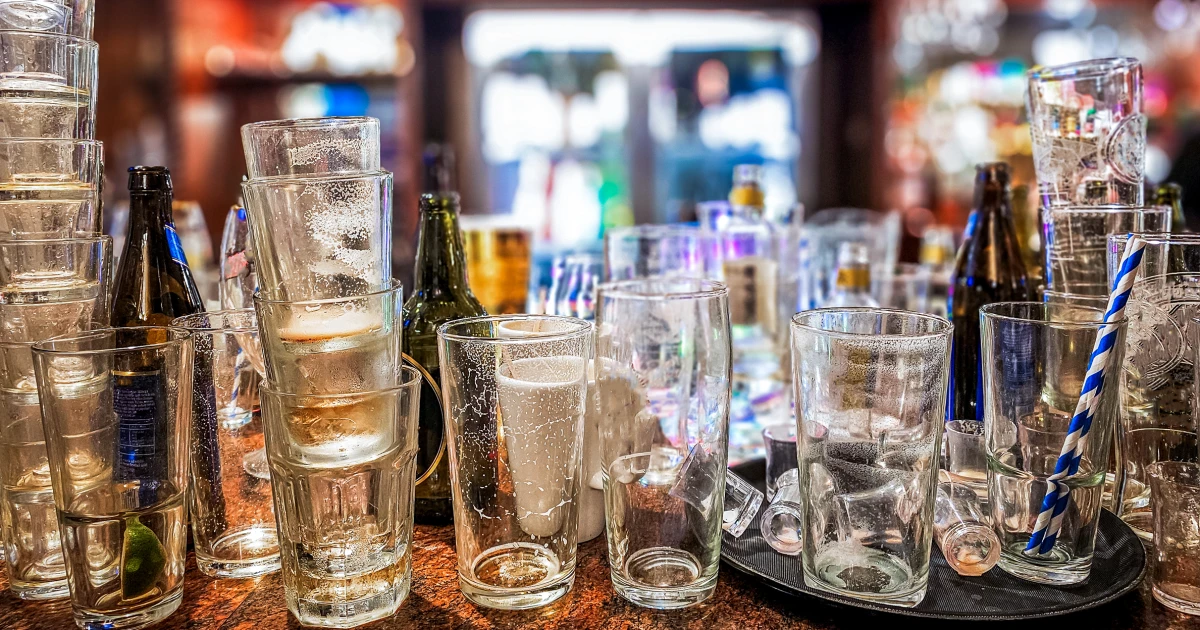
Americans are drinking less for the first time since the start of the pandemic, but alcohol consumption is still higher than before 2020, according to a study published this Monday in the journal Annals of Internal Medicine.
The decline in alcohol consumption rates, while modest — about 1% — is good news after heavy drinking spiked sharply during the pandemic, said the study’s lead author, Dr. Brian P. Lee, a liver transplant physician at Keck Medicine of USC in Los Angeles.
However, Lee noted, “these trends have not been uniform across groups.”
While both heavy and casual drinking decreased among Generation Z and millennials from 2022 to 2024, alcohol consumption increased among people ages 50 to 64, according to the study, which used data from the National Health Interview Survey conducted by the Centers for Disease Control and Prevention (CDC). Lee and his team analyzed the survey results for four years: 2018, 2020, 2022 and 2024.
In general, men reported a greater decrease in alcohol consumption than women between 2022 and 2024 – 2.4% compared to 1.1% – but excessive alcohol consumption fell by 9% among women, compared to 7.7% among men. The survey defined binge drinking as five or more drinks a day or 15 or more a week for men, and four drinks a day or eight a week for women.
(Many women suffer from eating disorders. A doctor explains how to treat them)
Generation Z adults reported the largest decrease in alcohol consumption between 2022 and 2024, more than 5%, while millennials reported the largest decrease in binge drinking during the same period, with a drop of 17%. However, for both age groups, rates of alcohol consumption or binge drinking were still slightly higher than in 2018.
Lee noted that the most concerning finding was that binge drinking among adults ages 50 to 64 has risen steadily since 2018. About 2% more people in this age group reported binge drinking in 2024 compared to 2022, and that number has increased by more than a third since 2018.
“This 30% increase means that there are around a million people who they drink excessively only in that age group”Lee commented.
(Florida Department of Health confirms first dengue death in almost a century)
Alcohol consumption increases the risk of high blood pressure, stroke, and digestive problems, and alcohol-related liver disease is currently the leading cause of liver transplants in the United States. Annual alcohol-related cancer deaths have doubled over the past three decades.
The older you are, the greater your vulnerability to the harms that alcohol can cause, Lee said.
“The average age at which cirrhosis develops is around 50 years old, and we know that someone with a 50-year-old liver is more likely to develop liver scarring from the same amount of alcohol than someone with a 20-year-old liver,” he said. “The risk associated with alcohol is not the same in all age groups, and this middle-aged group is precisely the one that worries us.”
People in their 50s and 60s who currently binge drink have probably also been drinking for years, which further increases your risk of complications alcohol-related health problems, said Dr. Michael Siegel, a professor of public health and community medicine at Tufts University School of Medicine in Boston.
(The first mRNA-based flu vaccine is now available and these are the people who can receive it)
“We’re talking about substantial alcohol consumption that will likely have health effects at that level, and it’s concerning to see that those trends haven’t really diminished over time,” he said.
Alcohol consumption has been rising steadily since about 2000, after a decline in the late 1980s and 1990s, said Priscilla Martínez-Matyszczyk, deputy scientific director of the Alcohol Research Group, a nonprofit organization. Consumption peaked in 2020, when binge drinking among Americans increased by 20% and overall alcohol consumption rose 4% compared to 2018.
“We have seen this before: a sudden increase in alcohol consumption after traumatic events that affect the entire population,” Martínez-Matyszczyk stated, noting a documented increase in alcohol consumption after the 9/11 terrorist attacks. “You see a peak and then a slight decline, but often those trends return to the trajectory they were originally on, and There was already an upward trend before the pandemic.”
