
NBC News
People who discover that they have autism after 6 years – the current average age at the time of diagnosis – are usually described as bearers in a “milder” way of autism than people diagnosed in early childhood.
Now a new study questions that assumption.
A genetic analysis reveals that people with autistic spectrum disorder diagnosed in late childhood or adolescence actually have “a different form of autism”, not a less serious one, according to Varun Warrier, principal author of a study published Wednesday in Nature.
He “Genetic profile” Of the people with autism diagnosed lately it looks more like depression, attention deficit disorder and hyperactivity and post -traumatic stress disorder than that of early child autism, according to Warrier, researcher on the autism at the University of Cambridge.
The study illustrates that autism is not a single condition with a unique cause, but rather a generic term for a set of conditions with similar, but not identical characteristics, according to Geraldine Dawson, founding director of the Dike Center for autism and brain development, who was not part of the report.
Alycia foundy, scientific director of the Scientific Foundation for Autism, who also did not participate in the study, said: “This article reinforces once again how complex the autism is and the important role that genetics plays, not only in the diagnosis, but also in the characteristics of said diagnosis. There is no single cause of autism, despite the statements against Tylenol.”
The authors of the new study analyzed social, emotional and long -term behavior in children in the United Kingdom and Australia, as well as genetic data of more than 45,000 autistic people from Europe and the United States.
Different genetic profiles
The researchers did not focus on a single gene or a few genes. Instead, they analyzed sets of thousands of genetic variants that, together, influence specific features.
While a genetic profile can cause difficulties in social interactions during early childhood or preschool stage, another set of genes can cause an increase in these problems during late childhood and beyond, according to Warrier.
(The Secretary of Health launches a record of people with autism and there is already controversy)
The new study suggests that some autistic children “develop differently and may not receive an early diagnosis because their characteristics have not yet clearly manifested,” Warrier said. “It is important to understand what these characteristics are and ensure that we evaluate autistic people throughout their lives.”
Most autism diagnoses are made before the ages of 18, with 22% of them before the age of 4, 20% between the ages of 5 and 8, 15% between 9 and 12 years and 16% between the ages of 13 and 17.

Adult diagnoses are more common in women. The 25 of the women with autism were diagnosed at age 19 or more last year, compared to 12% of men, according to Epic Research.
In the study, adolescents diagnosed with autism had more difficulty to face emotional problems and relationships with their classmates than other children.
That was Adeline Lacroix’s fight, Toronto.
Lacroix, who is now 42 years old and grew up in France, had trouble making friends when I was a child. “I wondered why at school we learned things that for me were quite easy, such as mathematics, but we didn’t learn to make friends, What was much more difficult for me“He said.
Lacroix often did not understand when other people were ironic or made jokes. Although I got good grades, “I felt very silly because I didn’t understand many things.”
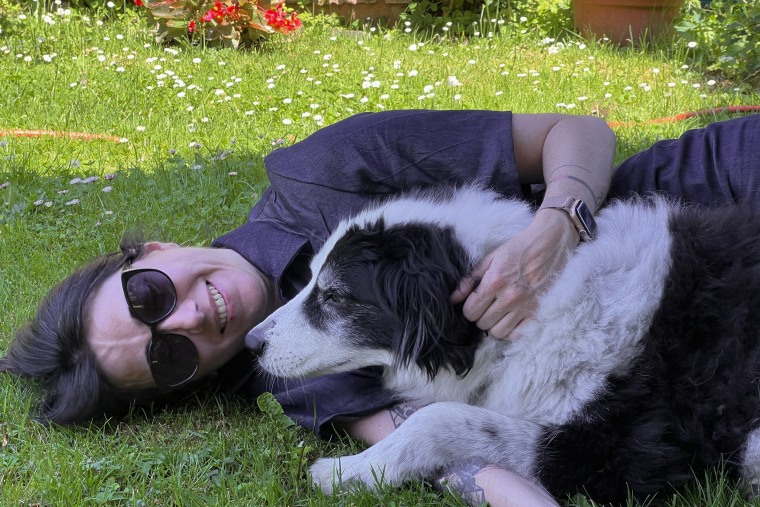
Her frustration led her to depression and to think about death. “I didn’t really want to die, but at the same time I was very tired,” he confessed.
His life changed when autism was diagnosed at 30. Suddenly, he realized why he was so difficult to understand the conversations.
(Risk under therapy: what is behind the job that pays up to $ 35/h to serve children with autism)
He changed his career, left his former job as a teacher to obtain a doctorate in psychology and neuroscience. Lacroix now has a couple that supports her and a job she loves at the Toronto addiction and mental health center, where she investigates women and girls with autism.
“I’m very happy with my life”he said.
Although many young people with autism remain relatively late in childhood due to the lack of detection and resources tests in their communities, greater awareness and broader access to the tests have contributed to reducing the age at which autism is diagnosed in children, which allows them to receive fundamental early support.
The greatest acceptance of neurodiversity is also motivating an increasing number of adolescents and adults to request autism tests, which may imply difficulties in communication and social interactions, as well as restricted or repetitive behaviors or interests. Between 2011 and 2022, autism diagnoses among adults aged 26 to 34 increased 450 %, the greatest relative increase among all age groups.

In Nature’s study, the first to relate a genetic profile with the time of autism diagnosis, newly diagnosed adolescents had a higher risk of depression.
The increase in depression could be due to both a genetic predisposition and the lack of support suffered by young people whose special educational needs and social difficulties are not addressed for years, Warrier said.
“Children with non -diagnosed autism may not receive the support they need,” he said. “They can be victims of harassment, exclusion and social vulnerability. Only when they have difficulties, their caregivers seek professional help and receive a diagnosis of autism.”
In future investigations, he said, expect to study how the social environment of a personwhether favorable or hostile, it affects the risk of depression in people diagnosed later in life. Although school and community services usually focus on young people, Warrier said it is important to support people with autism of all ages.
The emotional cost of trying to integrate
Sam Brandsen, who grew up in a small town in Iowa where few people were familiar with autism, did not receive that fundamental support.
In sixth grade, he was harassed by being different. The children mocked him for balance and backwards, a behavior that he found relaxing. The children pushed him against the boxes and tied the shoes of the desk to fall.
With willpower, he managed to stay still on his desk. But the mental and emotional effort he made, an invoice, Brandsen said, and caused panic attacks between classes.

Brandsen, now 31, declared that he was not diagnosed with him autism Until four years agoafter his 18 -month -old son was diagnosed with the same disease.
Like Lacroix, Brandsen confessed that he felt relieved by better understanding himself. Instead of waste energy to act like everyone else, he said: “I prefer to use that energy to be a friendlier.”
Brandsen commented that he can understand why people with autism who are later diagnosed in life may have a higher risk of mental disorders.
“You know you are different, but you really do not have a frame to understand what this difference consists of,” said Brandsen, part -time part -time researcher at the University of Alberta, in Canada, and a member of the Autistic Advisors Council of the Autism Society. “You try to understand the rules that seem to make sense for everyone else, and you don’t know why they don’t fit you.”
Although Brandsen said he understands why scientists want to study the causes of autism, he said they hope they spend more time investigating ways to help people with autism lead a full and independent life.

His son has several disabilities, Brandsen said, but the child too experience enormous joy.
“There are so many ways in which he has changed my life deeply for the better, although sometimes it has been a slightly more difficult path,” he said. “But you can also feel a lot of joy just by seeing a train.”
If you or someone you know is in crisis, call or send a text message to 988, or visit 988lifeline.orgto communicate with the help line for suicide and crises. You can also call the network, previously known as the National Suicide Prevention Line, 800-273-8255, or visit Speakingofsuicide.com/resources.
