
Daniela Vicentini had always wanted to have a child, and she describes herself as “the cryiest person in the world,” so she was surprised that she had not cried when she gave birth to her baby.
Shortly after, he began to suffer migraines – severe headaches accompanied by sensitivity to light – for the first time in his life. The new mother did not feel like going outdoors, as the sunlight bothered her. She also didn’t want to breastfeed or see her friends.
Vicentini’s family thought she had postpartum depression, and she was baffled, too.
I didn’t know it at the time, but the lack of emotions and other mysterious symptoms were due to a brain tumor—a shocking diagnosis for a young, healthy new mom who loves to run and exercise.
Vicentini gave birth to her first child in July 2024. Shortly after, his migraines began.
“If you’ve never had migraines, but you’ve never had a child, you assume it could be due to hormonal changes,” Vicentini, 34, who lives in Miami, Florida, told .com.
“For me, it was like I had given birth and my body was just adapting. No one would have ever imagined that it was a tumor in my brain.”
(Parents and experts are concerned about the increase in videos for children made entirely with AI)
Her tumor, a type called astrocytoma, appears randomly in most cases, said Dr. Macarena De la Fuente, chief of neuro-oncology and co-director of the Sylvester Brain Tumor Institute at Sylvester Comprehensive Cancer Center, part of the University of Miami Health System.
It was grade 4, fast growing and malignant.
“This is an aggressive brain cancer,” De la Fuente explained to .com. But it has a specific mutation that “makes the tumor behave better” and has a better prognosis compared to glioblastoma, the deadliest brain cancer, he added.
“You have something on your brain.”
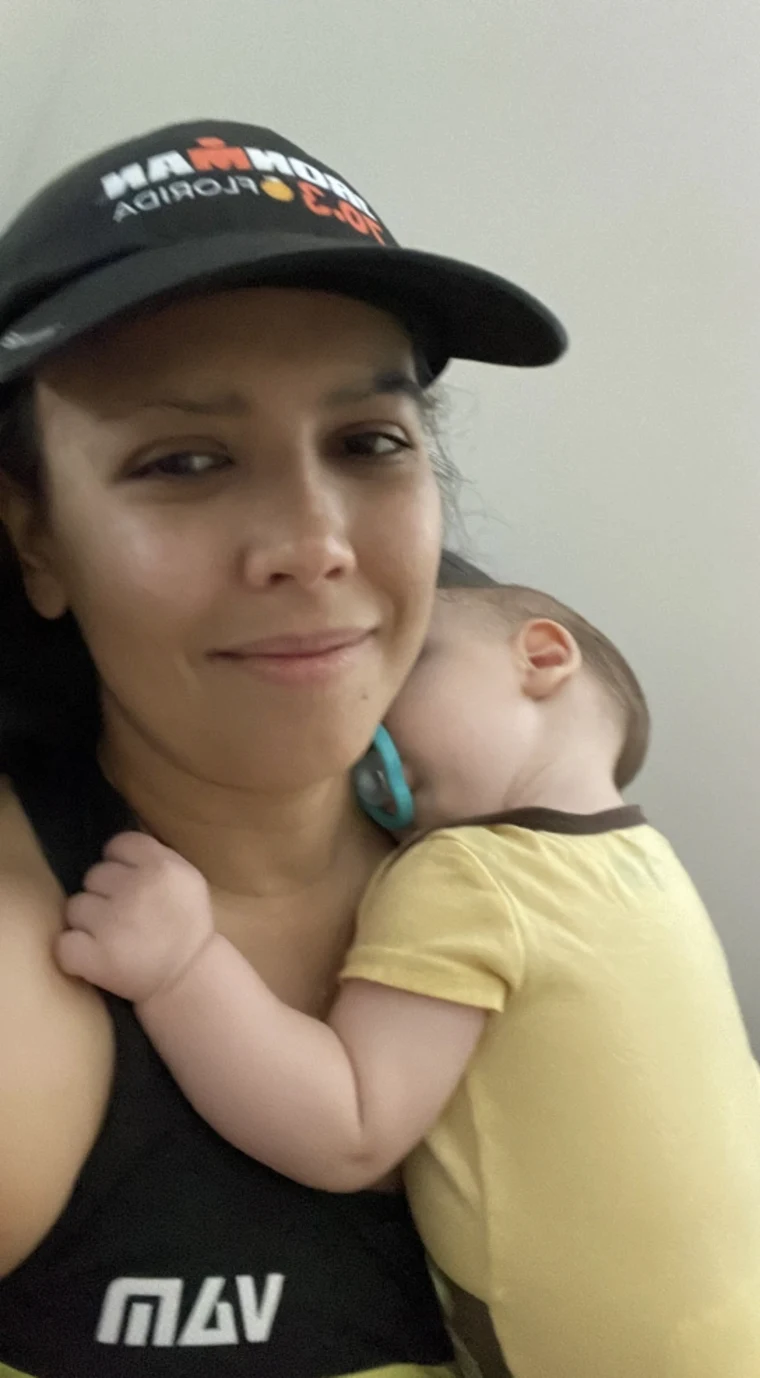
Vicentini was in tremendous shape and was healthy. She had been running marathons and triathlons since 2018. She exercised until giving birth, including a half marathon when she was four months pregnant. She practiced Pilates throughout her pregnancy.
He has never smoked and does not drink alcohol..
“I’ve always been a health-conscious person, I always ate at home,” she said.
“I went to culinary school, so I knew the ingredients well and what I should or shouldn’t eat. I had a nutritionist when I was training for very important races.”
(US doctor with Ebola is evacuated to Germany. His wife and four children remain under observation in the Congo)
The migraines started suddenly after giving birth in July 2024 and continued on and off for weeks. Then, in early September, Vicentini couldn’t keep any food down, so her husband insisted she go to the hospital.
Vicentini exercised throughout her pregnancy, including running a half marathon.
“That’s when they did a CT scan on me. And they said, ‘You have something on your brain,'” he recalled.

“(Things went from zero to 100 in a second. It was crazy,” he said.
Vicentini doesn’t remember it, but his family told him that he suddenly started giving nonsensical answers to basic questions like where he lived or what his name was.
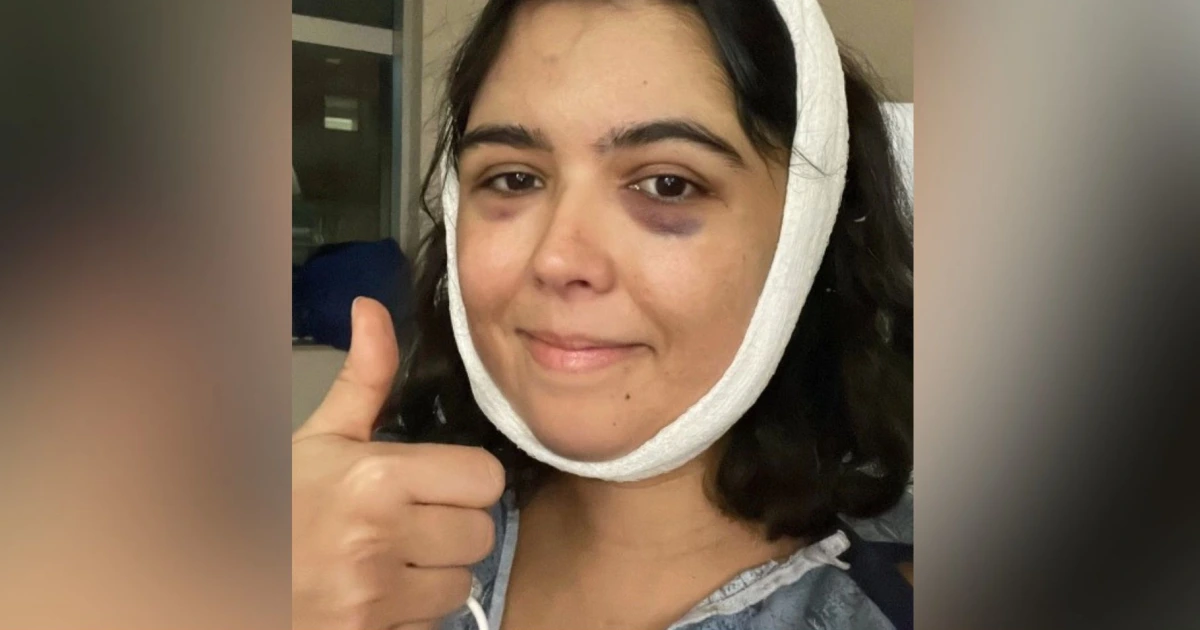
Just seven weeks after giving birth, she was rushed into emergency brain surgery to remove as much of the tumor as possible.
“I came back to life”
“The most amazing thing about the story is that as soon as I woke up from surgery, the first thing I said was, ‘No wonder I didn’t cry when my son was born.’ That was the difference in how I felt,” he recalled.
“Clearly, something was blocking those emotions. (…) I felt like I had come back to life.”
(Nevada remains the worst state in mental health care)
These symptoms are related to the location of the tumor, De la Fuente explained. Patients who have a mass pressing on the frontal region of the brain, as Vicentini did, may develop avolition, or apathy and blunted emotional responses.
“The events don’t really touch the patient’s emotions,” the neuro-oncologist noted when explaining the symptoms.
Vicentini’s treatment for his brain tumor included surgery, radiation and chemotherapy in the form of pills.
Patients develop headaches and nausea because a growing tumor increases pressure inside the skull. Vicentini’s sudden inability to answer basic questions can also occur with these types of tumors, he added.
Vicentini has a grade 4 astrocytoma, which previously would have been considered a glioblastoma, but these invasive brain tumors are now classified differently. Astrocytoma has a mutation known as the IDH mutation and offers better survival than glioblastoma, which is IDH-negative, according to the University of Texas MD Anderson Cancer Center.
Now there are medications that target this alteration, said De la Fuente.
Enjoy life
Vicentini’s surgery was a gross total resection, meaning all of the brain tumor seen on his scans was removed.
She then underwent radiotherapy and chemotherapy in the form of pills. The new mom lost clumps of hair, but had no other side effects. He is now taking a drug called Voranigo, a targeted therapy for IDH-mutated tumors.
(Expert believes it is “very difficult” for the Ebola outbreak in Africa to reach the US.)
Vicentini has never Googled his illness and does not ask doctors about his prognosis, instead focusing on living his life.
Today, he says he is doing very well: he works full time, enjoys his son, and is back to exercising daily. He just completed the Miami Corporate 5 Mile Run in April. He has scans every three months and his latest brain MRI shows he is stable.
These days, Vicentini focuses on enjoying life with his son.
“I feel like this was a warning, like, ‘Go out there, enjoy your life and don’t stress too much about the little things,’” she said. “When your life is at risk, literally nothing else matters, everything seems so silly.”
Vicentini finds it strange that no one knew about the ordeal unless she told them. He feels good and his thick hair covers the scars from brain surgery.
“She is fantastic,” said De la Fuente. “The treatment has managed to control the tumor.”
The doctor urged people to pay attention to symptoms of brain tumors, such as new headaches that don’t get better with over-the-counter pain relievers, wake you up in the middle of the night, or persist for more than a week.
