
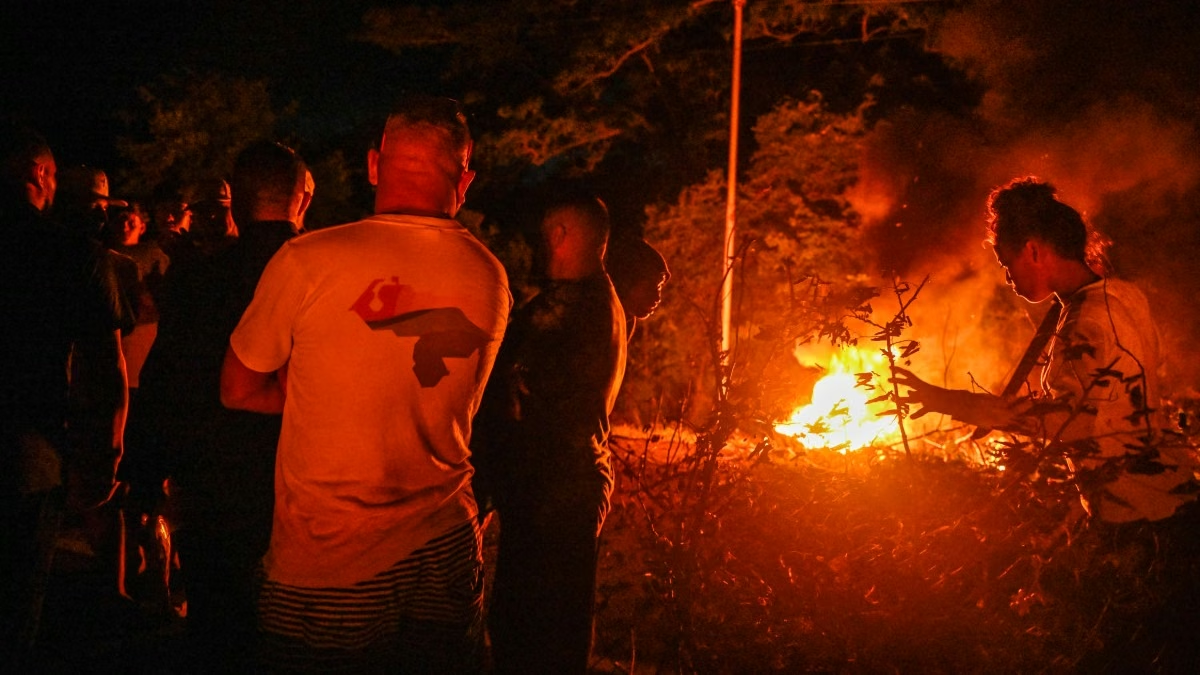
“The electrical crisis can worsen,” warns engineer José Aguilar, an international consultant on electrical issues, while in Caracas and vast regions of the country, power failures persist every day, and also protests in regions of the country.
So far in 2026, the lack of electricity, in many cases for more than 20 hours, is one of the main causes of the more than 4,000 citizen demonstrations in several states, according to records from the Venezuelan Observatory of Social Conflict.
“We want light! We want light!” is the complaint reported in any urban or rural point, while rationing without official notification increases and affects homes, schools and businesses.
Two weeks ago, Fedecámaras, an institution that brings together Venezuelan private companies, stated in a statement that power outages are “the main obstacle to economic growth and productivity.”
In the second quarter of this year, productive hours fell to almost half of the 488 working hours, it was reported.
Electrical crisis is strengthened
The decline in electrical service, which has worsened since the first major national blackout on March 7, 2019, has worsened this year.
“The electricity crisis has worsened in the first 10 months of 2026 and this has been the year of greatest rationing since 2007; this is indicative that we are very bad. And we could be worse, especially due to official opacity,” says Aguilar, who technically monitors the operation of the Venezuelan system, which was one of the most powerful in Latin America more than 30 years ago.
The electrical service has an installed capacity of between 32,000 and 35,000 megawatts (MV) but currently has a generation of about 12,000 MV, 3,000 less than the 15,000 necessary to cover national demand.
One of the main problems is in the generation. The Guri reservoir, the main hydroelectric source that together with the Caruachi and Macagua dams make up the Simón Bolívar Power Plant, and one of the largest in the world, “has a harmful downward trend and that is worrying.” And it is not because of the effect of the announced Super Child, as he clarifies.
At the end of August, a serious and violent failure left one of the powerful machines (17) of the hydroelectric plant out of operation, and that subtracted 1,200 MV from the entire Bajo Caroní generation, according to Aguilar.
The warnings that the failure could occur were ignored by the electrical authorities to the detriment of the national system itself.
Rationing increases even with a full but overstretched Guri, to which is added key reservoir machines that are out of service.
The incorporation of 1,300 MV of thermoelectric generation announced on September 29 by the authorities for the last quarter of 2026 “is insufficient.”
“That does not cover even half of the current electricity generation deficit,” he said, referring to the incorporation of new units in two plants of the thermoelectric park that has been practically paralyzed for several years and has not been able to start.
Plant Centro, one of the three largest thermoelectric plants in the country located in the state of Carabobo, would generate 600 MW; while another 500 MV would be available in Termozulia in the west of the country, according to official information.
“This resolves the dramatic situation that the population is experiencing in those states,” says Aguilar, shortly before technicians in Venezuela confirmed failures and warned of a reduced margin of MV in the event of contingencies.
Oil industry affected
The electricity crisis also affects the oil industry, since it receives 4.2% of the energy and also depends on it to feed thermoelectric generation with diesel and natural gas.
The sector’s demand is estimated between 1,200 and 1,700 MW and crude oil production shows a slight increase due to the difficulties of the electrical system that are holding back the goals of 1.3 million barrels per day for this year.
Aguilar does not see clearly the possibility that the agreements and memorandum of understanding that the state Corpoelec and international companies have signed can advance with the speed demanded by the demand.
He is aware, he says, that American companies, in particular, have complained about the lack of conditions and transparency that also hold back oil contracts.
The restoration of electrical service is one of the demands in Trump’s plan for Venezuela in parallel with oil exploitation.
Last September, OFAC issued General License No. 48D that authorizes the supply of goods, software, technology and services for electric generation, transmission and distribution infrastructure, while General License No. 49B allows the preparation of new investments in energy and oil.
“The United States government has to demand that they tell it clearly what is happening; the people of Venezuela are playing to delay this situation until the mid-year election arrives on November 3,” adds the international consultant.
Causes of the electrical crisis
Aguilar assures that the electricity crisis has not only been caused by the billion-dollar waste of resources during more than two decades of Chavismo in power, and by the almost zero maintenance of transmission and distribution equipment to bring light to Venezuelans.
Also, he emphasizes, there are figures from the Venezuelan regime and even the current head in charge Delcy Rodríguez, who as vice minister and head of several offices since 2007, during Maduro’s mandate, had direct interference in the management of the electrical system and contracts.
“She was in Guri during the 2019 blackout and I have elements to confirm it. She is the face of the blackouts and cannot evade her responsibility.”
In this context, the loans for the recovery of the electrical service have not materialized either.
According to Aguilar, what Venezuela has is “a cocktail of factors that taste bitter” and that influence “things to get worse.” And they have nothing to do with climatic phenomena.
“It is true that there may be more demand for electricity because it is very hot, but the country does not have the capable system that it should have to be able to withstand any climate effect.”
On October 14, Delcy Rodríguez announced the reform of the Electrical Service Law to allow private participation in all processes, at a Fedecámaras anniversary event, in which she also reported that she is negotiating another 44 oil agreements.
The expert maintains that while official announcements go beyond the issue of electricity “which has become politicized,” the deterioration and blackouts do not stop. And they will continue.
“In Venezuela, a lot of time has been lost since the traffic light changed from red to green on January 3 and everyone turned to Venezuela, but the days are passing with laws that are still crooked,” he points out.
“There are still many obstacles and although rationing is being worked on, the deterioration and lack of efficiency is atrocious; that is a sign that the service is going to be worse if progress cannot be made with the speed that the crisis of the Venezuelan system warrants.”
