
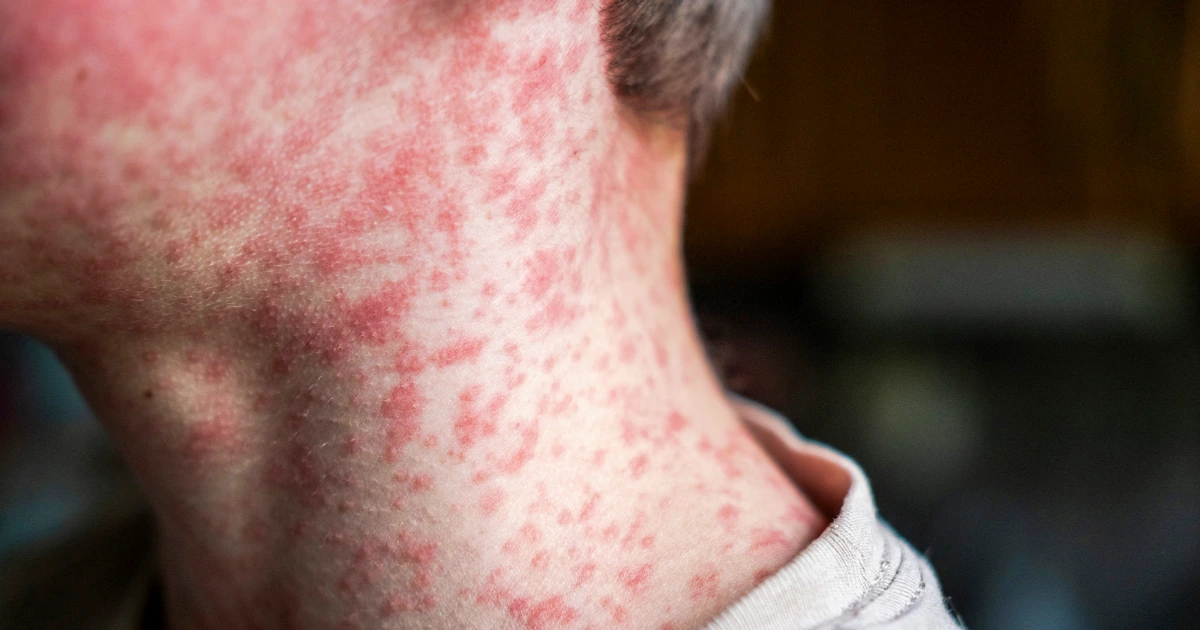
By the time many children with measles are sick enough to be hospitalized, the disease has already spread through entire families, taking by surprise parents who had no idea the virus could cause such serious complications.
“It’s a real surprise, because more often than not, almost everyone at home has also had measles, and most of them have had no complications,” said Dr. Patrick Gavigan, a pediatric infectious disease physician at Penn State Health Golisano Children’s Hospital in Hershey, Pennsylvania. Gavigan said parents often tell him, “We didn’t think this could happen.”
Doctors admit they are also learning about treating pediatric measles cases in real time, as many have never seen the disease before. The extremely contagious virus was eradicated in the United States in 2000; However, after constant waves of outbreaks over the past 20 months, that status is at risk of being revoked.
The virus is showing that it can attack multiple organs, including the intestine, liver, lungs and brain. At UPMC Children’s Hospital of Pittsburgh, some children have needed breathing tubes and medications to keep their heart rate and blood pressure within normal ranges. Others are developing secondary bacterial infections and need strong antibiotics.
(Two people die from measles in Pennsylvania outbreak)
Doctors at Golisano Children’s Hospital in Hershey contacted a retired pediatric infectious disease doctor who had previous experience with measles before it was eradicated in the United States in 2000. “The learning curve has been very steep,” Gavigan said.
The ongoing measles outbreak in Pennsylvania has become the largest in more than three decades. At least 1,222 people – a quarter of this year’s national total – have been diagnosed with measles since the surge began in April, although the actual number of cases is likely much higher than those confirmed, doctors say. Approximately a third of confirmed cases have occurred in children and adolescentsand 73 have been hospitalized, according to the state health department.
Gavigan estimates that he and his team at Golisano Children’s in Hershey have cared for 20 children with complications from measles in recent months. Measles-related work, including taking calls from emergency room doctors about possible cases, is something that happens almost daily, he said.
Gavigan said that, before the outbreak, he thought that measles manifested itself more like COVID in children – affecting the respiratory system – and that it affected children with other health problems more severely.
“I assumed we would see primarily younger children with underlying comorbidities admitted for pneumonia and viral respiratory tract infections requiring supplemental oxygen,” Gavigan said. “We’ve certainly seen that, but I’ve been very surprised by the non-pneumonia-related complications” in healthy children.
(US measles cases hit highest level in 35 years, surpass 2025 total)
The most common problem is severe dehydration and high fever. “This is usually because they have such severe diarrhea and vomiting, or they are too sick to stay hydrated,” said Dr. Marian Michaels, a pediatric infectious diseases expert at UPMC Children’s Hospital in Pittsburgh.
From being healthy to not being able to recognize your family
Two babies died. An 18-year-old man with measles died from a rare complication that caused brain swelling. At least six babies have been born infected with measles.
There is no way to predict which children will be most affected.
Most shocking is encephalitis, an inflammation of the brain that is often devastating for parents to witness, Gavigan said. “It’s very scary to see your children go from functioning normally to not being able to do even the simplest things.”
Anecdotally, Gavigan noted that older children are more likely to develop encephalitis from measles infections than younger children. Brain inflammation causes children to enter an altered mental state, becoming unusually agitated, irritable and sometimes unable to hold a conversation or even recognize their family members. Muscle weakness may also occur.
“The cases we’ve seen are mostly children who are otherwise healthy and go from walking and talking one day to having significant neurological dysfunction the next,” Gavigan explained. “The recovery has been longer and I would say incomplete, meaning they are not back to normal, at least by the time they leave the hospital.”
There is no antiviral treatment or any other specific treatment for measles. The best doctors can do is treat symptoms – extra oxygen, increase hydration – and give antibiotics if secondary bacterial infections occur. Gavigan noted that they are also administering vitamin A in cases of severe pneumonia, as some studies from other countries have suggested it could reduce deaths from this disease.
The Pennsylvania outbreak is primarily affecting Amish families in Lancaster County, a community that has historically had low vaccination rates. For children hospitalized with measles – often from large, close-knit families, with many brothers and sisters, and without much experience in the modern healthcare system – the experience can be particularly distressing.
Because measles is so contagious, infected children must be isolated in hospital rooms so they do not expose other vulnerable patients. Every time a doctor or nurse enters the room, they wear full protective gear, including gowns, N95 masks, and protective goggles or hoods.
(An expert explains why October is a key month to get the flu vaccine)
“Imagine a 2- or 5-year-old child confined to a small room, unable to walk, go to the playroom or see their friends, and with access only to a limited number of family members,” Michaels stressed. “That can be very scary for a small child.”
All of the hospitalized children were unvaccinated, Gavigan said.
Two doses of the measles-mumps-rubella vaccine are recommended, administered at approximately ages 1 and 5. Together, these doses offer 97% protection against measles, usually for life.
During measles outbreaks, an additional dose of the triple viral vaccine (MMR) to babies as young as 6 months old.
While most children recover from measles, “even 1 in 100 needing to be hospitalized is too many,” Michaels stated. “And 1 in 1,000 dying is an inexcusable tragedy in a society that has been measles-free for years thanks to people getting vaccinated.”
