
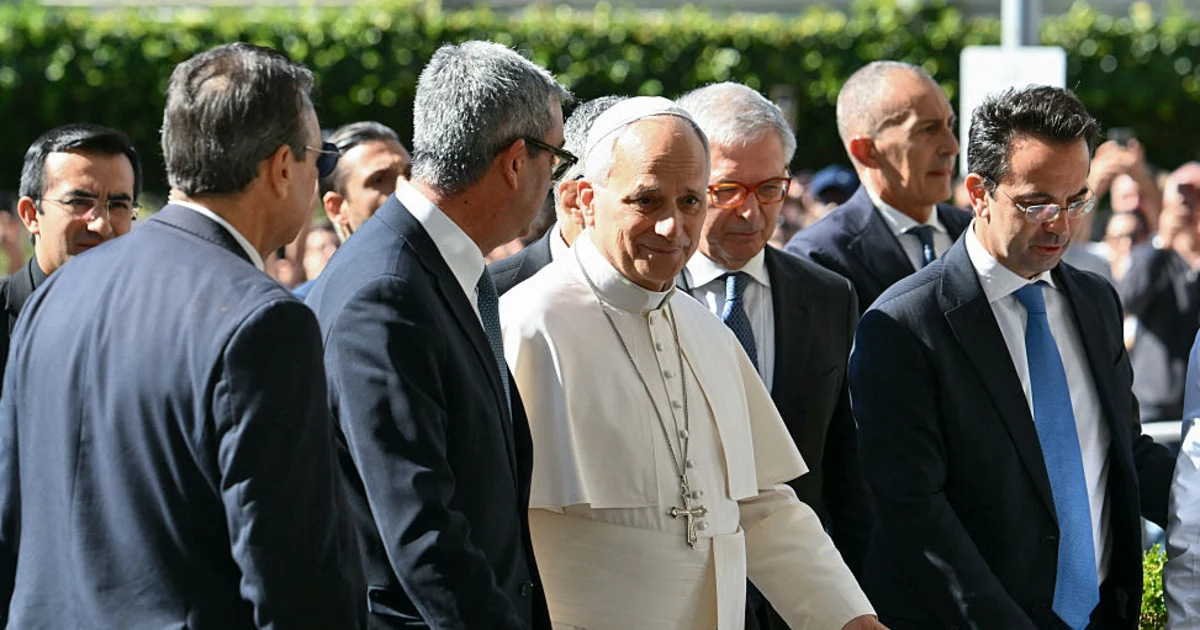
Pope Leo XIV was diagnosed with the most common type of lung cancer seen in people who have never smoked. The Vatican reported this Tuesday that León suffers from adenocarcinoma and that part of his right lung was removed during surgery. According to doctors, it is a treatable type of cancer.
The intervention was scheduled after a “very early stage” nodule was detected in his lung during a routine medical checkup, León said on Sunday.
Here’s what you should know about this cancer.
What is adenocarcinoma?
There are two main types of lung cancer: small cell lung cancer and non-small cell lung cancer.
Adenocarcinoma is a type of non-small cell lung cancer.
Small cell lung cancer is almost always associated with cigarette smoking, while non-small cell lung cancer is seen in both smokers and people who have never smoked. Non-small cell lung cancer accounts for about 80% of lung cancer diagnoses in the United States, according to the American Lung Association, and is growing and spreads more slowly than small cell lung cancer.
Who is at risk?
Adenocarcinoma can affect people of any age, according to Dr. Panagis Galiatsatos, a pulmonology and critical care physician at Johns Hopkins Medicine. Pope Leo is 71 years old.
“Adenocarcinomas are the main type of lung cancer in people who have never smoked, like the Pope,” Galiatsatos said. “It’s not surprising that if you’re going to get lung cancer, it’s an adenocarcinoma.”
(Kimberly Guilfoyle resigns as US ambassador to Greece after corruption allegations)
Doctors don’t have a clear explanation for why lung cancer develops in people who have never smoked, although some theories include genetics, air quality and an aging population, Galiatsatos said.
Lung cancers in people who do not smoke are usually biologically different of the lung cancers typically associated with smoking, said Dr. Jaclyn LoPiccolo, a lung cancer researcher at the Dana-Farber Cancer Institute in Boston.
How is adenocarcinoma diagnosed?
Symptoms of lung cancer, including adenocarcinoma, include persistent cough, shortness of breath, chest discomfort and, in advanced cases, coughing up blood, LoPiccolo explained.
However, early-stage lung cancer may not present any symptoms.
Some cases of adenocarcinoma are detected through lung cancer screening. Others are discovered purely by chance when patients undergo routine imaging exams, LoPiccolo said.
León underwent surgery after a nodule was detected in his lung during a routine medical checkup.
Lung cancer screening is recommended for high-risk populations, said Dr. Chi-Fu Jeffrey Yang, a thoracic surgeon at Massachusetts General Hospital in Boston. This includes people between 50 and 80 years old who have been heavy smokers for a long time and who still smoke or have recently quit smoking.
However, doctors believe more at-risk patients could be screened.
“In fact, probably half of the people with lung cancer in the United States would never have met those criteria,” Yang said.
How is adenocarcinoma treated?
Once cancer is discovered, doctors must determine how advanced it is before deciding on a treatment, Galiatsatos said.
“Staging can range from a different type of CT scan, called PET-CT,” he said. “It may also include a procedure called bronchoscopy, in which a biopsy is performed, including lymph nodes, as it is necessary to determine the stage of the disease.”
(Trump’s new spokesperson dispatches the press in less than 15 minutes and only takes questions from conservative media)
adenocarcinoma is usually treatable if detected in early stages.
“If it is detected early enough, treatment is quite simple,” Galiatsatos said.
Dr. David Jones, chief of thoracic surgery at Memorial Stone Kettering Cancer Center, said that if the Pope’s lung cancer is stage 1, he would not need any treatments other than surgery. “I would just be on active surveillance,” Jones said.
Treatment may include surgery or radiation therapy, sometimes combined with chemotherapy drugs.
After surgery, Galiatsatos explained, patients typically stay in the hospital for four to 14 days. It is common use a chest tube after surgery to help remove air trapped in the chest cavity.
“In the Pope’s case, they most likely had it removed and are now just monitoring his recovery and following up in the future with some additional scans,” he said. Galiatsatos did not participate in Leo XIV’s medical care.
More advanced treatment may be needed if the cancer has spread beyond the lungs.
“We usually treat it with medications that act throughout the body, and these may include chemotherapy, immunotherapy or targeted therapies that attack specific genetic changes that drive cancer,” LoPiccolo explained.
