
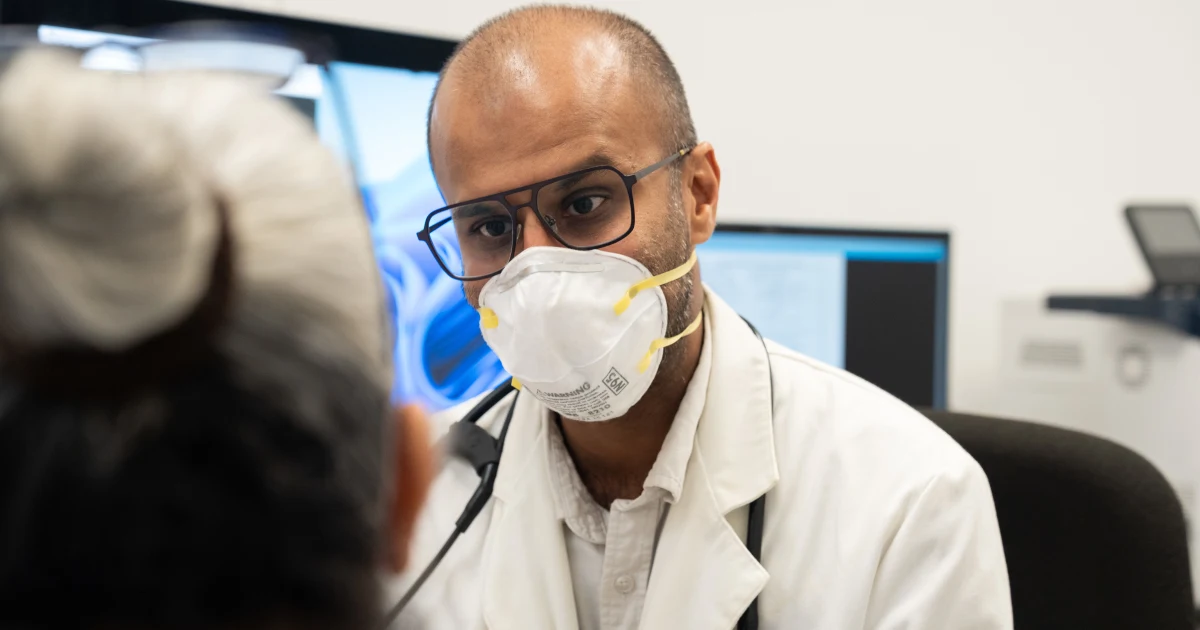
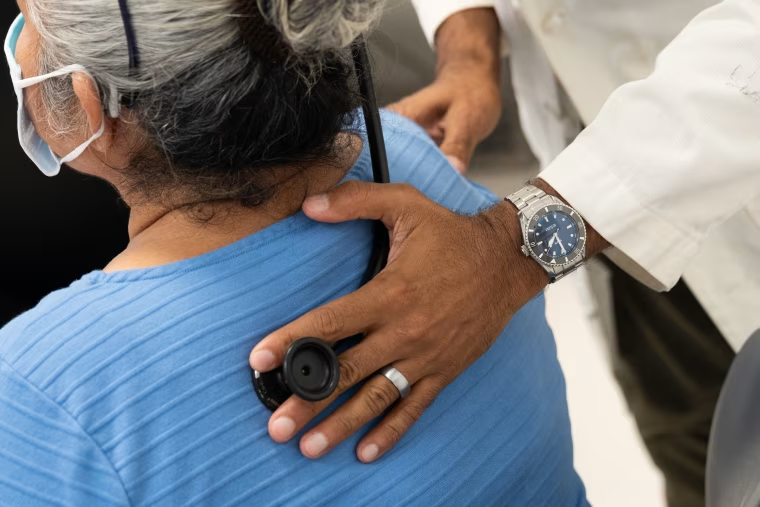
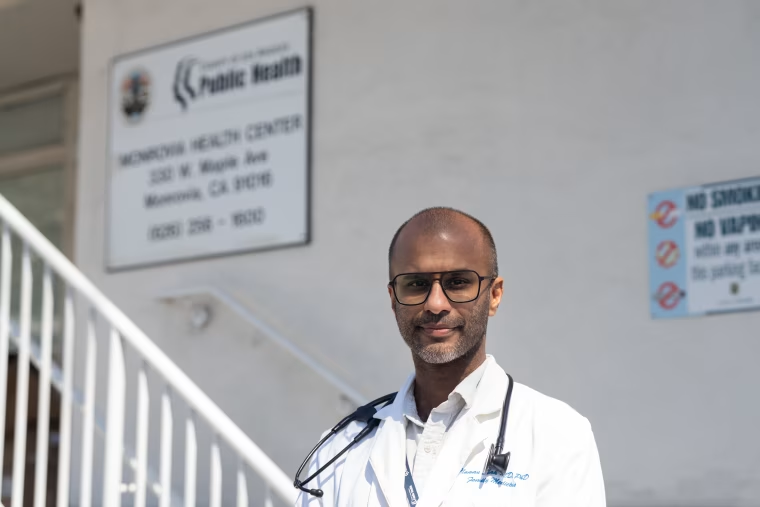
Every Tuesday, Naman Shah sees tuberculosis patients at a small public clinic in the San Fernando Valley of Los Angeles. Shah, a physician and epidemiologist with the Los Angeles County Department of Public Health, examines images of damaged lungs, listens to patients’ labored breathing and reviews their medications.
It is part of an initiative dating back to the early 20th century to control infections and prevent the spread of tuberculosis. “We like to act preemptively,” Shah said, “that is, before problems occur, not after the damage is done.”
Today, Shah and his colleagues are applying the same principle to medical debt.
A critical part of that effort is a new system that will allow all Los Angeles County hospitals to easily assess whether their patients qualify for financial assistance. The goal is to prevent low-income families from receiving medical bills that plunge them into debt.
Shah thinks this system could avoid several hundred million dollars in medical debt each year.
A vicious circle
Nationwide, an estimated 100 million adults have some form of healthcare-related debt. In Los Angeles County, the most populous in the country, public health officials estimate that about 800,000 residents have medical bills they cannot pay.
“The consequences of medical debt were overwhelming,” said Shah, who previously worked at a rural health clinic in India and, since 2023, has led a Los Angeles County initiative to address the problem.
“People end up going into credit card debt and then enter a vicious cycle of high interest rates and poverty,” he explained. “They stop filling their prescriptions. They stop going to their doctor’s appointments. And then their health gets worse.”
Hospitals often offer financial assistance to low-income patients. But it is often difficult for patients to get information about this help. The application process can be complicated, and research shows many people who qualify never apply for assistance.
“Most people go in and out of the hospital without knowing that financial assistance exists,” said Jared Walker, founder of Dollar For, a nonprofit that helps patients across the country apply for financial assistance, known as charity care or charity care.
This situation contributes to debt. It also generates costly collection efforts that, as even hospital officials themselves acknowledge, are pointlessly directed against low-income patients who will hardly be able to pay.
“They are wasting time and resources trying to collect debts that cannot be recovered,” said Adena Tessler, regional vice president of the Southern California Hospital Association.
How do they check if patients qualify?
One possible solution is a system that automatically assesses whether low-income patients qualify for financial assistance and grants them that help without needing to apply. This mechanism is known as presumptive eligibility.
Some hospitals already use these systems, which operate through computer programs that check patients’ eligibility using publicly available information, such as their credit history.
The strategy can be very effective. Shah said hospitals that have implemented presumptive eligibility systems have reported increases of up to 50% in the amount of financial assistance they provide to their patients.
Under a state law passed in 2025, all California hospitals will be required to begin screening their patients for presumptive eligibility no later than July of next year.
But these systems can be expensive and difficult for smaller hospitals to implement. Currently, only about one in five Los Angeles County hospitals uses them, according to Shah.
Public health authorities wondered if they could help more hospitals implement them.
The county, which like many local governments faces significant fiscal difficulties, could not finance the project, Shah explained. But the public health department was able to bring together representatives from the county’s health care sector and hospitals to find another solution.
“The beauty of government is that it doesn’t always have to do the work,” Shah said. “We have the ability to get people to cooperate.”
The Southern California Hospital Association, which had initially cautiously welcomed the county’s initiative, began to consider that improving financial assistance programs would also benefit hospitals, many of which were wasting money on collection efforts.
“The billing process is complicated and expensive,” said Paul Young, senior vice president of the association.
The association agreed to purchase a presumptive eligibility system and make it available to its members. This collective purchasing model, which Young compared to “the Costco model,” would reduce costs for each hospital, he explained.
At the same time, LA Care, a nonprofit health plan that manages Medicaid coverage for more than 2.5 million low-income county residents, pledged $2 million to implement the system.
The investment reflects the safety net insurer’s mission to make health care more accessible to more people, said Melanie Fontes Rainer, who leads strategic planning for LA Care.
“It’s going to make Los Angeles County a better place,” he said.
Get it going
Getting the new system up and running by January, as participating organizations hope, presents several challenges.
Hospital representatives are analyzing how the system will be financed in the long term. It’s also unclear how many of the county’s 88 acute care hospitals will end up using it, even if it proves cheaper and easier to implement.
Participants are also working to improve the data the system uses to evaluate patients. One of the objectives is to connect it with the tax records of the state of California. This would allow hospitals to access more accurate information about patient income than current systems, which typically rely on estimates, provide.
Walker, Dollar For’s patient advocate, said she is encouraged by the county’s efforts.
“I am optimistic about our ability to create a better hospital financial assistance system,” he said. “And the fact that Los Angeles County hospitals are willing to innovate and find creative solutions to achieve this is very encouraging.”
For his part, Shah said county public health officials recognize that improving patient screening systems at hospitals will not alone eliminate medical debt.
But he said the public health department couldn’t ignore a problem that affects more county residents than asthma or tobacco use.
“Prevention is our specialty,” he said.
This article is part of “Hidden Help“, a series of investigations by Tradeoffs and about how hospitals can protect their patients from the life-changing consequences of medical debtis life.
