
Raúl Rivas González – Professor of Microbiology. Member of the Spanish Society of Microbiology, University of Salamanca – The Conversation
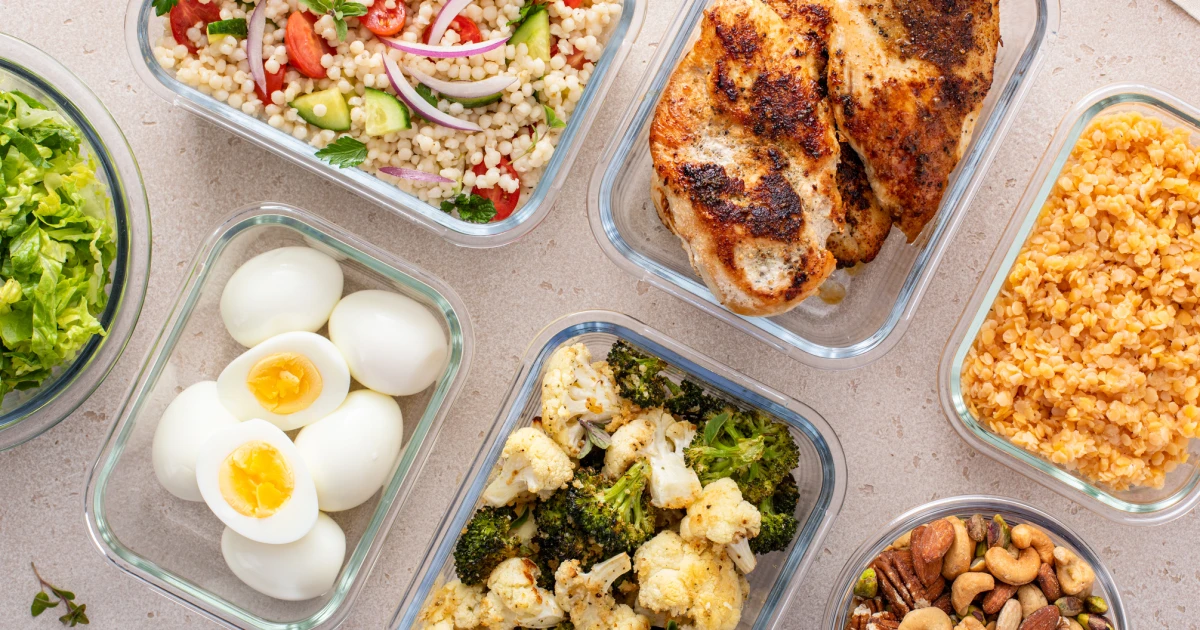
Maintaining a healthy diet is a challenge for modern society, among other things because lack of time usually pushes us to turn to ultra-processed foods. A growing alternative is to practice what is known as batch cooking either meal prepthat is, cooking in batch, during a single session, what we will consume throughout the entire week.
Although this practice has been popularized in the last decade, as an urban trend driven by the acceleration of the pace of life, the search for temporal efficiency and the management of the family budget, it has its historical roots in traditional mass conservation techniques and in the logistics of food rations. meal prep industrial of the 20th century. This referred to the standardization, chain production and packaging of individual portions of food, designed to be stored, transported and consumed quickly.
The model was born from military logistics during World War II, a period in which feeding millions of soldiers required transforming traditional cuisine into a science of quantitative distribution and including the famous field rations. With them, armies managed to offer menus calculated to the millimeter in terms of calories, fats and proteins, sealed in waterproof containers or cans that did not require refrigeration.
This development drove crucial technical advances in the food industry, including vacuum sealing, rapid freezing, freeze-drying and line assembly. Advances that are now applied to factory kitchens, hospitals and school cafeterias.
Yes, you can cool food in the refrigerator.
Although it is true that the batch cooking can save time and money, this practice of batch cooking for the entire week poses serious food safety challenges when the various microbiological variables are not rigorously controlled. The main risk factor has to do with the prolonged permanence of food within the thermal danger zone, located between 5 °C and 60 °C. This range favors the germination of spores and the accelerated proliferation of bacteria that survive the initial thermal processing.
When cooking large volumes, the endospores of bacteria such as Bacillus cereuscommon in rice and pasta, can survive initial cooking and germinate during slow cooling to room temperature, giving rise to new bacteria that release heat-resistant toxins. These toxins are not destroyed by subsequent reheating and can cause serious health problems.
How do we avoid it? Choosing appropriate packaging. The protocols of official organizations such as the European Food Safety Authority (EFSA) and the American Food and Drug Administration (FDA), advise fragmenting stews. in shallow containers that accelerate heat transfer between the outside and the food. This guarantees cooling that drops from 60 °C to less than 10 °C in less than two hours.
The temperature of a kitchen is between 20 °C and 25 °C, an insufficient range for the food to drop below 10 °C on its own, which makes it necessary to transfer it to the refrigerator or use an ice water bath. The idea that we should never store hot food in the refrigerator comes from the risk of introducing large pots of hot food.whose thermal mass raises the internal temperature of the refrigerator and breaks the cold chain of the rest of the food.
However, hot food can be placed in the refrigerator if we distribute the preparation in shallow containers, because it reduces the heat load to a level that the appliance safely manages. To achieve rapid cooling, it is advisable to rest the food first in these flat containers for a maximum of 30 minutes on the counter to release the densest steam, or rest it on a tray with ice if we are in a hurry. As soon as visible condensation subsides, the container should be placed in the refrigerator to complete the descent from 60°C to less than 10°C in less than two hours.
Inside the refrigerator, it is essential to leave space between containers to allow free circulation of cold, in addition to keeping the lid ajar during the process to let residual heat escape without exposing the food to contaminants, closing it completely once cold.
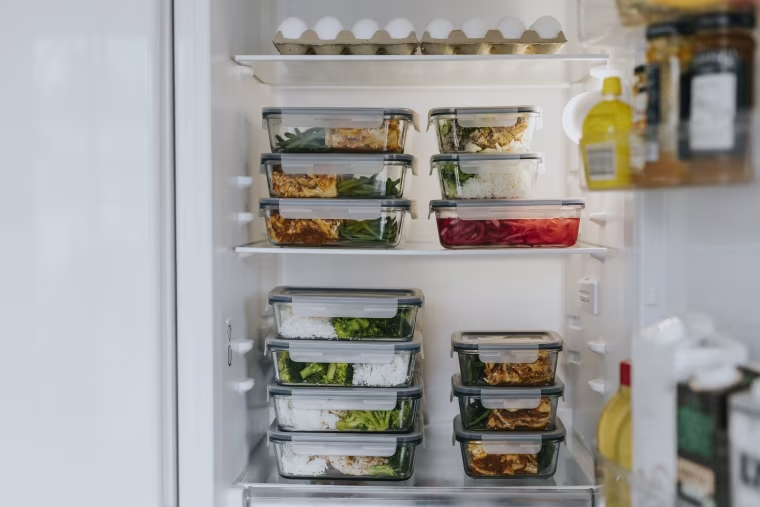
The total time from the end of cooking to reaching a temperature below 10°C should not exceed two hours, a period that drops to just one hour if the ambient temperature exceeds 30°C.
Proceeding in this way we also prevent them from doing their thing Clostridium perfringensa bacteria that is commonly associated with dishes based on cooked meats, cooked meat products, meat sauces, stews, meatballs, etc. produced in large quantities and refrigerated in inappropriate conditions.
Up to 4 days in the refrigerator
As cooked foods spend days in the refrigerator, the main risk is represented by Listeria monocytogenesa psychrotrophic pathogen capable of multiplying slowly even at refrigeration temperatures, making preparations stored for more than four or five days a significant danger.
Therefore, it is advisable to limit refrigeration storage (≤ 4 °C) to a maximum of 3 to 4 days. And freeze at -18°C for longer periods. Besides, it is advisable to subject each individual portion to a single uniform reheating that reaches at least 74 °C in its thermal center before consumption, because this temperature is the international food safety standard that guarantees the instantaneous thermal destruction of pathogenic bacteria in their vegetative form, such as Listeria monocytogenes, Salmonella, Escherichia coli and Campylobacter.
Beyond the microbiological danger, the batch cooking It has chemical and organoleptic singularities of great relevance. For example, storage and subsequent reheating of cooked meats triggers lipid degradation known as warmed-over flavor (overheated flavor), which generates unpleasant rancid, cardboard or old notes, due to the oxidation of unsaturated fatty acids catalyzed by heat and free iron.
Dishes that contain potatoes also change their texture in the refrigerator. The change derives from the physicochemical transformations of carbohydrates and the cellular architecture of the tuber. During cooking, gelatinization causes the starch granules to absorb water and increase in volume, giving the initial soft consistency. When cooling the dish using the batch cookingthe amylose and amylopectin polymers undergo retrogradation, and the tissue becomes firm, mealy, or rubbery.
This restructuring causes trapped moisture to be expelled. As a consequence, the internal pulp dries out, the outer surface becomes moist and the sauces of potato stews are destabilized. Freezing intensifies the deterioration, because the formation of ice crystals fractures the cell walls, causing structural collapse and the appearance of a pasty mass upon thawing.
