
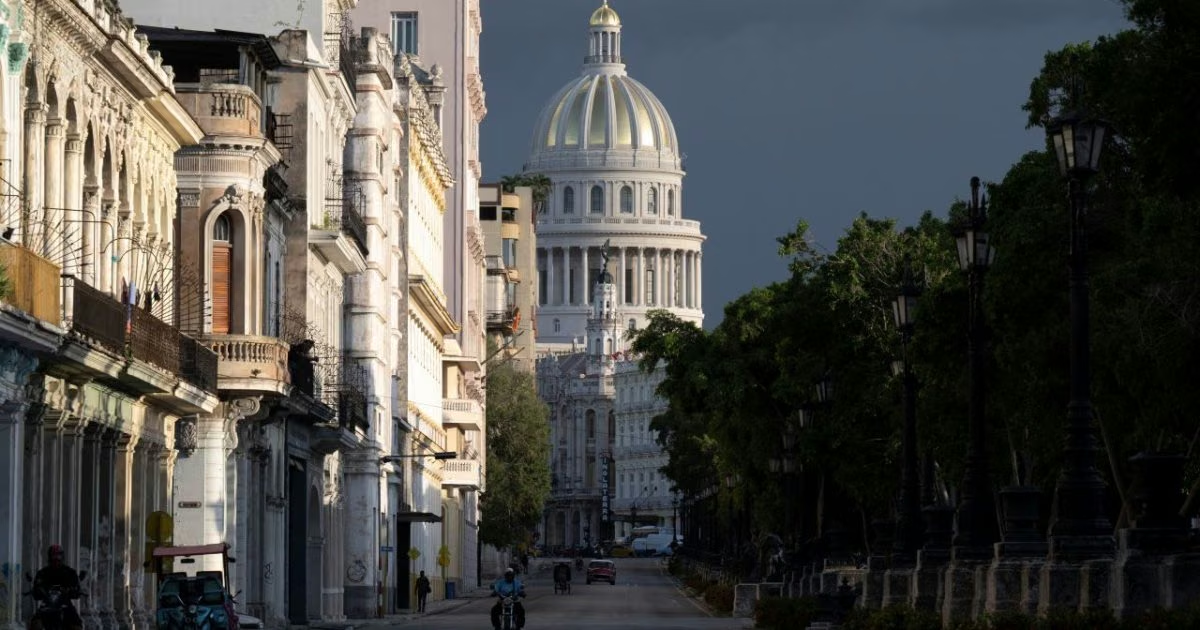
HAVANA — Tourism in Cuba continues to plummet, one of the main sources on which the island’s economy rests. From January to August of this year, Cuba received only 450,353 international tourists, 64.4% less than in the same period of the previous year, after the arrival to the island last month of only 30,490 visitors, according to data released this Thursday by the National Office of Statistics and Information (ONEI).
Tourism, one of the three largest sources of foreign currency for Cuba, was in crisis since the Covid-19 pandemic, but US pressure since last January, which paralyzed the arrival of flights and secondary sanctions that caused the departure of the main international hotel companies, ended up demolishing the sector.
According to the figures published today by the ONEI, by country of origin, Canada contributed 128,400 visitors between January and August, followed by the Cuban community abroad with 103,481 and the United States, with 41,971. The figures represent year-on-year decreases of 75.6%, 35.6% and 50%, respectively.
Other sending markets such as Mexico, with only 22,246 visitors, and Argentina, with 15,144, registered drops of more than 40%; while Russia, with 21,563, exceeded 70% in the reduction of emitters.
The departure of hotel companies
The communist regime of Cuba recognized this July that pressure from the United States has caused the departure from the country of seven international hotel companies that managed 46% of the country’s total rooms (more than 80,000, according to official data), among them the Spanish chains Meliá, Iberostar and Barceló, the Canadian Blue Diamond, the Indonesian Archipiélago International and the Turkish ATG.
The numbers of international visitors this year are far from the record numbers linked to the “thaw” of diplomatic relations between the United States and Cuba, which allowed the arrival of 4.6 million tourists in 2018 and 4.2 million in 2019, due to Washington’s elimination of restrictions on travel to the island.
Faced with this situation, the Cuban dictatorship approved last June – within the package of 176 economic reforms – several measures to boost the tourism sector; among them, the approval of new business modalities for the private sector, including hotel management, car rental or passenger transportation services.
The reforms will also allow the private sector to act as tourist agents and guides. With these measures, the Havana Executive also plans to implement a 1% tax on these businesses to promote the sustainability and image of this economic activity.
Despite a certain openness that the regime has shown, with more than 67 years in power, it has made it clear that the economy will remain under state control, a situation that gives few guarantees to investors due to the lack of rights.
SOURCE: With information from EFE
