
By Aria Bendix – NBC News
The United States continues to see outbreaks of foodborne illnesses this year: only since July have there been alerts regarding the detection of E. coli bacteria in blueberries; by cyclosporosis in lettuce; salmonella in jalapenos, and both E. coli and salmonella in alfalfa.
It may seem like outbreaks are becoming more common. However, specialists on the subject indicate that this would not be the case, and that what is happening instead is that each outbreak is resulting in more infections. That’s partly because the cyclosporosis outbreak in the United States is one of the largest on record.
Each year, US regulators issue alerts for between 20 and 30 outbreaks of foodborne illnesses, according to the nonprofit Public Interest Research Group (PIRG), focused on consumer health analysis. In 2025 there were 28 alerts in total; So far this year there have been 21.
(Trump’s deep cuts erode foundation of US public health system, experts say)
But what has changed compared to other years is the number of people sick from these outbreaks.
A PIRG study using federal data identified that in 2025 there were 1,000 cases approximately throughout the country and that in 2024 there were around 1,800.
In contrast, the Centers for Disease Control and Prevention (CDC) has confirmed since may of this year 15,716 cases only cyclosporosis, caused by a parasite and causing intense diarrhea.
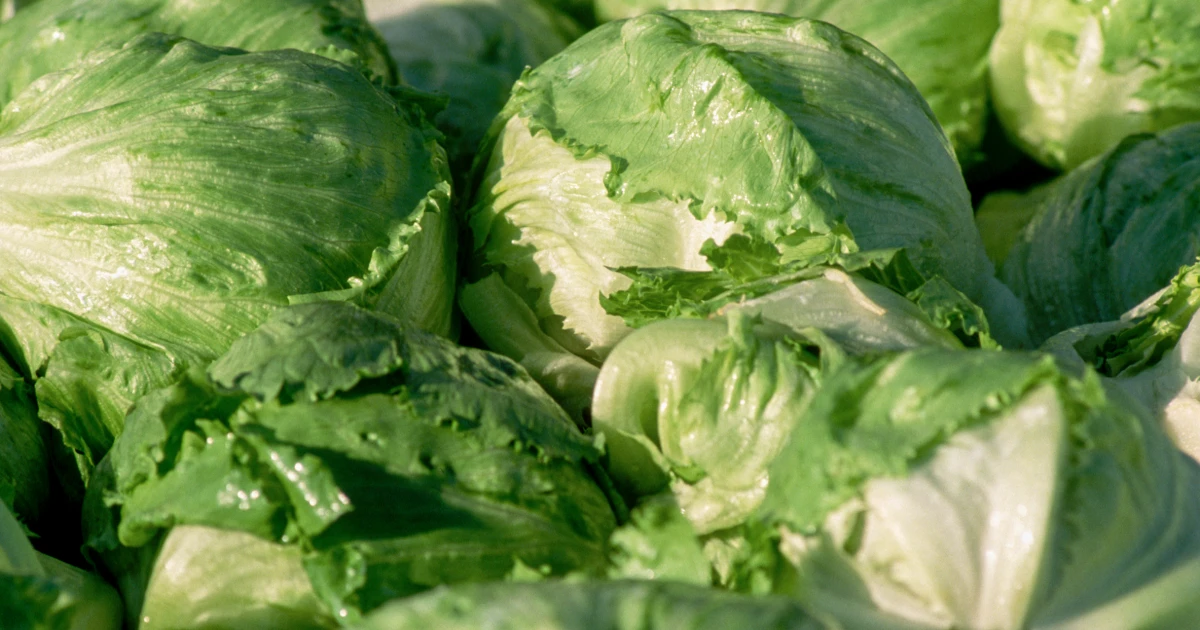
Of those cases, 11,000 would be linked to iceberg lettuce traced to the company Taylor Farms, which supplies Walmart, Taco Bell and other sites. So far there are two deaths due to the disease.
raw consumption
The researchers attribute this increase in cyclosporosis for several reasons: It is linked to lettuce, which is usually consumed without boiling (unlike other foods in which the heat when cooking kills the parasites). And the lettuce linked to the contaminated cases was sold in popular restaurant chains and supermarkets. Other outbreaks of cyclosporosis in the United States have been caused by cilantro or parsley, which are less widely consumed.
“This combination of factors is unique compared to other outbreaks in the Cyclospora cayetanensis and that’s why we see such magnitude of infections,” said Craig Hedberg, a health sciences professor at the University of Minnesota.
Is difficult to identify and trace infections of cyclosporosis, because people get sick up to weeks after consuming contaminated food. For this reason, sometimes he does not remember what he could have eaten that caused the discomfort since the health authorities are investigating.
(Trump relaxes restrictions on the study of psychedelic drugs to test their effectiveness in treating mental health)
Meanwhile, it is possible that fresh produce that could have transmitted infections has already been eaten or put in compost, so it cannot be analyzed directly.
And while the longer it takes to identify the source of an outbreak It is more likely that cases will continue to accumulate in the meantime.
Salmonella is easier to detect and trace the origins of an outbreak, although achieving this does not immediately stop cases. Until this week, the CDC reported 431 infections only linked to this bacteria in jalapeno peppers.
Bruce Chassy, professor emeritus of food sciences and nutrition at the University of Illinois (Urbana-Champaign campus), said the short time between the lettuce-related outbreak and the jalapeño outbreak may have given the impression that such outbreaks are increasing.
“It’s human, like when you read that there were 1,500 cases of norovirus on a cruise ship and people say that then it’s not a good idea to go on a cruise, even though those who stay on land also get norovirus and up to millions of Americans become infected every year,” he said.
Lack of inspections
The specialists consulted for this article indicated that at the level of authorities Several problems must be remedied with the management of food-related infectious diseases.
Teresa Murray, in charge of consumer protection issues at the PIRG Education Fund, said that many times when a potentially contaminated product is identified, authorities take a long time to notify the companies that manufacture, package or sell it.
The Food and Drug Administration (FDA) has made changes in the past to try to reduce those times: in 2022 it announced a rule for food producers to keep more detailed records of how they harvest, pack, store and move goods such as eggs or leafy greens. The rule also provided for producers to share registration information with other companies along the supply chain.
That rule was going to become mandatory starting in January of this year for food companies. But he Last year Congress granted an extension so that companies do not have to comply with that more detailed record until July 2028.
(Why the record increase in excuses to comply with school vaccination requirements is worrying)
Murray said that decision could have impacted the response this year to the cyclosporosis outbreak.
“I am almost certain that several of these diseases would have been prevented if more companies had been able to review a record sooner that showed that the products had effects,” she said.
The FDA also does not carry out enough inspections of factories or packing plants. The law establishes that the agency has to review at least once every three years facilities considered high risk, which are those that handle products that are known from previous cases to present contamination, or where there have been violations of health codes in the past.
But since 2018 the FDA has not complied with the goal of reviewing every three years, according to a report from the Federal Government Accountability Office (GAO), because inspectors are needed.
The FDA also does not make public all recall notices, according to PRIG. The organization points out that the FDA did not give public notice last year for a listeria outbreak linked to breadcrumbs, nor for cases of ice cream that was later discovered to have been packaged with pieces of plastic.
Since 2017, the FDA and the Department of Agriculture have announced about 300 recall alerts for products on sale, but it is believed that the number is insufficient because many infections are not detected for a recall notice to be given.
This is because there are people who may not have gotten sick enough to trigger alarms or because if they go to a hospital, the medical staff does not always perform tests for foodborne diseases.
The CDC also reduced last year a program called FoodNet with which 10 states constantly monitored possible infections of these diseases to report them to the federal government. With FoodNet, the CDC had more data to study how common certain foodborne illnesses are even when there are no large outbreaks.
However, during the second Trump Administration the CDC made cuts to FoodNet such that it is now monitoring now it is not mandatory for several pathogens, including the one that causes cyclosporosis.
They ask for more parasite tests
The researchers consulted for this article said that many companies do work actively to avoid possible contamination of their products, but that in the process from harvest to delivery to supermarkets there are many opportunities for something to end up leaking anyway.
(Experts are concerned about the increase in the proliferation of ticks that transmit Lyme disease)
For example, the United States depends on many imports of certain fresh foods such as tomatoes or zucchini, to be able to offer them even when it is not harvest season directly in the country.
This external origin makes it difficult to carry out the inspections that the FDA considers necessary. If the FDA itself does not have inspectors to meet the goal of reviewing facilities in the United States once every three years, it can even less do so in facilities outside the country. According to the GAO report, the FDA it only carries out around 900 such inspections, 5% of its targetevery year.
Jennifer Acuff, associate professor of microbiology and food safety at the University of Arkansas, said food companies should be more strategic in how they conduct their internal inspections and testing.
Acuff said the industry typically tests for possible parasites until the end of the production process, but sampling only at that stage does not sufficiently account for potential contaminations. Acuff said that many times tests are not even carried out in the water used for growing or cleaning certain products before packaging.
It is also important that precautions be taken in crop fields that are close to farms: the proximity of certain agricultural fields of fruits or vegetables to livestock or chickens can increase the risk of contamination.
Erika Austhof, an associate research professor at the University of Arizona, said the Extreme weather also contributes to spread pathogens more. He said that higher temperatures due to the climate emergency generate favorable conditions for bacteria to proliferate and that heavier rains cause sewage or pollution to leak into areas where food is harvested.
“It’s causing a perfect storm for outbreaks,” he said.
