
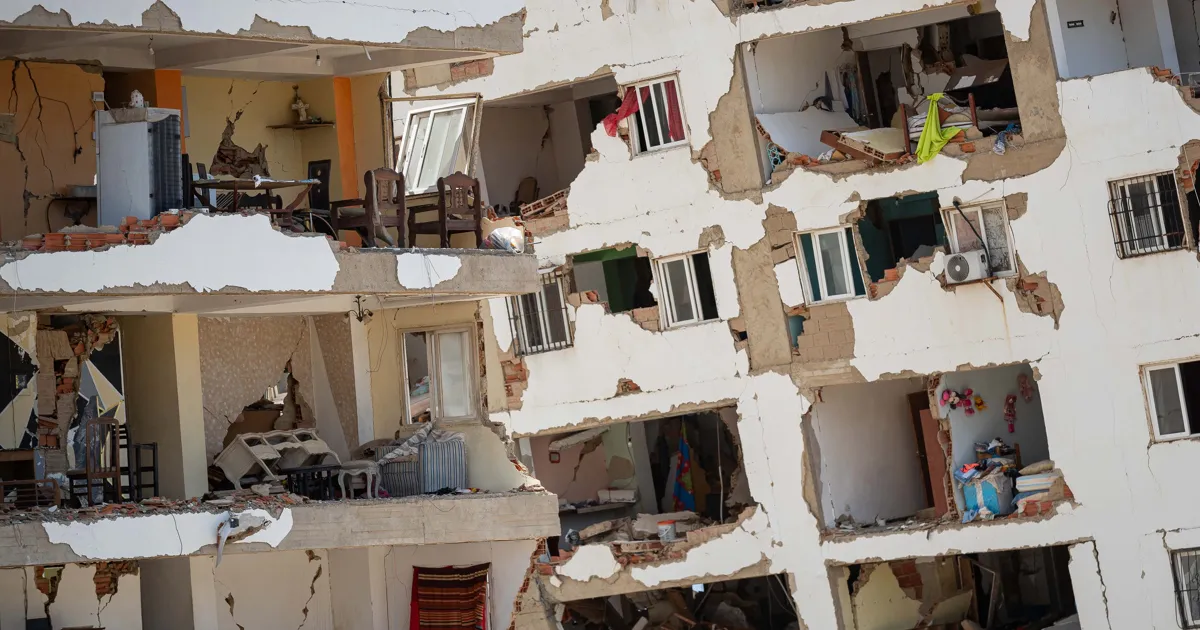
CARACAS. One month after the double seismic event that devastated Venezuela, an official investigation has not been initiated to determine the causes of the collapse of buildings, nor is there timely information on the number of missing people. For this reason, the NGOs request that a supranational commission be appointed to determine the civil and criminal responsibilities that may arise. This commission would objectively analyze the consequences of the earthquakes and determine the responsibilities
“The tragedy that occurred on June 24 must serve to analyze consequences and determine responsibilities, without concealment or cronyism, as well as to update the corresponding regulations, with criteria far removed from the political and circumstantial,” they state in a public letter from the NGOs Fundación Espacio Abierto, Gente del Petróleo and Grupo La Colina, among others.
In the South American country, a debate was opened about the quality of the buildings built, especially those related to the government program Housing Mission, in the state of La Guaira, declared a disaster area.
According to the official report, the number of deceased people exceeds 5,400; that of wounded, 16,000. However, the number of people missing from this tragedy has not been reported. Private calculations indicate that there are more than 40,000 people in this situation.
Accountability
On the other hand, 39 NGOs They demanded that the reconstruction process after the double earthquake of June 24 be developed with transparency, accountability and citizen participation, warning that, a month after the emergency, “opacity continues to be the rule.”
In a statement released by Peace Laboratory, the organizations indicated that the immediate response to the disaster gave way to a decisive stage for the country and maintained that “the way in which this process is conducted will mark not only the recovery of the affected cities, but also the quality of our institutions and the trust of citizens in public action.”
The document recalls that the United Nations Sendai Framework for Disaster Risk Reduction states that all reconstruction must become an opportunity to “Build Back Better”, that is, reduce the vulnerabilities that aggravated the post-earthquake tragedy through safer infrastructure, strengthened institutions and greater citizen participation.
However, the organizations maintain that public information about the reconstruction remains insufficient.
“Although the authorities have made partial announcements related to the recovery, citizens still do not have sufficient public information to understand how the reconstruction process will develop,” the statement said.
According to the organizations, the criteria for prioritizing the works, the execution schedules, the budgets, the supervision and accountability mechanisms, and the measures planned to guarantee rights such as health, education and housing while the work progresses are not yet fully known.
They also warn that uncertainty persists regarding the rehabilitation of affected hospitals and health centers, the recovery of schools, solutions for families who lost their homes, and the continuity of medical and educational care for displaced people.
The demands
Among the main requests addressed to the Venezuelan State are:
Periodic publication of verifiable information on reconstruction plans.
Lifting restrictions on access to public information and independent media.
Facilitate the work of journalists, humanitarian organizations and volunteers.
Ensure temporary shelters meet international human rights standards
Incorporate affected communities in the design and monitoring of public policies.
Repeal regulations that hinder the work of civil society in assistance and recovery tasks.
“Reconstruction is much more than an engineering task. It is also a process of democratic reconstruction. Without transparency there will be no trust. Without participation there will be no resilience. And without democratic institutions that act within the constitutional framework, reconstruction will hardly be able to respond to the needs and rights of the affected people.”
The statement also questions that, in the midst of the earthquake emergency, the blockades against information portals and independent media continue, considering that these restrictions limit the right of the population to access information of public interest and make it difficult for citizens to monitor the reconstruction.
The organizations also regret that during the emergency response there have been obstacles to volunteer initiatives and community solidarity.
“This civic energy constitutes one of the main resources that any society has to face a catastrophe and should have been recognized, facilitated and articulated by the authorities, not limited by unnecessary restrictions,” they stated.
