
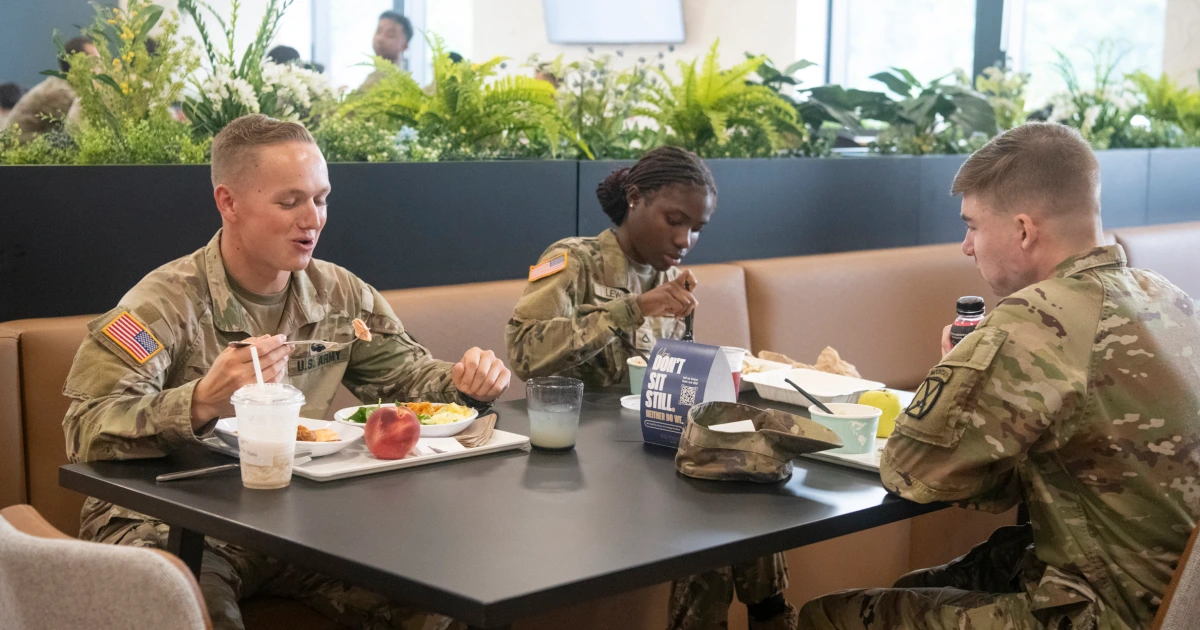
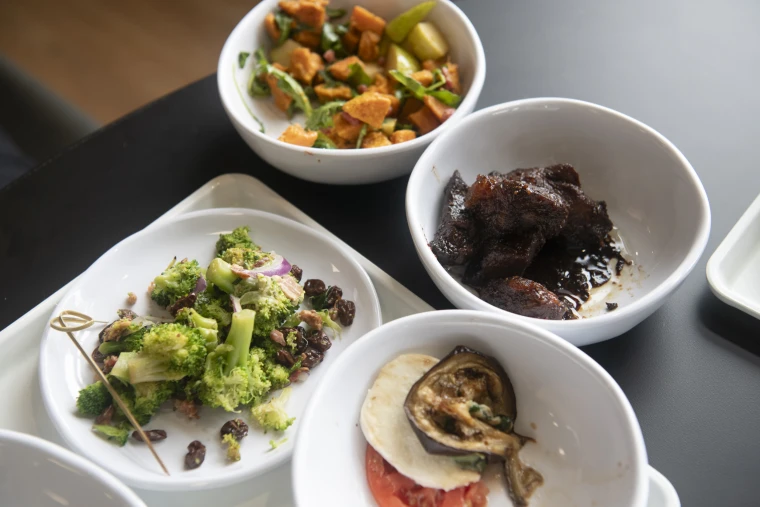
FORT DRUM, N.Y. – At the preview of a shiny new dining facility at the Fort Drum military base, soldiers placed their orders for grilled salmon, steak and flatbreads at touch-screen kiosks. In the background, blenders churn out protein shakes with flavors including “apple pie” and “cookies and cream.” Side dishes of red potatoes and cauliflower sat in elegant black containers.
The Belvedere Bistro is the third of these university campus-style dining spaces, as the Army calls them, to open its doors in the country in the last five months. NBC News was granted exclusive access to the facility ahead of its official opening. Inspired by university campus dining halls, these renovated establishments are part of a broader initiative by the Army to transform its gastronomic offering, with the aim of reversing the reputation of offering unappetizing food and distancing soldiers from fast food.
The Army says the food served at these new facilities follows the Trump Administration’s dietary guidelines, which make Emphasize protein at every meal and avoid ultra-processed foods. The Secretary of Health, Robert F. Kennedy Jr., has highlighted this initiative to renew military menus as one of his greatest achievements in office, a victory for the movement Make America Healthy Again (MAHA), despite the fact that this project began long before the current Government.
Private First Class (Pfc.) Kason Davis, 19, believes improving the food will make a difference.
“In the first few weeks of making sure I’m eating healthy here… I 100% believe I’ll be in better shape, I’ll feel better, I’ll wake up better, I’ll sleep better, simply because of the food I’m feeding my body,” he says.
Davis claims to have felt the effects of poor nutrition: He regretted eating McDonald’s the other night before a 6-mile run the next morning.
“I just didn’t feel ready to start,” he says. “I felt out of energy. I felt sluggish.”
The Army is working to make soldiers’ food healthier and more palatable amid a broader shift in the preferences of the American public: The protein-eating boom is in full swing, there is greater awareness about the dangers of processed foods and young people are consuming less alcohol. However, according to Lucas Brooks, an Army veteran and researcher at the American Security Project, a nonpartisan think tank, the diet of the average soldier is probably worse than that of the average American.
“If we want soldiers to eat healthy foods, we need to make them as accessible as possible,” Brooks said. “That’s something I think we’re really struggling with in the Army.”
The new feeding program is aligned with Defense Secretary Pete Hegseth’s push to improve the physical fitness of members of the Armed Forces. According to the American Security Project, about 68% of active duty military members are overweight or obese.
The initiative also comes amid other health-related changes that the Trump Administration has pushed to align military culture with its political agenda, some of which have generated controversy. Hegseth several months ago eliminated the requirement that troops receive the flu vaccine and recently announced that the Armed Forces will test service members’ testosterone levels and offer hormone therapy.
Kennedy, for his part, has claimed that traditional Army food was “poisoning” American troops and that offering more nutritious food improves “military readiness.” He even dedicated the first episode of his podcast to this topic.
However, Lt. Gen. Chris Mohan, responsible for overseeing the Army’s feeding programs, insisted that the new dining options have nothing to do with politics. The program was not the original idea of either Kennedy or Hegseth.
“This is not a government thing,” Mohan said. “It’s about saying, ‘Hey, let’s do this right for our soldiers.’”
Robert Irvine, the celebrity chef who helped design the new establishments, said MAHA “turns out to be a Robert Kennedy initiative on the civilian level, but it was already happening in the Army.”
So far, soldiers seem to appreciate the improvements to the menu.
Capt. Logan Yates, a company commander, supervises about 70 soldiers at Fort Hood, Texas, home to the first university-campus-style dining hall, in operation since February. Yates said he has seen improvements in his soldiers’ fitness scores and weight measurements in recent months, although he is not sure if this can be directly attributed to the new mess hall.
At the very least, he said, “I am convinced that it will help feed and support the training and demands of my soldiers better than the previous DFAC (military feeding center) did.”
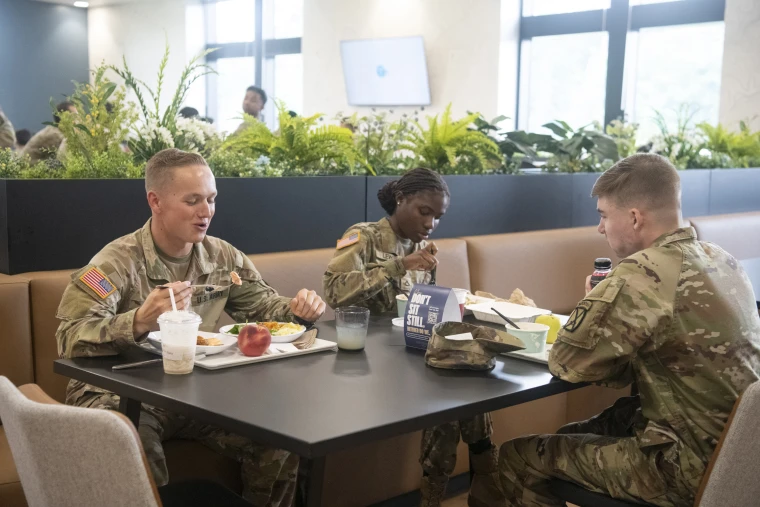
However, Yates added that there is still an element of personal responsibility: “At the end of the day, if soldiers want to consume excess calories and eat a lot of pizza, they can do that. It’s up to them.”
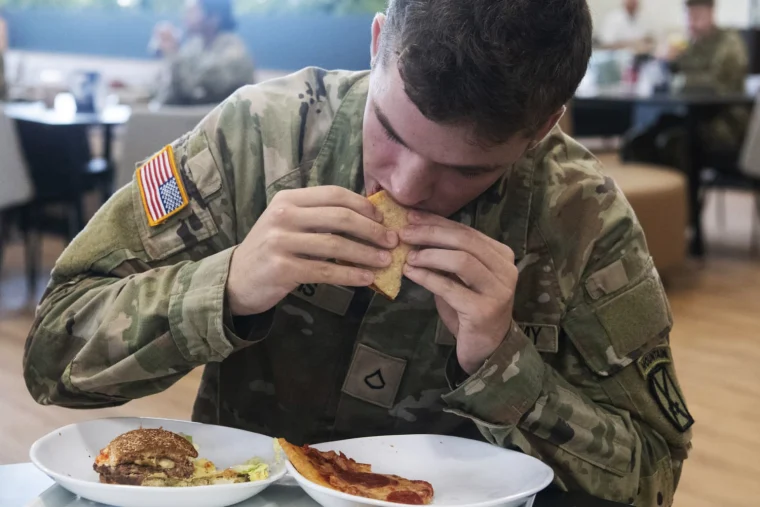
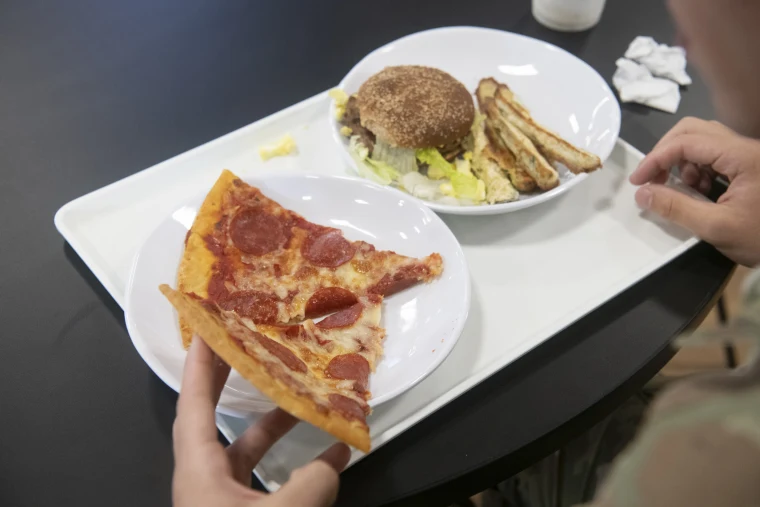
Pizza and hamburgers were some of the most common foods on soldiers’ plates at the new Fort Drum facility during NBC News’ visit. Neither product fully conforms to the Trump Administration’s dietary recommendations; However, the Army claims that the options offered are healthier versions of fast food.
“People will not continue to return to a meal that they perceive as a concession or a sacrifice,” said Sandra Koehler, vice president of wellness at Compass Group, the contracting company that operates the pilot programs and has dietitians at each facility. “The healthiest option also has to be satisfying and appetizing.”
Army data suggests that soldiers are choosing these new food options over other alternatives. At Fort Carson, Colorado, home to the second university-campus-style dining hall, soldiers’ use of meal cards has more than tripled since it opened, according to the Army. At Fort Hood, the use of these cards has increased more than 150%, the institution added.
The Army said it launched its healthy eating initiative in 2023 after finding that many soldiers were giving up their food benefits to opt for fast food or food purchased at gas stations. To do this, it tasked a board of directors with the task of making restaurant options healthier, tastier and more affordable. The three renovated dining rooms that have opened so far are considered a first step. Compass Group has already signed on to develop two others, and the Army said it has received proposals for 11 more.
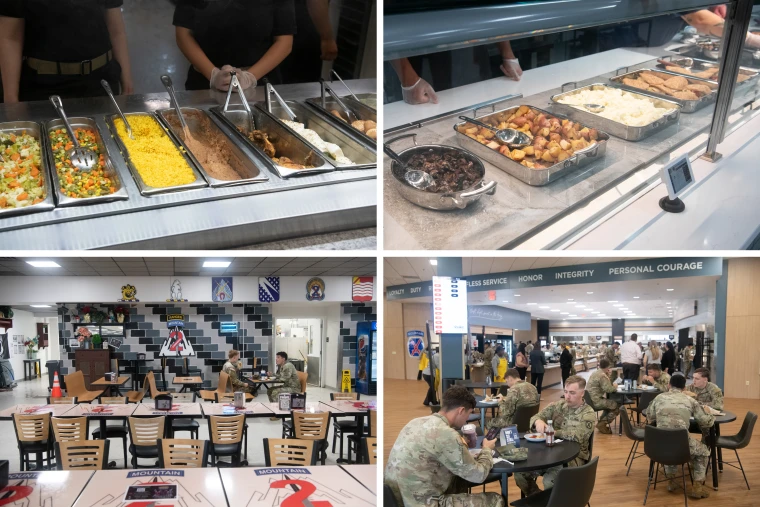
The food at Belvedere Bistro is a far cry from the aluminum buckets of refried beans and cubed vegetable mixes served at another Fort Drum dining hall, where the atmosphere was heavy and smelled of cooking oil and all-purpose cleaner.
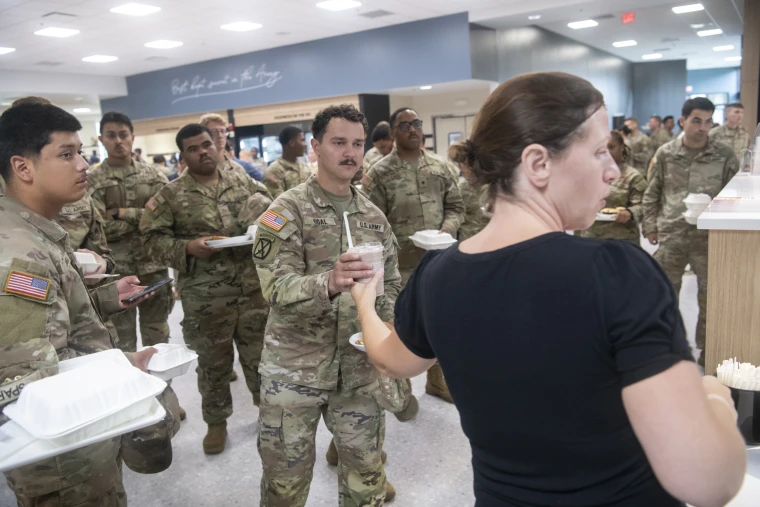
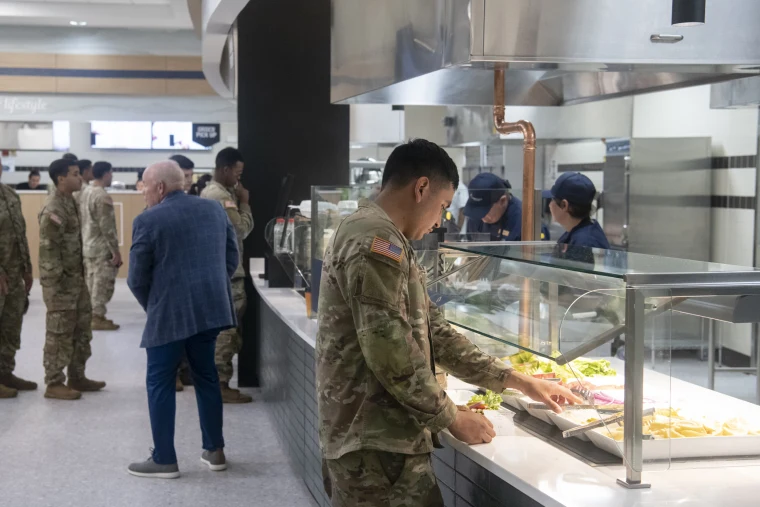
At the renovated bistro, soldiers praised the variety of options and mentioned dishes they planned to try in the future, such as roasted mushrooms and turkey bacon. The longest line formed in front of the stand that prepared protein shakes on the spot. Near the cash registers, low-sugar drinks and snacks were displayed by brand and color, as if it were a high-end market.
The bistro is open to any member of the Army, and lower-ranking soldiers can use up to $39 a day from their living allowances to cover their meals at the establishment. Some military personnel questioned how far that amount would go, given that the products are sold separately, while other cafeterias on the base offer unlimited food. Others noted that, at the very least, it gives them greater flexibility.
“You can spend the money however you want. I think that, by itself, already improves morale,” said specialist (Spc.) Sergio Sánchez.
Outside experts say these new establishments represent a promising first step, although the Army faces an uphill task to eliminate junk food from soldiers’ diets and make the dining halls convenient for personnel with demanding schedules.
Most soldiers have very short periods to eat during the day, Brooks explained, and the nearest dining hall may be a 30-minute walk away, while a convenience store or fast food restaurant is usually much closer.
“Many soldiers end up losing confidence in the dining system,” he said.
The Army said it hopes to alleviate some of these problems by expanding opening hours at the new dining halls to allow soldiers to order all of their meals for the day at once. Compass Group is also distributing meals at “drop-off points” closer to military workplaces and locating food trucks in high-traffic areas.
Despite the changes, not all soldiers plan to abandon fast food completely.
“I don’t consume it as much as I did before I joined the Army,” said Private First Class (Pfc.) Gabriel Hobgood. “But sometimes, if it’s late at night, I’ll definitely go to McDonald’s.”
