
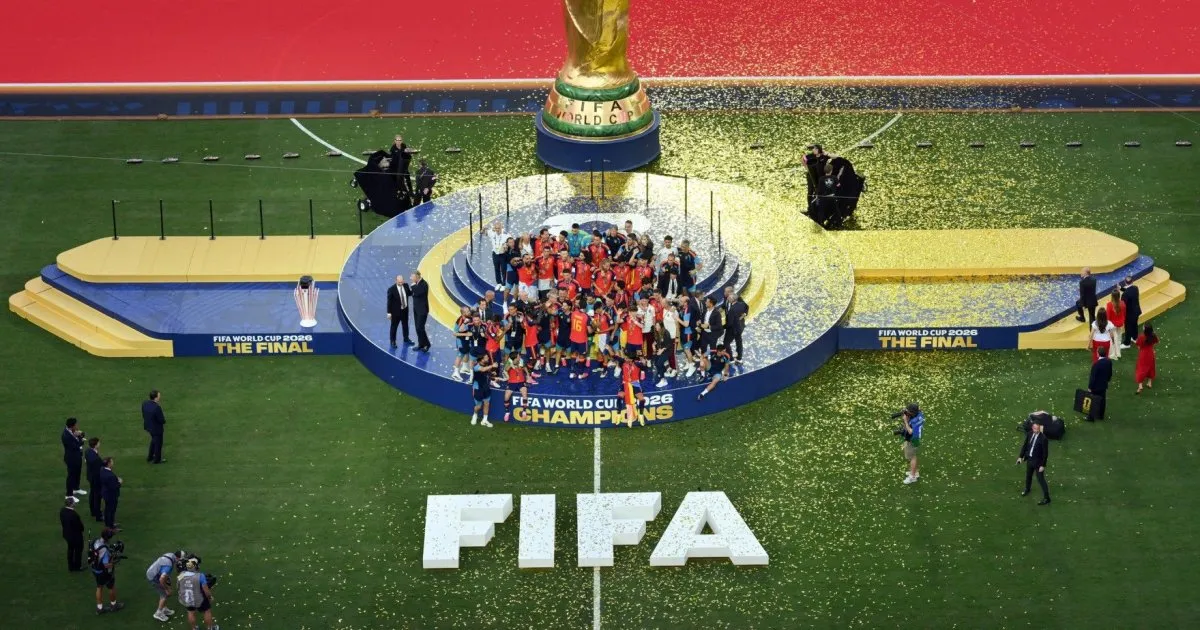
The 2026 World Cup, organized by the United States, Canada and Mexico, concluded with a largely favorable outcome for FIFA, which highlighted the sporting success, the massive attendance at the stadiums and the historic audience figures, despite the logistical and political challenges that surrounded the tournament.
The World Cup was the largest in history, with 48 teams, 104 matches and three host countries. Despite previous doubts about the new format, the championship offered a high level of competition and maintained the interest of fans until the final, in which Spain defeated Argentina 1-0 in extra time to win its second world title.
One of the great indicators of success was the television audience. The English-language broadcast of the final reached almost 39 million viewers in the United States, with a peak of over 51 million, making it the most-watched English-language soccer match in the country’s history. Adding the audience of the broadcast in Spanish, the meeting exceeded 60 million viewers in the United States.
The overall numbers also grew significantly. The broadcasts of the 104 matches averaged 7.7 million viewers on Fox platforms, more than double the average recorded during the 2022 World Cup in Qatar.
Stadium attendance also broke records. The president of FIFA, Gianni Infantino, assured that nearly seven million fans attended the stages and estimated that more than 6 billion people followed the tournament from their homes around the world.
On a sporting level, the expanded format did not reduce the level of competition. Teams like Cape Verde and Congo surprised by advancing to the knockout rounds, while Curacao arrived with options to qualify until the last day of the group stage. Finally, the semifinals brought together four powers: Spain, Argentina, France and England.
The weather conditions represented one of the main challenges of the tournament. Some matches were played under temperatures close to 38 degrees Celsius, especially in Philadelphia, although phenomena such as the smoke caused by the forest fires in Canada did not affect the final thanks to a timely change in weather conditions.
The championship was also not free of political controversies. Iran’s participation was marked by visa problems and travel restrictions, while some arbitration and disciplinary decisions generated debate. However, there were no serious incidents related to security or immigration control around the stadiums.
For Infantino, the tournament marked a before and after in the history of football.
“I think we have to invent a new vocabulary to define the success of this World Cup,” said the FIFA president at the close of the competition.
