
WASHINGTON — President Donald Trump told Fox News on Tuesday that he will expand U.S. strikes on Iran next week to include power plants and bridges if Tehran does not reach a deal.
“Next week is going to get really bad for them, because next week the power plants are coming. Next week the bridges are coming,” Trump said in an interview with the US network.
“We are going to destroy all your power plants. We are going to destroy all your bridges unless you come to the table and negotiate,” he added.
Trump’s comments came as U.S. forces carried out strikes against Iran for the fourth straight day and reimposed a naval blockade on the country’s ports.
A fragile ceasefire reached on June 17 between both sides has fallen apart.
Asked how long the US attacks would continue, Trump responded: “They will continue until I say enough is enough.”
Port blocking
During the interview, Trump also assured that the United States could attack an Iranian nuclear facility again if it deems necessary.
Commenting on satellite images that, according to the interviewer, show work in one of those complexes after previous bombings, he stated that Iran would have sealed some accesses with concrete, but warned that Washington could cause “enormous damage” to the site “in a matter of minutes.”
The president also defended the blockade imposed by the United States on Iranian ports and maintained that the Strait of Hormuz remains open for international maritime traffic, although “closed for Iran, both to enter and exit.”
He also called the previous Iranian leaders “evil” and said that although the current leadership also includes “very bad people,” they are the ones he believes are standing in the way of a possible deal.
The United States carried out new attacks against Iran on Tuesday night and reestablished the blockade of its ports, while President Donald Trump renounced taxes on ships crossing the Strait of Hormuz, the epicenter of the war.
The US blockade, in force since 20:00 GMT, and the bombings launched an hour earlier by Washington threaten diplomatic efforts to support the protocol of agreement signed on June 17.
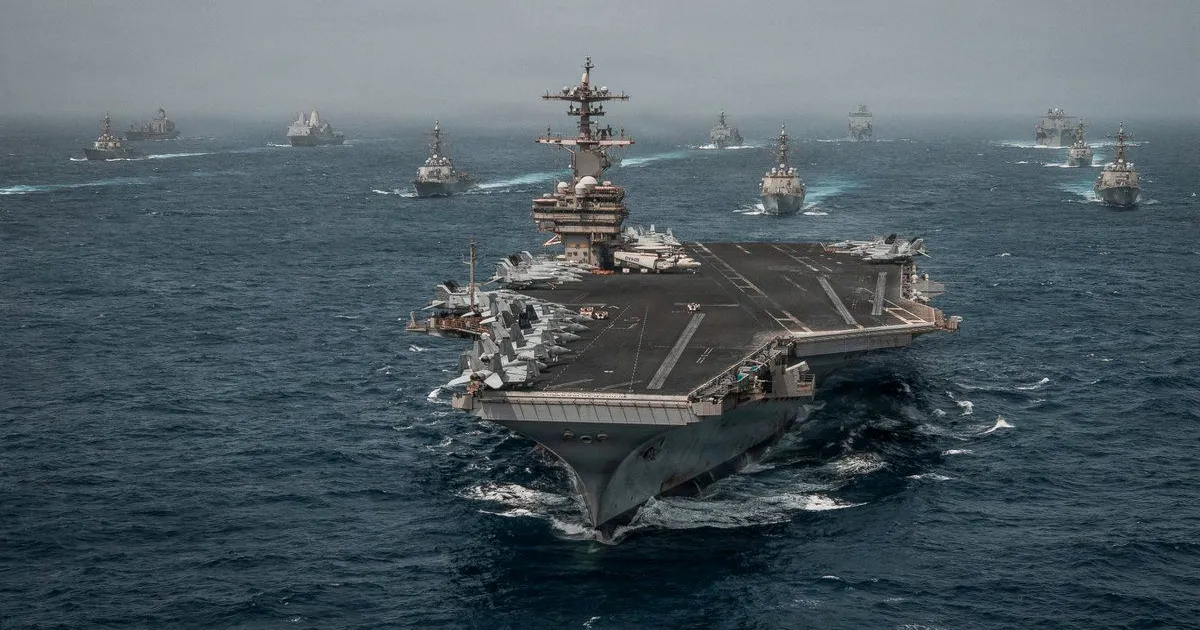
“There are currently more than 20 US Navy warships and hundreds of military aircraft operating throughout the Middle East,” said the US military command for the region (Centcom).
Fuel prices
The measure against Iranian ports, which had been lifted last month, “has, in a way, dismantled the memorandum” to pause the conflict and allow peace negotiations, Iranian Deputy Foreign Minister Kazem Gharibabadi declared on Tuesday.
Oil prices, which soared more than 9% on Monday, moderated their rise after Trump abandoned his plan to impose tolls in Hormuz.
Like Tehran, which is considering charging for passage through the strait, Trump had assured that he wanted to apply a fee equivalent to 20% of the value of the cargo in exchange for the protection of this maritime route, contrary to international law and the principle of freedom of navigation.
But in a message Tuesday on his Truth Social network, he changed his project to “trade and investment agreements” between the United States and the Gulf monarchies.
On Tuesday, the United States government also announced that it will strengthen its sanctions against the Iranian oil sector, targeting fifty people and entities linked to the network of oil magnate Mohammad Hossein Shamkhani.
