
PANAMA CITY.-The government of Panama This Saturday, it rejected an international report that points out the vulnerability of the Colón Free Zone (FTZ), the largest in Latin America, for illicit activities such as smuggling and money laundering.
The Panamanian Foreign Ministry refuted in a statement the accusations that seek to “present the Colón Free Trade Zone as a space of tolerance for organized crime.”
He assured that the incidence of illicit acts represents 0.00042% of the commercial volume of 25,000 million dollars annually in the free zone, the largest in the Americas located next to the Panama Canal, the route through which 5% of world maritime trade passes.
They indicated that, to counter illegal acts strengthened security controls, cutting-edge technology, video surveillance cameras and state-of-the-art scanners.
The Transnational Alliance to Combat Illicit Trade (Tracit) stated in its report that the ZLC “has become a notorious transshipment center for all types of sanctioned, prohibited, counterfeit and smuggled goods.”
Additionally, it has a “long history as a center for illicit trade and trade-based money laundering and has been called ‘the Disneyland of smuggling’ due to its wide supply of various illicit goods, including alcohol, tobacco and illicit pharmaceuticals.”
Incidence of drug trafficking
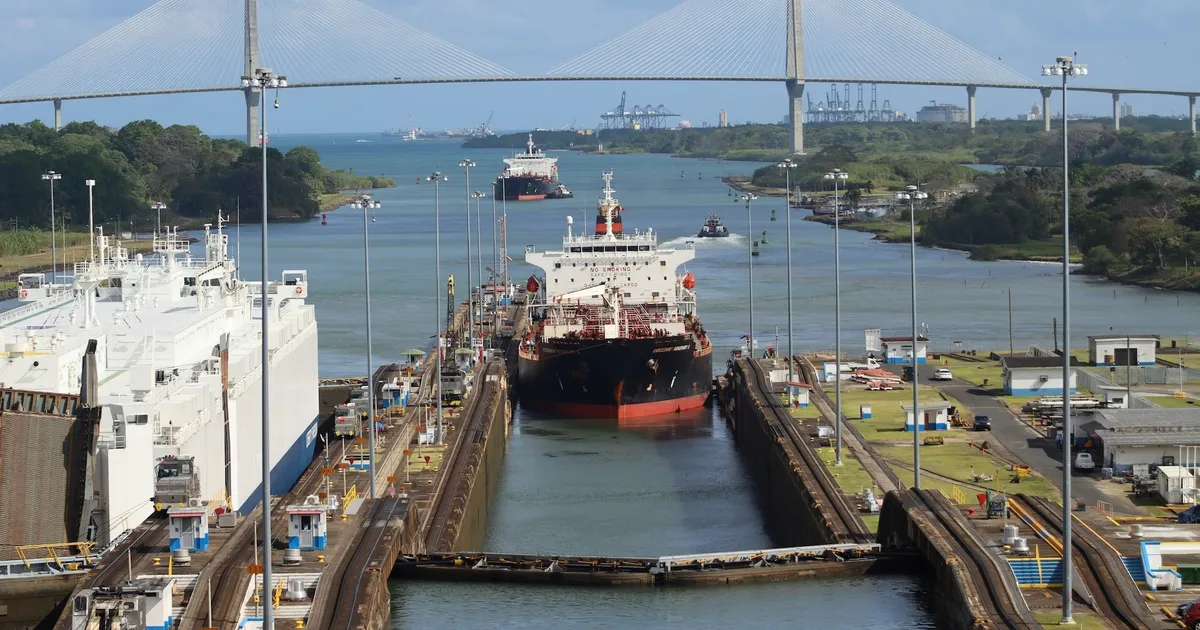
The Caribbean province of Colón has a strategic location along the Panama Canal as it connects the Atlantic and Pacific oceans and is therefore also affected by drug trafficking and violence.
Official data indicate that last year 97 tons of cocaine were seized in Panama, the majority in Colón. In 2025 the country had a rate of 14.2 homicides per 100,000 inhabitants. However, in that region that rate was three times higher.
