
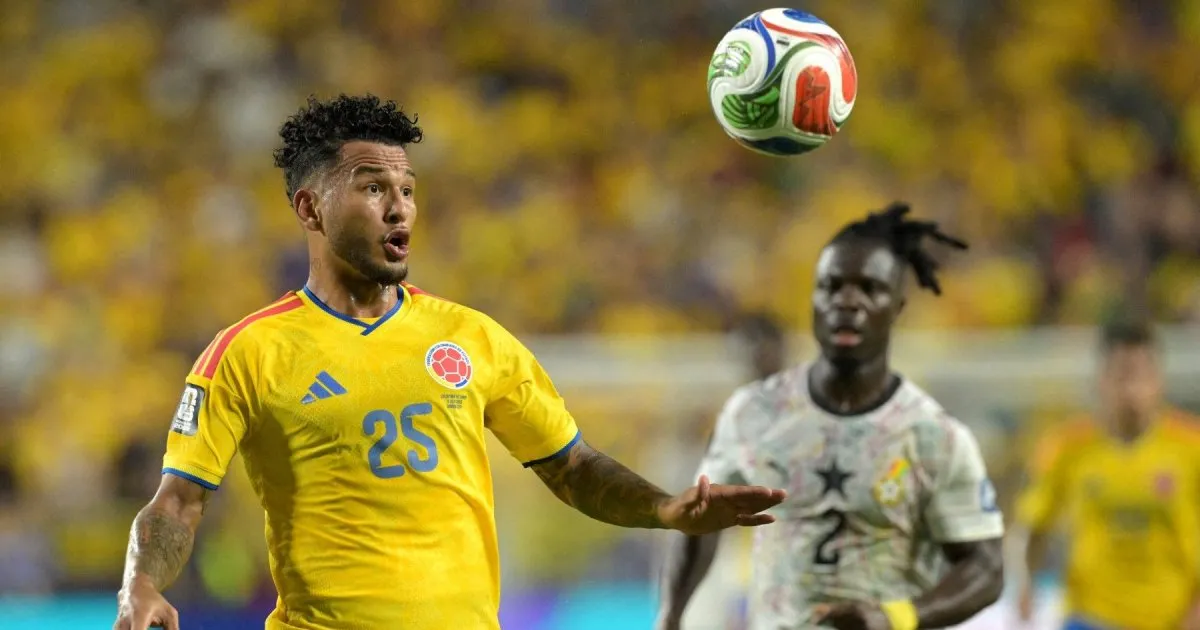
Jhon Córdoba’s injury leaves the way clear for Luis Suárez to assume responsibility for the attack Colombia in the round of 16 duel of the World facing Swisswhich will be played on Tuesday in Vancouver.
The Sporting Lisbon forward faces the opportunity to establish himself as the offensive reference of a team that has shown dominant football, with 28 shots on goal and an undefeated record of three wins and one draw, although with a lower scoring output than expected.
Born in Santa Marta, Suárez has yet to score in his first World Cup, despite reaching the tournament after having an outstanding season in Portugal with 28 goals in the league, a figure only surpassed among the main European competitions by Harry Kane.
Since the decline of Radamel Falcao as an offensive reference, Colombia has looked for a scorer capable of solving a problem that even contributed to his absence in the 2022 World Cup in Qatar. Although Suárez has not yet opened his scoring account in the 2026 World Cup, he was decisive when he came on for the injured Córdoba against Ghana and assisted Jhon Arias in the winning goal.
The attacker assured that his contribution goes beyond the goals and highlighted the collective work of the team, convinced that the scores will arrive as the games progress.
Coach Néstor Lorenzo also has alternatives such as Juan Camilo “Cucho” Hernández or even Luis Díaz as a forward, although everything indicates that Suárez will be the one chosen to start against the Swiss.
Colombia will face a demanding challenge against a Switzerland that finished as leader of its group and eliminated Algeria in the previous round. The young Johan Manzambi, author of three goals and two assists, appears as the main offensive threat of the team led by Murat Yakin.
The Colombians, with a defense that has only conceded one goal in the tournament and a team that is increasingly less dependent on James Rodríguez, will seek to reach the quarterfinals and get closer to the best performance in their history in a World Cup, achieved in Brazil 2014.
