
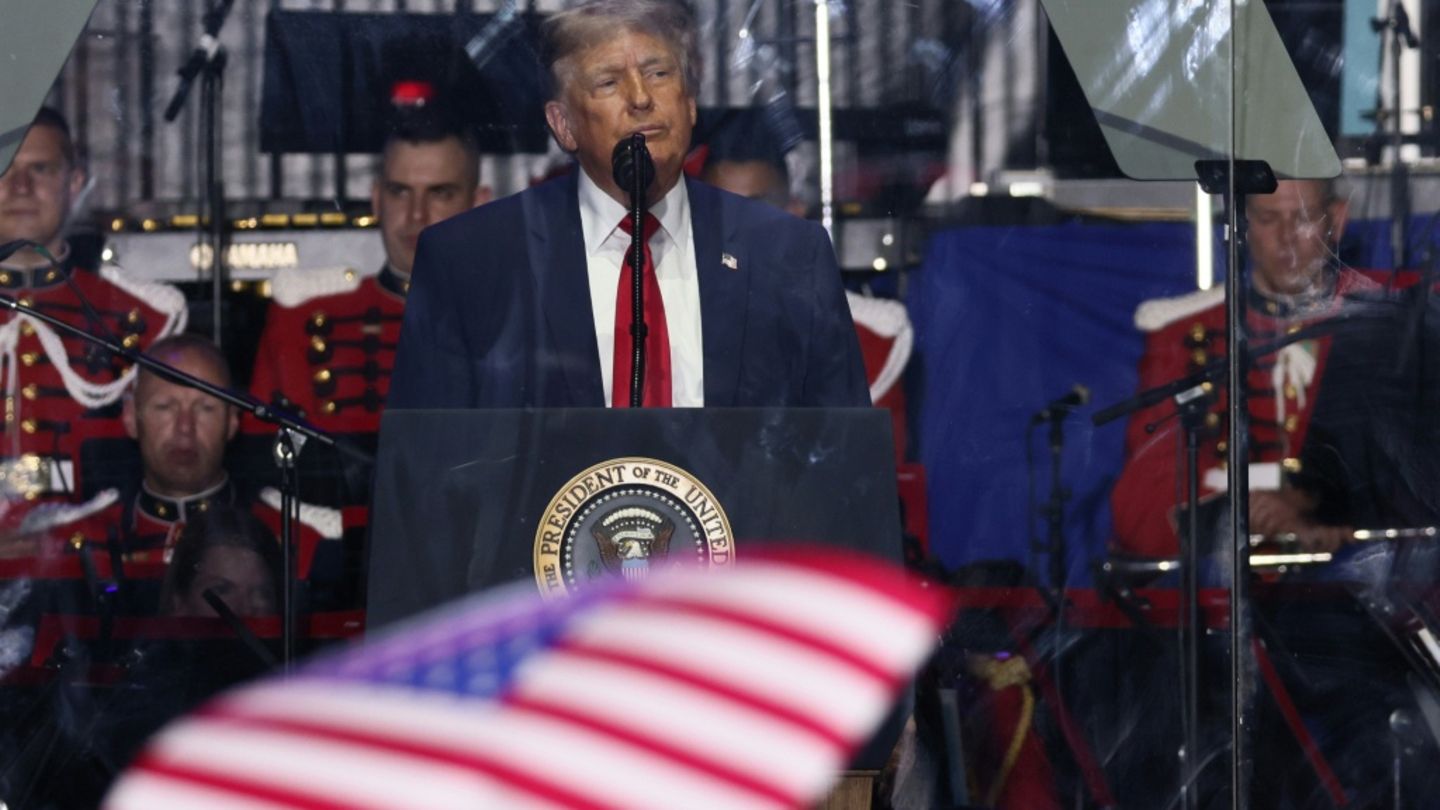
Trump’s signature on the housing bill introduced by Democrats and Republicans was expected on Wednesday shortly before his visit to the Capitol. The president had actually supported the law, which would have allowed him to demonstrate energy in the fight against inflation fueled by the Iran war before the congressional elections in November.
But shortly before the signing, the president said he would not sign until his voting rights change called the “Save America Act” passed Congress. Trump spoke of a “national emergency.” The housing law, on the other hand, is of “minor importance” and “pales in comparison” to the electoral law reform.
The highly controversial “Save America Act” stipulates, among other things, that voters must prove their US citizenship to register and show photo ID when voting in order to be able to vote. The Democrats see this as an attack on voting rights that disadvantages people who, for various reasons, have difficult access to the necessary documents.
Trump, who continues to spread false claims that the election he lost to Joe Biden in 2020 was rigged, describes the proposed change as a means of combating voter fraud. During his lunch with Republican senators, he pushed to bring the amendment to a vote. When he then spoke about the Republicans who had voted against him the day before in connection with the Iran resolution, participants said that things got loud.
Senator Bill Cassidy reported that he accused the president of hiding the truth about the Iran war from US citizens. “Our original goals have not been met and I want to know what is going on,” Fox News quoted Cassidy as saying. In an internal party primary election, Trump ensured that the politician from Louisiana would no longer sit in Congress after the election in November.
Four Republican senators voted on Tuesday for the so-called War Powers Resolution introduced by the opposition Democrats. The resolution previously passed by the House of Representatives does not have the force of law, but is seen as an expression of discontent in Congress. Trump ordered military action against Iran at the end of February without congressional approval.
The New York Times reported that Trump was “angry as a hornet” at the closed-door lunch. As he left the meeting at the Capitol, he told reporters: “I don’t like some people, but that’s OK. I think you know who I mean.”
Hours later, there was a U-turn in the Senate: According to information from CNN, Cassidy and Republican Senator Rand Paul, who had both voted in favor of restricting the president’s powers the day before, voted again in Trump’s favor. A resolution introduced by Democrats to further restrict the president’s actions was rejected by a vote of 50 to 47. He then expressed a milder mood: “This vote is a warning to Iran,” wrote Trump in his online service Truth Social.
The USA and Israel started the Iran war on February 28th with air strikes on Tehran. Iran responded with missile and drone attacks on Israel as well as several Gulf states and US facilities in the region. In mid-June, the USA and Iran signed a framework agreement. Negotiations are currently underway that should lead to a final agreement to end the war by August.
