
In the first stage, the objective has been to “avoid chaos”, a civil collapse, in the country as announced by the Secretary of State, Marco Rubio.
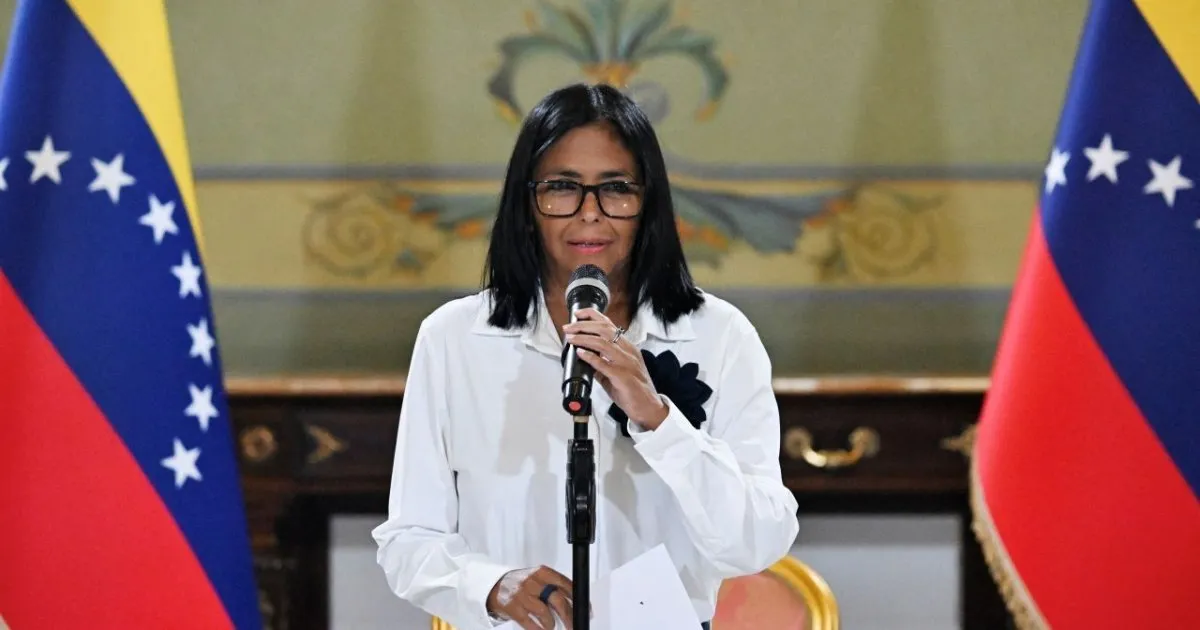
The Administration of President Donald Trump is working on energy control, the urgent sale of oil, direct supervision of income and dialogue with figures from the interim office that he heads. Delcy Rodriguezwho was Maduro’s vice president and held several positions in the power structure.
The recovery stage, according to Rubio, is based on “ensuring that American, Western and other companies have access to the Venezuelan market in a fair manner.” It was presented as a key phase to “create a national reconciliation process within Venezuela so that opposition forces can be amnestied and released.”
In the third stage, the objective is a transition in which “It will be up to the Venezuelan people to transform their country.” This phase is complex and requires several conditions that, until now, have not been specified.
Marco Rubio said on June 3, in a hearing in the House of Representatives, that five months after the overthrow of Maduro, Venezuela is still in a “recovery phase,” before moving into a political transition stage.
The Secretary of State highlighted that The country needs a free press and a new National Electoral Council (CNE) to hold elections with guarantees. He also pointed out the need for political parties “to organize and mobilize, because you cannot participate in an election if you have not had time.”
Rubio was questioned by congressmen about the possibility that Venezuela could hold elections at the end of 2027. The official responded: “We would like to see it as soon as possible, but the reality, remember, is that it’s been five months, not five years.”
Venezuela held the presidential elections in July 2024, in which the opposition denounced fraud by Maduro with voting records. These elections were not recognized by the United States, the European Union and several Latin American countries.
“Venezuela seems to find itself closer to a process of authoritarian recomposition and internal reconfiguration of power than to the verifiable beginning of a democratic transition,” noted the NGO Peace Laboratory, in a report released on June 4.
The Venezuelan organization indicated that, until now, there have been no reforms comparable to international transition experiences. They pointed out that the new appointments, such as that of the Attorney General and the Ombudsman, respond mainly to criteria of political loyalty.
“There is no electoral schedule or renewal of the National Electoral Council, “Measures aimed at guaranteeing judicial independence have not been promoted, truth and reparation mechanisms for victims have not been created, and the restrictive regulatory framework that limits freedoms and civic space has not been dismantled,” the NGO said.
The repression produced more than 2,000 political prisoners and after the releases and releases within the framework of an Amnesty Law, the Penal Forum recorded that, as of June 9, there were 389 political prisoners left.
Guardianship agenda
Political consultant Ricardo Ríos points out DIARIO LAS AMERICAS that “the ruling party is basically supported by two pillars, tutelage and expectation. And the expectation is collapsing, so what remains is tutelage.”
He adds that the sector headed by Delcy Rodríguez is characterized by the control of power and “a pragmatism that becomes a government emptied of content.”
He points out that more than a sign of openness of the interim, the aspects in which Delcy Rodríguez has yielded They respond to the conditions imposed by the United States.
“When Delcy Rodríguez gives that statement, for me revealing, that they were given 10 minutes to make a decision or else they were going to suffer the same fate as Maduro, it is a sign that there was an alignment with the interests of the United States. It is a largely supervised government, the landing of the helicopter at the embassy in Caracas, last May, clears up many doubts in this regard, among many other events of recent weeks,” says Ríos.
The analyst highlights that within the agenda imposed by the US are the reform of the Organic Hydrocarbons Law and the new Mining Law, approved by the National Assembly, as well as the visit of the head of the US Joint Chiefs of Staff, General Dan Caine, on June 4. This visit occurred while Delcy Rodríguez was on tour in India.
The political consultant refers to the relaxation of sanctions carried out by the Trump Administration and the rapprochement of companies, especially in the United States energy area.
The United States chargé d’affaires, John Barrett, reported on June 8 that Venezuela’s oil exports reached 1.25 million barrels per day (bd), their “highest level in seven years.”
In the opinion of Ricardo Ríos, the United States is tying up the legal factors, the political factors and, above all, the legal and economic factors first.
“And once that is defined, we will move on to phase three where the electoral issue is defined with certain conditions and regardless of who wins, they, from the geopolitical point of view, of their interest or strategically, already have the issue of energy (7:01) and the issue of internal governance guaranteed,” he adds.
He expresses that there is some progress, although “not with the expectations that the country has, with the needs that exist.”
He points out that, in addition to a significant number of political prisoners being released, but not all of them yet, “there has been a progressive change in the lifting of self-censorship.”
electoral exit
María Isabel Puerta, professor of Political Science at Valencia College in Florida, points out that at this time she does not see any signs of a transition in Venezuela.
“The United States has insisted on economic stabilization, economically and politically, but the political thing is not going to be stabilized until there is an electoral solution,” he says. DIARIO LAS AMERICAS.
The analyst points out that the US oil sector seems not to be very convinced of the benefits of investing in Venezuela at this time.
He adds that this caution is due to the fact that there is no legal certainty, nor the rule of law, “and there will not be until elections are held and there is a political change.”
Puerta reports that, in the midst of the United States’ tutelage over Venezuela, the Democrats are asking for accountability regarding the destination of the funds obtained from the sale of oil.
Democrats Jeanne Shaheen, ranking member of the Senate Foreign Relations Committee, and Gregory W. Meeks, of the House of Representatives, expressed their concern in a letter to Marco Rubio about the absence of an electoral agenda or schedule after Maduro’s capture.
The congressmen also questioned the appointments of the Minister of Defense, Chief General Gustavo González López, of the Attorney General, Larry Devoe, and of the Ombudsman, Eglée González Lobato. They believe that these designations, “would represent missed opportunities to address endemic corruptionstrengthen the rule of law and move away from the former repressive Maduro regime.”
Researcher María Isabel Puerta insists that as long as the electoral body is not changed, There is no possibility of talking about transparent elections. He points out that, until now, the focus of the process is the economic aspect.
“The fact that María Corina Machado is kept out of the country is part of that refusal to take the necessary steps for a political transition,” he adds.
Interim denies negotiation
The Minister of the Interior, Diosdado Cabello, ruled out on June 8 any interim negotiations with the majority opposition or with the leader María Corina Machado.
“Nothing is planned, and with her even less,” Cabello assured, at a press conference of the United Socialist Party of Venezuela (PSUV), of which he is general secretary.
He denied that any meeting had taken place to discuss the political future of Venezuela.
María Corina Machado, Nobel Peace Prize 2025, insisted that she will be the interlocutor in the negotiation with Delcy Rodríguez. He said that it is in the interest of the interim president to assume that she must respect “what the people decide.”
“If you want to negotiate with another person, you are not negotiating with who represents the people of Venezuela at this moment and it is not a real negotiation,” said Machado in reference to the 2024 elections.
“María Corina Machado is changing, not her position, but her strategy. She surely knows much better than anyone what the true intention or agenda is,” says analyst María Isabel Puerta.
He emphasizes that The interest of democracy has to be that of Venezuelans.
Political consultant Ricardo Ríos highlights that, until now, it is unknown what the dialogue is between María Corina Machado, “the political factor with the greatest representation, with the greatest popular support,” and the State Department.
“If there is an agreement that we do not know about, in the coming months there should be an electoral process, or at least a schedule focused on 2027. If there is no agreement, then we should, strategically it is expected, see that the opposition sector, a little prominent outside the country and another inside, will begin to put pressure,” Ríos highlights.
He indicates that the negotiation does not have to exclude social pressure and internal political pressure, “which is completely off, strikingly off because there is a geopolitical, strategic difficulty, of focusing on a sector of the opposition, of agreeing or challenging.”
@snederr
