
CARACAS.- To his excellent citizen John M. Barret, charge d’affaires of the Embassy of the USA in Venezuela, to the international community, to human rights organizations, to the democratic authorities of the world, to the media, and to all those committed to judicial independence and the rule of law:
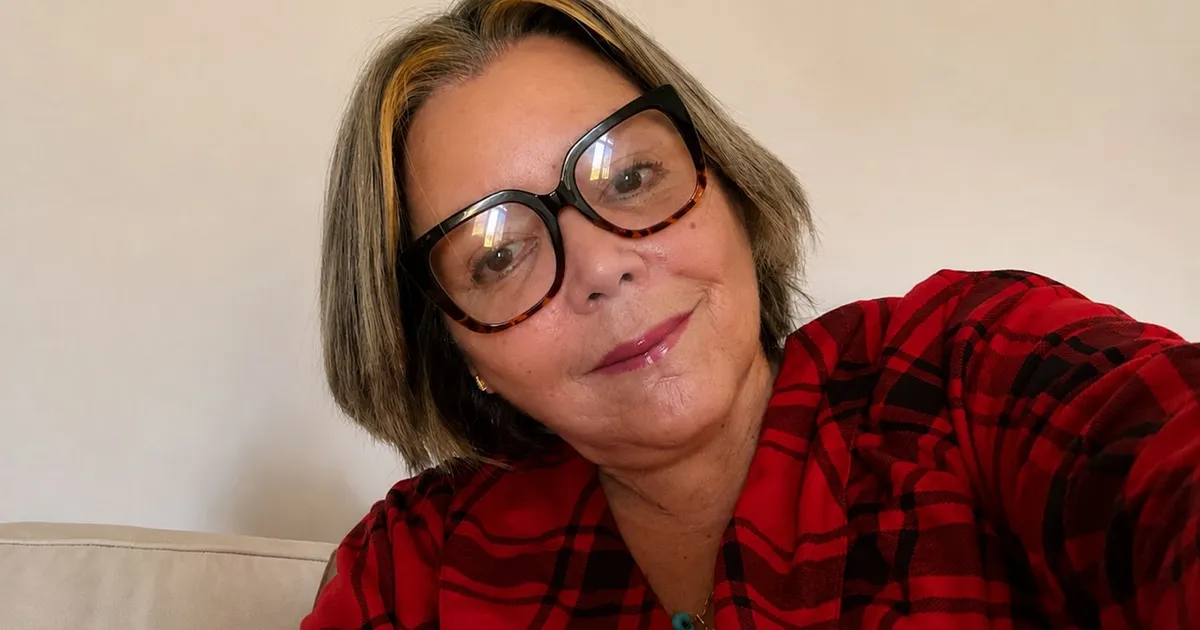
More than 16 years have passed since the Venezuelan criminal judge María Lourdes Afiuni Mora was arrested for fulfilling her duty. Her case is not only the story of a woman persecuted for exercising judicial function, it is also the story of how a justice system can be used as an instrument of political retaliation and how an individual injustice can be transformed into a mechanism of collective intimidation.
On December 10, 2009, Judge María Lourdes Afiuni Mora issued a judicial decision in the exercise of her functions by which she granted precautionary measures to citizen Eligio Cedeño, whose deprivation of liberty had become arbitrary according to Venezuelan legislation and according to the decision of the Working Group on Arbitrary Detentions of the United Nations (UN). Due to that decision, adopted within her legal powers and also supported by the aforementioned international pronouncement, she was arrested, imprisoned, physically and mentally tortured, and subjected to an unfair process that continues to this day.
His custodial measure was preceded by public statements by the then president of Venezuela, Hugo Chávez Frías, who demanded his conviction on national radio and television, and even went so far as to state that, in the time of Simón Bolívar, judge María Lourdes Afiuni Mora would have been executed for the decision he had made. Those statements not only seriously compromised judicial independencebut they sent an unequivocal message to the entire Venezuelan justice system: deciding in accordance with the law could have devastating personal consequences.
What followed is widely known, María Lourdes Afiuni Mora She was confined in a common prison, even though her investiture required her to go to a special detention center; was subjected to detention conditions absolutely incompatible with international human rights standards, and was a victim of serious physical, psychological and sexual abuse that left irreparable consequences on their health.
Paradoxically, the prosecutor in charge of the case herself stated that there was never any economic benefit, payment, promise or consideration related to the judicial decision that motivated the accusation, a circumstance that was recorded verbatim in the file. Given this fact, the aforementioned fiscal representative resorted to a crime that is not provided for in the Venezuelan legal system, which she called “spiritual corruption.”
Notwithstanding the above, María Lourdes Afiuni Mora was also convicted of the crime of self-corruption, despite the fact that the norm that typifies said criminal offense requires, for its consummation, the existence of a consideration in exchange for the decision adopted by the judicial official.
Sustained pursuit
The case of María Lourdes Afiuni Mora transcended national borders and achieved international notoriety, prompting multiple pronouncements from international organizations, human rights organizations, jurists, special rapporteurs and democratic governments. Likewise, it was presented before various international forums as one of the most serious examples of persecution against a woman for the exercise of her convictions and the fulfillment of her professional responsibilities in the judicial field.
But, 16 years later, the injustice has not ended, and although he has already more than served any time related to the sentence imposed on him, Judge María Lourdes Afiuni Mora remains trapped in a legal limbo that prevents her from fully recovering her rights. The process remains open, the restrictions remain in force, and requests aimed at putting a definitive end to this situation remain without an effective response.
The human cost has been immense and merciless; for years, the aforementioned citizen has been prevented from freely meeting her only daughter and her two grandchildren, American citizens who have resided in the United States since their birth; and has seen more than a decade of family life separated by judicial decisions that lack any reasonable and proportional justification.
However, the damage caused transcends María Lourdes Afiuni herself, her case produced what is known today inside and outside Venezuela as the “Afiuni Effect”which is nothing other than the fear of judges and judicial officials to act independently in politically compromised matters. Therefore, the arrest and subsequent torture of a judge for making a jurisdictional decision in accordance with the law became an exemplary message for the entire Judicial Branch in our country, and in one of the most visible symbols of the loss of institutional autonomy in Venezuela.
On the other hand, months ago an Amnesty Law was approved in Venezuela, presented as an instrument aimed at promoting national reconciliation. However, said regulations excluded Judge María Lourdes Afiuni Mora. Likewise, recently, citizen Delcy Rodríguez announced the holding of a broad national consultation aimed at promoting criminal justice reform, with the purpose of transforming the judicial system. In this context, it is impossible to conceive of genuine reconciliation as long as the victims continue to be ignored and the damage caused by judicial processes used as mechanisms of persecution and political revenge are not repaired.
Likewise, we cannot speak of full and effective justice or of a true transformation of the justice system as long as cases so emblematic and sensitive for the judicial field, such as that of María Lourdes Afiuni Mora, remain without a definitive resolution that fully restores her rights and demand the independence of the Judiciary in our country.
Therefore, we make a respectful but urgent call to the diplomatic representations accredited in Venezuela, especially to the United Statesto democratic governments, to international human rights organizations, to United Nations rapporteurs, to the media, and to all institutions committed to defending the rule of law to keep their attention on this case and contribute, within their powers, to promoting a definitive solution.
Closing this file is not only to repair an injustice against a person, it is also to send a message in favor of judicial independence, human dignity and the need for no judge to be persecuted again for applying the law.
After 16 years, María Lourdes Afiuni Mora He deserves justice and Venezuela needs this dark page of its judicial history to be finally closed.
NELSON AFIUNI MORA
Brother of Judge María Lourdes Afiuni Mora
ABG. THELMA FERNANDEZ
Legal representative of the Afiuni Mora family
