
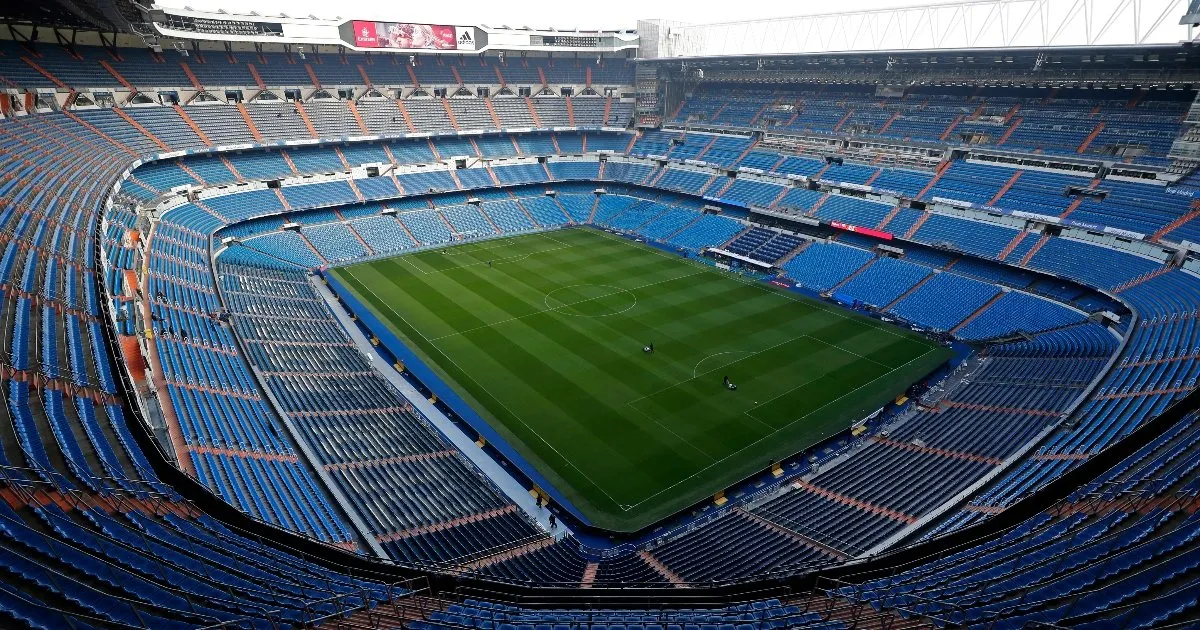
The Santiago Bernabéu is one step away from once again becoming the center of the football world. Various information published by Diario AS indicates that the Real Madrid stadium is the great favorite to host the final of the 2030 World Cup, a tournament that Spain, Portugal and Morocco will jointly organize. If it comes to fruition, the Madrid Coliseum would once again be the scene of a World Cup final 48 years after the one held in 1982.
The last World Cup final at the Bernabéu: Italy 3-1 West Germany
On July 11, 1982, before nearly 90,000 spectators, the Santiago Bernabéu hosted the final of the 1982 World Cup in Spain between Italy and West Germany. The match ended with an Italian victory 3-1, allowing the “Azzurra” to win their third World Cup.
The goals of the final
Paolo Rossi (57′) – Italy 1-0 West Germany.
Marco Tardelli (69′) – Italy 2-0 West Germany.
Alessandro Altobelli (81′) – Italy 3-0 West Germany.
Paul Breitner (83′) – Italy 3-1 West Germany.
The protagonists of that night
Italy reached the final led by Paolo Rossi, who finished as the tournament’s top scorer and was one of the great figures of the championship. In addition, captain Dino Zoff won the World Cup at the age of 40, becoming the oldest player to win a World Cup.
Among the most memorable moments of that final are:
The penalty missed by Antonio Cabrini in the first half.
Marco Tardelli’s unforgettable shout of celebration after scoring 2-0.
The gesture of the Italian president Sandro Pertini celebrating in the box before the end of the match.
The definitive consecration of Paolo Rossi as a national hero.
The Bernabéu of 1982 vs the Bernabéu of 2030
The difference between both stadiums is practically that of two different eras of football.
Santiago Bernabéu 1982
Open stadium without cover.
Basic electronic markers.
Stands closer to the classic concept of the 80s.
No huge immersive screens.
Infrastructure focused exclusively on football.
Capacity close to 90,000 spectators for the World Cup final.
Santiago Bernabéu 2030
State-of-the-art retractable cover.
Video scoreboard 360 degrees around the stadium.
International level lighting and sound technology.
Retractable grass and underground conservation system.
VIP spaces, commercial areas and immersive experience for fans.
One of the most modern and technological stadiums in the world.
A setting with enormous symbolism
If FIFA definitively confirms the Bernabéu as the venue for the 2030 final, Madrid will join a very small group of cities that have hosted more than one World Cup final. In addition, the Real Madrid stadium will reinforce its status as a historic venue, after having hosted a European Championship final, a World Cup final and multiple continental finals.
The black and white image from 1982 and the modern postcard of the current Bernabéu reflect the evolution of world football. Almost half a century later, the same scenario could once again crown a world champion, this time in one of the most advanced stadiums ever built.
