
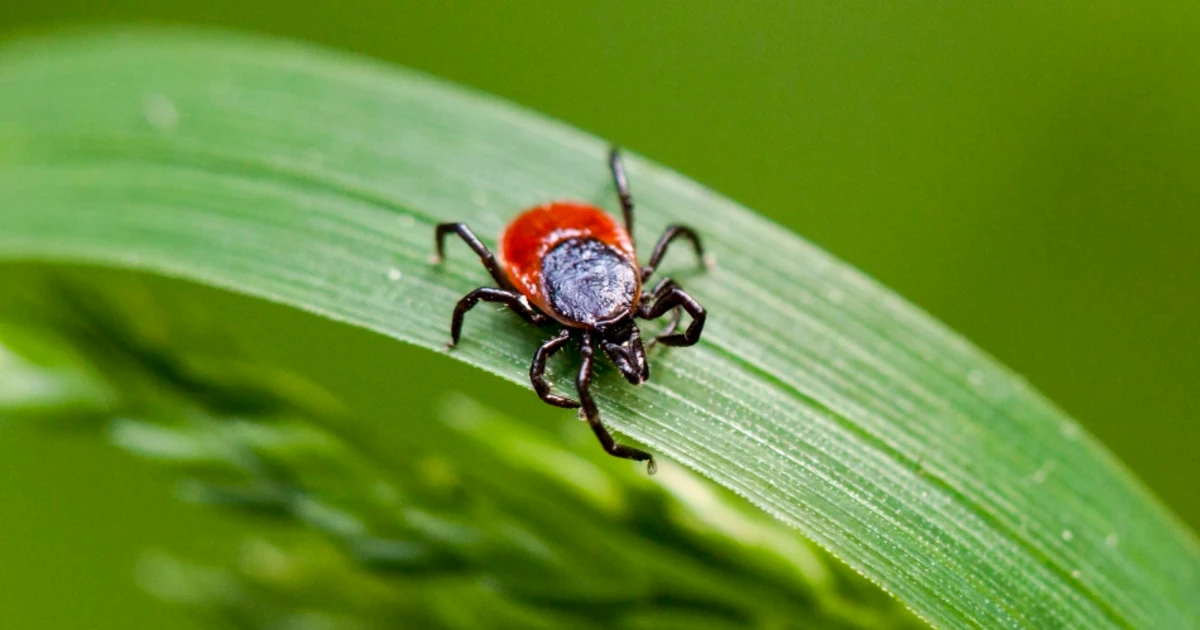
There is a new type of Lyme disease in New York State.
Almost all cases of this tick-borne disease in the United States are caused by a corkscrew-shaped bacteria called Borrelia burgdorferi. But B. burgdorferi is actually one of two species that cause Lyme disease in the United States. The other, Borrelia mayonii, is much rarer. Until now, it had only been detected in Minnesota and Wisconsin. Both types of bacteria are transmitted by deer ticks.
According to a report from the Centers for Disease Control and Prevention published this Thursday, a case of Lyme disease caused by B. mayonii was detected last July in upstate New York.
The new infection occurred in an adult who lives in Herkimer County, which stretches from the outskirts of Utica to the Adirondack Mountains. According to the report, the person had not traveled recently.
The state health department found a handful of ticks on the person’s wooded property that tested positive for the bacteria. But a much broader search of more than 1,500 ticks from 24 New York counties did not find the bacteria again.
It’s unclear exactly how the bacteria got to Herkimer County.
“Although this finding was unexpected, we know that the distribution of ticks and tick-borne diseases can change geographically over time,” a spokesperson for the New York State Department of Health said in an email.
(Ultra-processed foods increase the possibility of suffering from dementia, according to a study)
Douglas Norris, professor of molecular microbiology and immunology at the Johns Hopkins Bloomberg School of Public Health in Baltimore, stated that the bacteria has likely been present in New York ticks for a couple of years, although it appears to be confined to a very small area.
Same disease, different symptoms
Researchers know much less about B. mayonii than they do about B. burgdorferi. There have been far fewer infections caused by the former to study them, and the bacteria was discovered by researchers at the Mayo Clinic, based in Rochester, Minnesota, in 2016 – 35 years after B. burgdorferi. Both species can cause debilitating diseases.
Both infections can begin with fever and headache, but Lyme disease caused by B. mayonii is more prone to cause nausea and vomiting.
People infected with the less common species may also not develop the disease’s characteristic target-shaped rash surrounding the tick bite, Norris said. Instead, they may have a more widespread rash, which could look like small red spots on one part of the body, rather than just over the bite.
“People are also having more neurological symptoms,” said Dr. Bobbi Pritt, a pathologist at the Mayo Clinic. Pritt was one of the scientists who discovered the bacteria B. mayonii. “There could be broader symptoms that we haven’t seen yet.”
The health department did not reveal what symptoms the New Yorker infected with B. mayonii had last year.
Increase in cases of Lyme disease
Lyme disease cases have skyrocketed across the Northeast in recent years. Between 2020 and 2024, the incidence of Lyme disease in New York state increased nearly 450%, going from about 37 cases per 100,000 people in 2020 to nearly 165 cases per 100,000 in 2024, according to health department statistics.
(Illnesses increase in children due to mistrust in vaccines)
Although more cases of B. mayonii are likely to appear throughout the Northeast, these infections are expected to remain rare, Pritt said.
“I think Borrelia burgdorferi will continue to be the most common form of Lyme disease in the United States. We know that Borrelia mayonii is not the main cause of Lyme disease to begin with,” he said.
Even in the upper Midwest, where B. mayonii has been detected in the past, the bacteria causes a minority of Lyme disease cases. B. mayonii only causes about two of the nearly 3,000 cases of Lyme disease detected in Minnesota each year, according to the Minnesota Department of Health.
Only 0.2% of nymphs, or young ticks, collected throughout New York carried B. mayonii, compared to about 1% of adult ticks, the health department found. On the other hand, B. burgdorferi infects about a quarter of nymphs in the Northeast and half of all adult ticks.
Ticks must remain attached to a person between 24 and 48 hours before you can transmit infectious bacteria, so monitoring is key. For this reason, nymphs, which are about the size of a poppy seed, are typically the ticks that spread Lyme disease, Norris said.
“A large tick is usually noticed by a human, but those small ones not so much,” Norris said.
Climate change expands Lyme disease ‘sweet spot’
Climate change is redefining where tick-borne diseases spread, although it is not likely to be the cause of B. mayonni’s emergence in New York, Norris said.
“Unfortunately, it was introduced in the sweet spot,” he said.
Experts don’t know how the bacteria got there, but Norris said it’s possible an infected tick attached itself to a bird that migrated to New York from Minnesota or Wisconsin.
(Can we consume enough protein naturally or do we need ‘whey’? An expert clarifies?)
New York and the northeastern region of the United States in general have an ideal climate for ticks to incubate the bacteria that causes Lyme disease to the point that it can infect people. This so-called sweet spot is shifting north due to climate change, toward Maine and southern Canada, causing further spread of Lyme disease and skyrocketing cases in places like New York, where Lyme disease is known to have circulated for decades.
Pritt said to prevent tick bites, people should stay in the center of trails while walking to avoid contact with tall grass that can harbor ticks. When possible, people should wear long sleeves and tuck their pants into their socks to try to prevent bugs from sticking to their skin, he explained. Pritt also recommends using insect repellent with 30% DEET or oil of lemon eucalyptus. It’s also a good idea check yourself and pets looking for ticks every hour or so when in areas where there are ticks. Taking showers and doing a thorough check for ticks once you return home are also advised.
“We don’t want people to be afraid of the outdoors,” he said. “But ticks can transmit a whole host of things, other parasitic and viral diseases, so the bottom line is that people need to protect themselves from tick bites.”
