
MIAMI — The US Department of Justice made public this Wednesday a criminal indictment against former Cuban dictator Raúl Castro, 94, handed down by a federal grand jury based in Miami on April 23, for his alleged order to shoot down two unarmed small planes of the Brothers to the Rescue organization over the Straits of Florida in 1996, causing the death of four pilots, three of them US citizens.
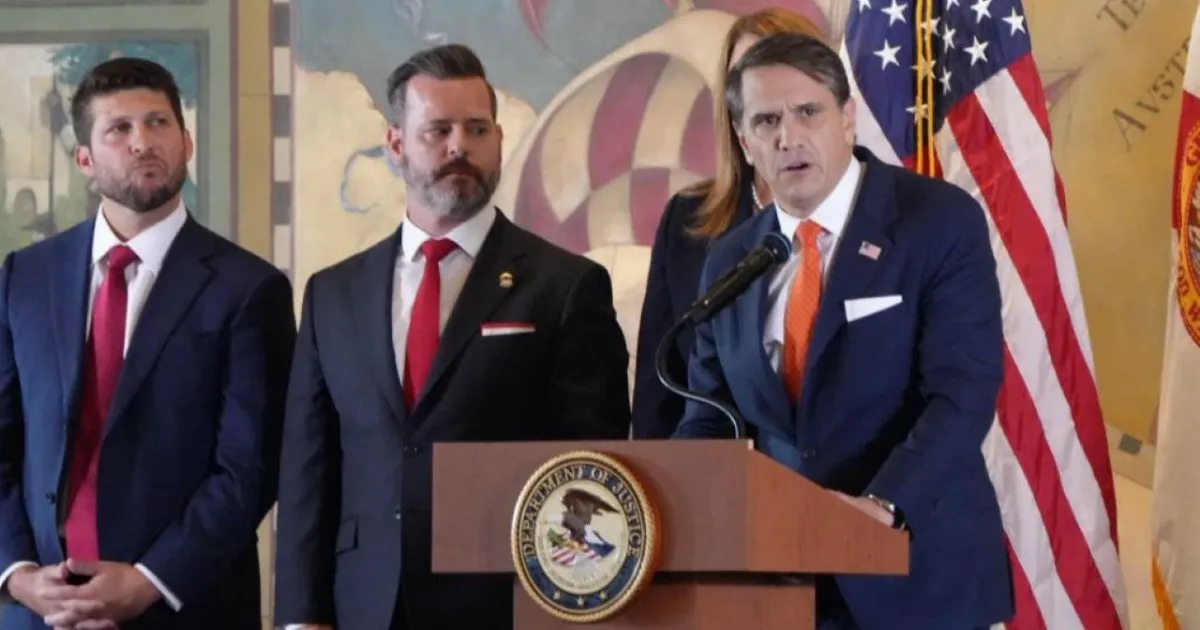
The indictment, which includes charges of murder, conspiracy to kill United States citizens and destruction of aircraft, was declassified and announced by acting Attorney General Todd Blanche, in a ceremony held at the Freedom Tower in Miami, a historical symbol of Cuban exiles.
Court documents state that the grand jury issued the formal indictment on April 23, but the indictment remained under seal for almost a month until it was unclassified this Wednesday.
The strategy of keeping the document confidential allowed the Department of Justice to coordinate the announcement with a ceremony honoring the victims.
The accusation was presented before the federal court of the Southern District of Florida and includes, in addition to Raúl Castro, other Cuban soldiers: Lorenzo Alberto Pérez-Pérez, Emilio José Palacio Blanco, José Fidel Gual Barzaga, Raúl Simanca Cárdenas and Luis Raúl González-Pardo Rodríguez.
The accused also include Rubén Martínez Puente, former head of the Cuban Air Force, and Francisco Pérez-Pérez, identified as one of the pilots who carried out the attack.
The charges are not based on the governmental role of Castro, who governed Cuba between 2008 and 2018, but on his position as Minister of the Armed Forces in 1996 and his direct participation in the demolition order. The indictment includes four individual counts of murder and two of destruction of aircraft, according to the text declassified by the prosecution.
“For the first time in almost 70 years, the senior leadership of the Cuban regime has been charged in the United States of America for acts of violence that resulted in the deaths of American citizens, said Todd Blanche, Acting Attorney General of the United States.
The victims and the facts
Brothers to the Rescue was an organization of exiled pilots based in Miami that made regular flights over the Strait of Florida to locate and assist Cuban rafters trying to reach the United States.
On February 24, 1996, two of its unarmed civilian aircraft were intercepted and shot down by Cuban Air Force MiG fighters using heat-guided missiles, according to US Congressional documents.
Carlos Costa, Armando Alejandre Jr. and Mario Manuel de la Peña, American citizens, and Pablo Morales, a legal resident of the United States, died in the attack. A third aircraft managed to escape.
The Cuban regime then maintained that the attack was a legitimate response to the intrusion of aircraft into Cuban airspace. Fidel Castro declared that the military forces acted under “standing orders” to shoot down planes that penetrated the island’s airspace and denied that Raúl Castro had issued a specific order that day.
Washington condemned the attack, imposed sanctions, and the Justice Department indicted three Cuban military officers involved in the episode in 2003, but none were extradited.
Thirty years of waiting for the Cuban exile
The process has been three decades in the making. Federal prosecutors in Miami first drafted an indictment against the Castro brothers in the 1990s, but changing political priorities kept the investigation on hold.
The case regained momentum after Donald Trump’s first term and gained new relevance when Cuban-American congressmen—led by Mario Díaz-Balart, María Elvira Salazar and Carlos A. Giménez, along with Senator Ashley Moody—formally demanded that the Department of Justice, last February, take up the file.
The announcement was received with a standing ovation at the Freedom Tower, where relatives of the victims attended the event along with federal officials and leaders of the exiled community.
Sylvia Iriondo, survivor of the demolition, described the day as “a day of hope, a day that marks a path of justice that has eluded our families and communities for 30 years.”
