
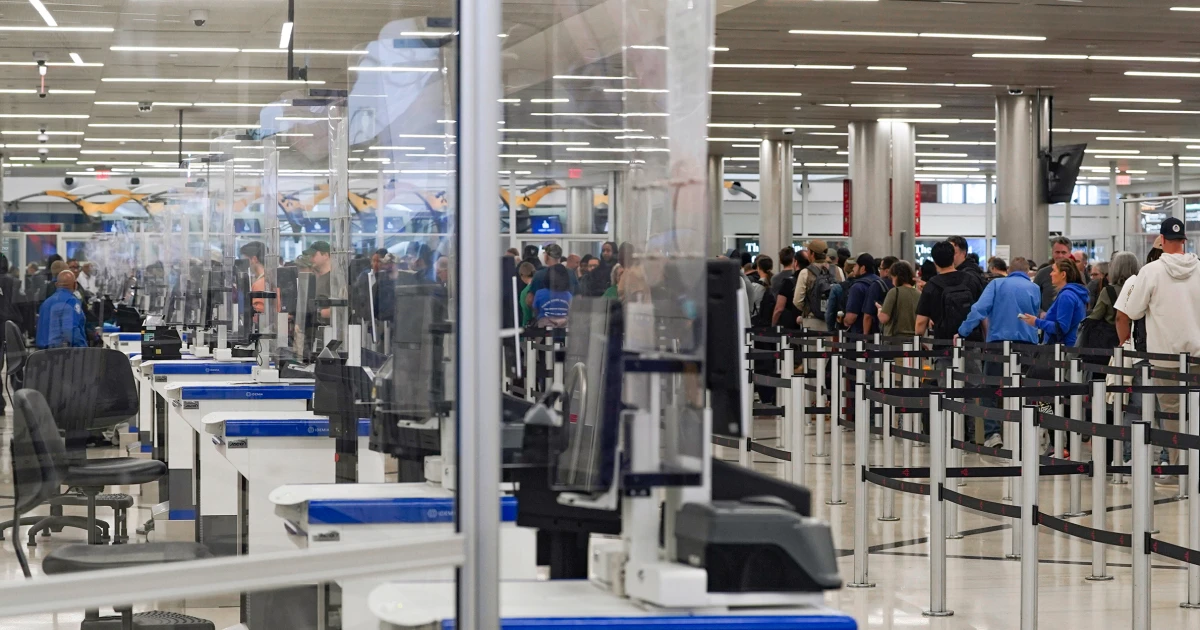
The United States announced this Monday the invocation of Title 42 of the public health law to restrict the entry into the country of passengers from African nations hit by an Ebola outbreak that has left dozens dead.
The Centers for Disease Control and Prevention announced that people without a U.S. passport who have traveled to Congo, Uganda or South Sudan in the past three weeks will be restricted from entering the country.
The WHO declared the outbreak in Africa a public health emergency of international concern on Sunday, after recording more than 300 suspected cases and 88 deaths.
“For now, the CDC considers that the immediate risk to the general population of the United States is low,” the agency detailed in a statement. The measures will be in force for 30 days.
“We will continue to evaluate the evolution of the situation and may adjust public health measures as more information becomes available,” the CDC expanded in its statement.
Ebola is highly contagious and can be contracted through bodily fluids such as vomit, blood or semen. The disease it causes is rare, but serious and often fatal.
Health authorities have confirmed that the current outbreak, confirmed on Friday, is caused by the Bundibugyo virus, a rare variant of the Ebola disease for which there are no approved treatments or vaccines. Although there have been more than 20 Ebola outbreaks in the Democratic Republic of the Congo and Uganda, this is only the third time the Bundibugyo virus has been detected.
(WHO declares global health emergency due to Ebola outbreak in the Democratic Republic of the Congo and Uganda)
Among the measures announced Monday by the CDC are strengthening public health controls and surveillance of passengers arriving from affected areas, and coordinating with airlines and ports of entry to identify people who may have been exposed to the virus.
In addition, the CDC asked the population to seek medical attention in case of symptoms such as fever, weakness, vomiting, diarrhea, and unexplained bleeding or hemorrhage within 21 days after visiting the affected areas.
Authorities reported on Friday the spread of the disease in the eastern Congolese province of Ituri, close to Uganda and South Sudan. On Saturday, the Africa Centers for Disease Control and Prevention reported 336 suspected cases and 87 deaths in Congo.
“There are significant uncertainties about the actual number of infected people and the geographic spread related to this event at the current time. In addition, there is limited understanding of the epidemiological links with known or suspected cases,” said WHO Director-General Tedros Adhanom Ghebreyesus.
