
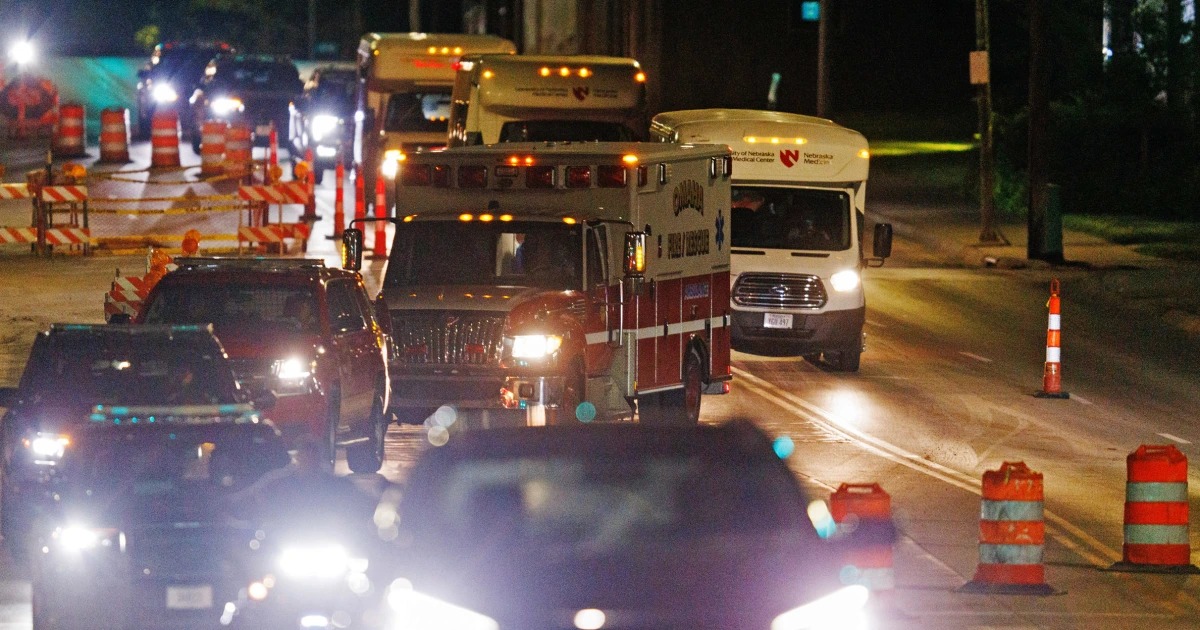
A total of 18 Americans are currently in quarantine at two federal facilities after returning home from traveling on the MV Hondius cruise ship.
It is not yet clear how long they will remain in quarantine or where. Now that the passengers have had time to rest, U.S. health officials are interviewing them to get a clearer picture of the extent to which American passengers may have been around infected people, and whether they have the necessary resources, such as separate rooms, to quarantine safely at home.
“We want to do this in the least restrictive way possible,” said Dr. Brendan Jackson, acting director of the division of high-risk pathogens and pathology at the Centers for Disease Control and Prevention (CDC), at a press conference on Monday.
Symptoms can take up to 42 days to appear after exposure to the virus. If passengers are allowed to leave federal quarantine centers and stay home, They must be free of symptoms. They would also need to contact local health authorities regularly, Jackson said.
The Andes strain is the only hantavirus that can be transmitted from person to person. Although there are some reports of people contracting it through casual contact, most scientists say it is not easily transmitted and there is no clear evidence that people are contagious before showing symptoms.
(See the plane with the 17 Americans evacuated from the hantavirus cruise land in Nebraska)
“We have no evidence of sustained community transmission outside of close contact settings, nor of effective airborne spread in public spaces, and there are no recommendations for general travel restrictions,” Dr. Bobbi S. Pritt, director of the division of clinical microbiology at the Mayo Clinic, said Tuesday at a College of American Pathologists press conference.
Eleven cases of hantavirus have been reported among the almost 150 passengers. Three people have died.
Sixteen of the 18 Americans are at the national quarantine center in Omaha, Nebraska. Two are in a quarantine facility at Emory University in Atlanta. One of the people quarantined in Atlanta has had mild symptoms, but has tested negative for hantavirus. None of the other passengers in Omaha or Atlanta have tested positive.
Dr. Michael Mina, an epidemiologist and former professor of immunology and infectious diseases at the Harvard TH Chan School of Public Health, said a strict quarantine is a “small price to pay” to avoid more cases and possible deaths.
(What is the Andean strain of hantavirus? What you should know about the deadly type of infection linked to a cruise ship)
“If even one death could be avoided, it would be worth quarantining the entire ship,” Mina said.
More cases expected
Dr. Abraar Karan, an infectious disease physician at Stanford Medicine, said quarantining passengers at home “poses unnecessary risks.”
“What happens if they go home to quarantine and start getting sick? Then they have to be transferred to a center that has a biocontainment unit, something that very few have,” Karan said. “People coming home doesn’t seem to make much sense.”
The director general of the World Health Organization (WHO), Tedros Adhanom Ghebreyesus, has already acknowledged that more cases could occur, given the long incubation period of the virus.
“It is possible that we will see more cases in the coming weeks,” he said at a press conference. The WHO recommends that people quarantined at home stay separated from family members in different rooms. If physical interaction with another person is necessary, ship passengers must wear N95 masks.
How other countries are carrying out quarantine
Zimbabwe’s Ministry of Health stated that its citizens from the cruise ship “will remain together in a designated private isolation center during the quarantine period.”
Health authorities in the United Kingdom and the Netherlands, however, indicated that some passengers could isolate at home as long as they can do so safely.
(More than 110 people were infected with a norovirus outbreak on a Florida-based cruise ship)
Katelyn Jetelina, an epidemiologist who tracks diseases for a website called Your Local Epidemiologist, said that “as with any public health decision, you have to weigh the real advantages and disadvantages. “This is both a public health and humanitarian response.”
The passengers “were in international waters and lived a nightmare for more than a month. That has a real psychological impact,” Jetelina said. “I think the best option is the least restrictive approach that still ensures the safety of communities.”
At least seven Americans who had already disembarked from the ship are reported to be quarantined at home in several states, where health departments have indicated they are maintaining regular contact with passengers to help them manage symptoms.
Quarantine guidelines for the 18 passengers may change in the next few days.
Dr. Mara Jana Broadhurst, medical director of the Nebraska Biocontainment Unit Laboratory, said her team and U.S. health authorities are trying to “find a balance” between monitoring passengers at the facility and at home.
The quarantine recommendations “are based on what we know about the incubation period,” Broadhurst explained at the pathologists’ press conference this Tuesday. “The facilities here in Omaha will be available throughout the incubation period.”
The UNMC quarantine rooms are set up to be more like a hotel than a hospital, with exercise equipment and the ability to order food at home, said one of the passengers quarantined in Nebraska.
“They may not bring it to you right away, but you can receive shipments, care packages,” Jake Rosmarin said Tuesday on NBC’s show. He stated that he has had no hantavirus symptoms. “I am happy to be in a place where I know they take good care of us and, if something happens, we have the medical attention we need.”
