
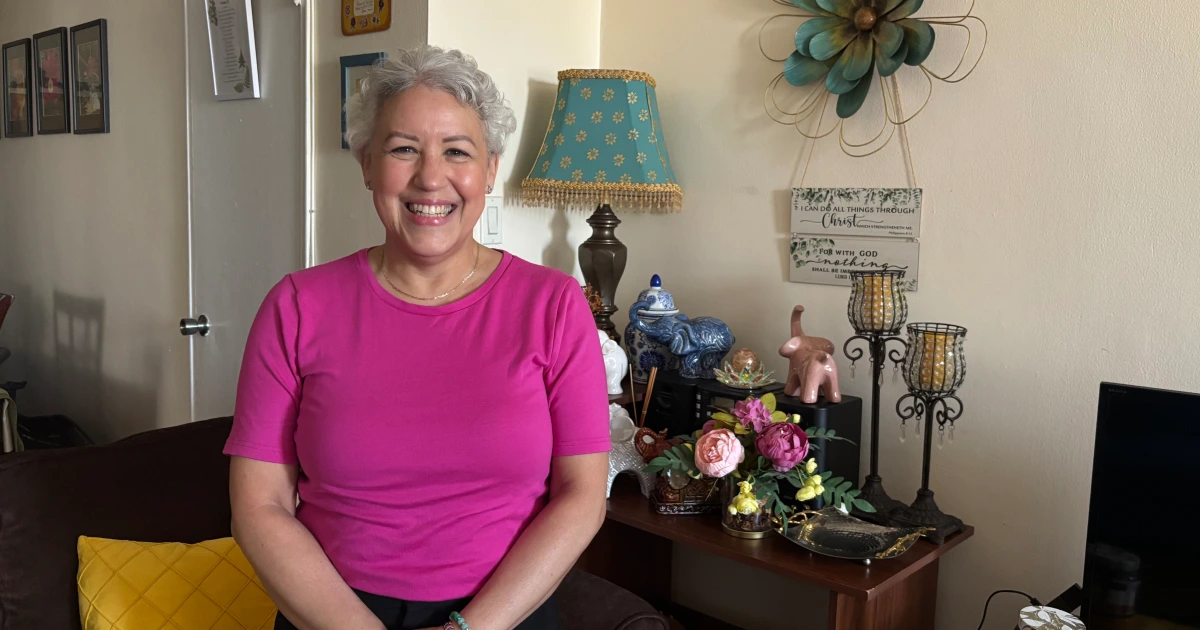
Every time he went to the bathroom he saw blood, and after a month or a month and a half, he went to the doctor. This is how a three-year process began for Yenny Alba Olivares, who in 2023 was diagnosed with colorectal cancer and later two leukemias. A stage already completed, since he became cancer-free in April 2025. Now he tells his experience with courage.
“Maybe if I had gone for my regular check-ups, to have a colonoscopy, the result would have been different,” says the architect of Dominican origin.
Excluding skin cancers, colorectal cancer is the third cancer most common diagnosed in both women and men in the United States.
The disease is now the leading cause of death in cancer patients under 50 years of age, according to a recent study published by the Journal of the American Medical Association. And its incidence among Hispanics under 65 years of age increases 4% annually.
Olivares was 53 years old when the disease was detected, and his recovery process, during which two leukemias were also detected, lasted three years. “First they gave me radiation for 28 days and chemotherapy pills and the tumor was completely destroyed, and I didn’t have to have surgery because there was nothing left.”
This type of cancer originates in the rectum and colon and the most noticeable changes are weight loss and bleeding when defecating. In addition, it is one of the main causes of death from cancer among Hispanics in the United States, which is why experts insist on the importance of regular check-ups.
Just over half of Hispanic adults are screened for colorectal cancer according to American Cancer Society guidelines, fewer than whites, whose group is at 65%.
“What I would recommend is that any of these changes (…) go to the doctor,” advises Dr. Gabriela Bambrick-Santoyo, from the Memorial Sloan Kettering Cancer Center in New York. The doctor also says that, Even if there are no symptoms, these routine screening tests should begin at age 45 with a colonoscopy every ten years.
Olivares, who has been living in the Queens neighborhood of New York for 21 years, says that what he missed most during his illness was “being at home with my family, but also traveling, because that is what I like the most.”

After the disappearance of the colorectal tumor, Olivares received other bad news, and that is that in a blood test they did after radiation, they discovered that he had leukemia: “At first I didn’t want to believe it,” he remembers.
He had to undergo a long course of chemotherapy, twice, since after a time in remission, the leukemia came back: “And they always say that when it comes back it is stronger.”
Olivares suffered many physical consequences, such as hair loss, which especially affected him, since before his illness he went to the salon every week. “I didn’t see myself in the mirror and I didn’t talk to anyone for about two or three days.”
After a bone marrow transplant on April 25, 2025, he feels that on that date “I have my birthday again.”
Now he hopes to be an example for the Hispanic community and raise awareness of the importance of regular medical check-ups: “Latinos always think that it will never happen to us”.
He also says that the illness has brought him even closer to his Christian faith and to understanding that he must set limits: “At work people always want something.” In this sense, he states that “it’s not that I don’t care because in my job I have to be responsible, but if I have to leave it for myself or my family, I’ll leave it and that’s it.”
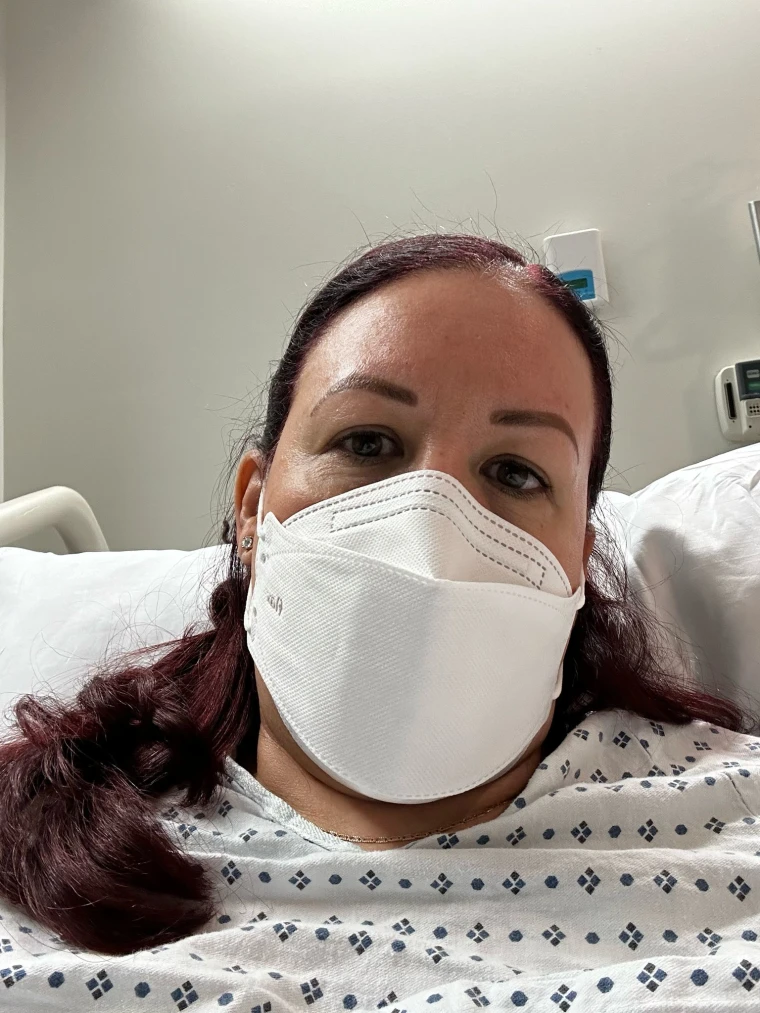
Olivares’ cancer was a physical and emotional challenge for her, but also for her family.
Her son was only 12 years old when he was diagnosed with the first tumor, and it was not until years later that he was able to verbalize how he felt: “It was very hard for me to get home and you weren’t there,” he told his mother just a few weeks ago.
Now “he knows that I am here… For him it is also peace of mind that mom is in the house… I longed for that,” says Olivares.
Her husband, who is a chef and brought her food to the hospital during her long stays, doesn’t talk much about the years of illness, preferring to look forward with gratitude that everything turned out well.
Olivares also did not talk much about the subject while his treatment lasted: “When I returned home and had strength, I started working from home, to keep my mind on something. Because if you start thinking that you are sick, you are not going to get out of there.”
Regarding changes in his habits, Olivares says that he now starts his days with green juices of celery, apple and ginger, instead of coffee, although not on medical recommendation. And the protagonists of their meals are vegetables and meat or fish.
Dr. Bambrick-Santoyo also insists on having a good diet and highlights that the most important thing is to “eat basic things, that have not been packaged, processed in a factory. If we are talking about fish with rice and vegetables or beans, they are things that we can buy and cook at home.”
An added challenge: navigating the health system
The challenge for Olivares, and many Latinos in the United States, is navigating a complex health system. And although this was not the case for Olivares, who is a US citizen, it is especially difficult for those who do not have their immigration status regularized.
“The Latino community in the United States may have a complex immigration situation,” said Bambrick-Santoyo, who explains that the lack of early care is precisely one of the reasons why Latinos are diagnosed in more advanced stages.
But it’s not that simple. Ben D’Avanzo is a senior strategist at the National Immigration Law Center, an immigrant advocacy organization. D’Avanzo says that a 1996 federal law disqualifies undocumented immigrants from enrolling in health insurance programs administered or financed by the federal government, although with exceptions. The main one is that the law requires that anyone who goes to a hospital with a medical emergency receive treatment, regardless of whether they have health insurance or not, and regardless of their immigration status.
Additionally, D’Avanzo says some states have created different programs to help immigrants who cannot access federal health benefits. And he recommends checking the websites of organizations such as the American Medical Association and the American Public Health Association, which support immigrants’ access to health care.
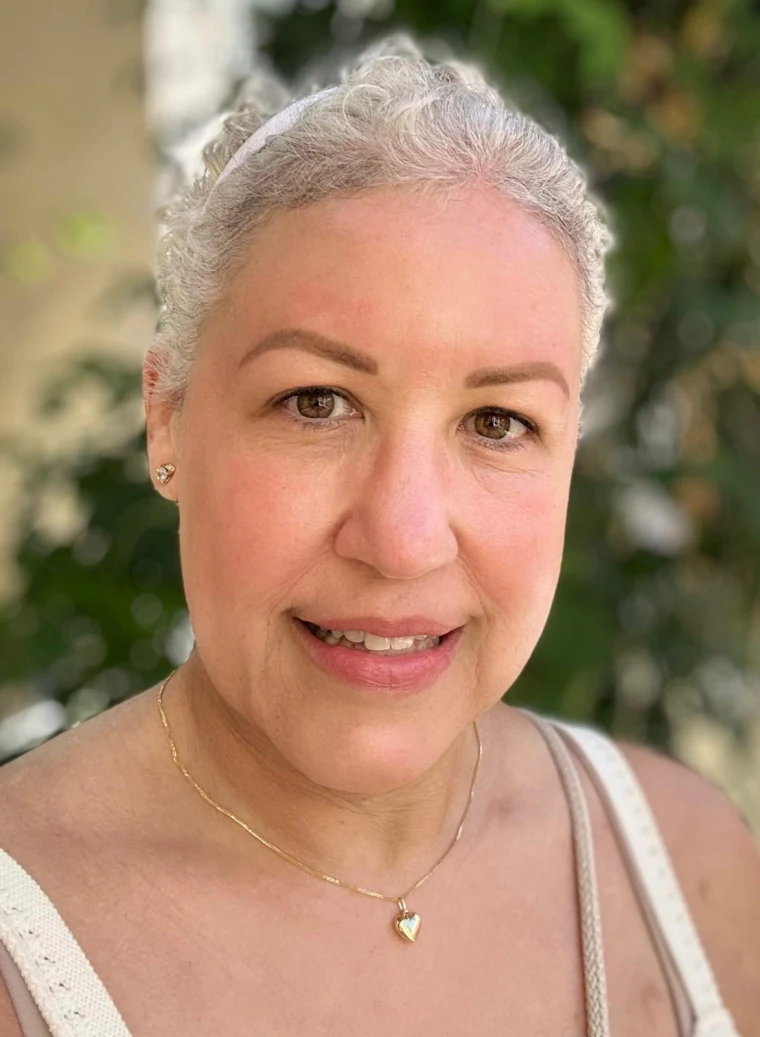
“Providing basic healthcare to everyone should be a top priority”says D’Avanzo, who adds that it is unfair that immigrants who are paying taxes and working to support their families in this country cannot be healthy.
Olivares has a stable job as an interior architect and health insurance through her company. So she feels lucky that when she got sick, she didn’t have any problems. She says that her employer continued to generously pay—since they are not required to do so after 12 weeks of medical leave—the entire insurance, although she, unable to work, stopped receiving her salary and entered a temporary disability program, from which she received about $600 a month.
For her part, Dr. Bambrick-Santoyo, who lives and works in New York, highlights that, in the state, any patient must be treated in hospitals without asking questions about their immigration status or their ability to pay for the treatment.
Despite insurance and income, Olivares was not able to cover all of his treatment at the time, but he made payment plans with the hospital to pay off the debt little by little. The Dominican feels lucky because she says “I haven’t had to worry.”
For Olivares, who a year after his bone marrow transplant may be living a life very similar to the one he had before his cancer was detected, the disease has taught him lessons that go far beyond health: “I have learned to value the things that are truly important: your family, your health and your peace of mind.”
