
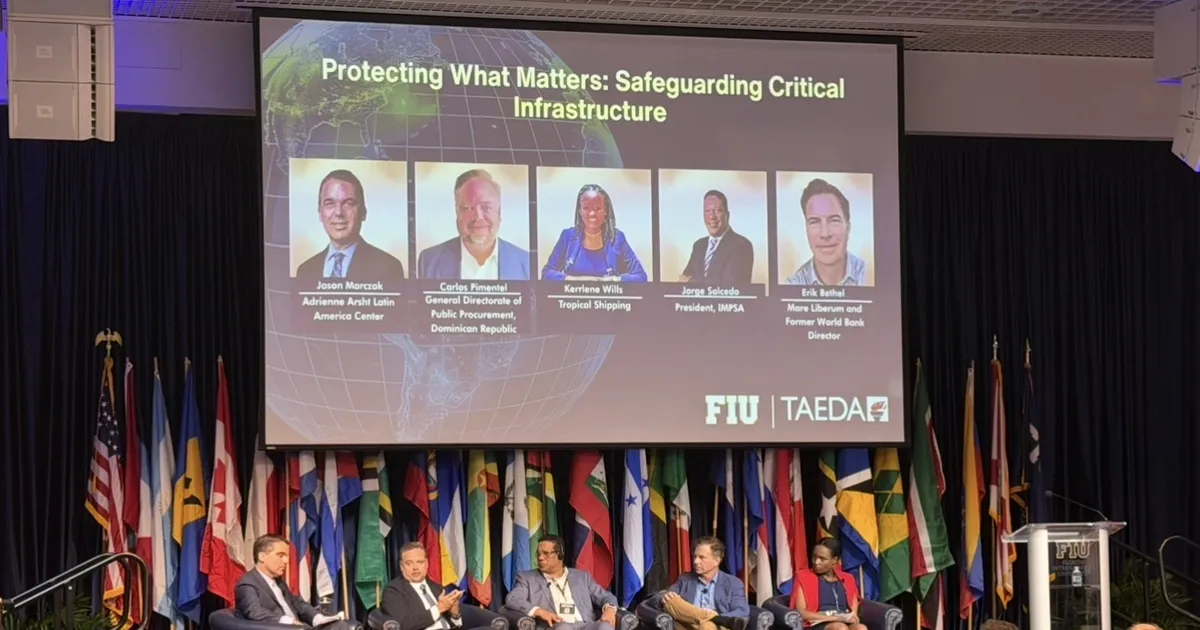
MIAMI. – The 2026 Hemispheric Security Conference continued this Wednesday at Florida International University (FIU) with an agenda focused on the geopolitical challenges facing Latin America, the Caribbean and the Western Hemisphere in the midst of an international scenario marked by strategic tensions, migration, cybersecurity and disputes between global powers.
The second day of the meeting brought together security specialists, government officials, academics and military representatives in Miami to discuss the future of the region and the impact of international conflicts in countries such as Cuba and Venezuela.
One of the main spaces was focused precisely on the possible scenarios for both nations, as well as the risks and opportunities linked to the Western Hemisphere.
During this exchange, figures such as the former diplomatic representative of the United States for Venezuela James “Jimmy” Story, the representative of the Friedrich Naumann Foundation for Freedom, Elisabeth Maingler, and the Cuban activist Rosa María Payá participated, who presented different visions about the role of sanctions, international pressure and the possibilities of democratic transition.
Story maintained that Washington should not delay an eventual transition in Caracas and warned about strengthening the structures of Chavismo if the international approach is limited only to diplomacy or energy agreements.
Regarding the government in Havana, it recognized a more complex panorama due to the limited opportunities for political organization within the island.
For his part, Payá defended a different position and considered it necessary to maintain measures of international pressure against the Cuban regime.
The former US ambassador to the Organization of American States (OAS), Frank Mora, who was among the guests, stated that economic sanctions alone have historically not caused sustained political changes and pointed out that any transformation requires internal pressure and citizen mobilization.
The debates also coincided with new complaints about alleged repressive actions in the Greater Antilles and with a climate of political tension marked by recent messages from the Catrista dictatorship related to scenarios of confrontation and civil defense.
This Wednesday’s programming also included a dialogue on the growing competition between powers and its impact on the American continent, a panel that brought together specialists such as John Mearsheimer, professor at the University of Chicago, and Rafael Grossi, director general of the International Atomic Energy Agency.
The event also included conversations with Assistant Secretary of War for National Defense and Security Affairs of the Americas, Joseph Humire; the Minister of Defense of Guatemala, Henry Sáenz Ramos; the Minister of Defense of Argentina, Carlos Alberto Presti; and the administrator of the Panama Canal Authority, Ricaurte Vásquez Morales.
Another of the topics analyzed was the strategic value of the Panama Canal within the regional and global scenario, in the midst of growing discussions related to trade, security and international presence in Latin America.
The remaining sessions were focused on the protection of critical infrastructure, maritime security and emerging threats linked to cybersecurity, artificial intelligence, autonomous systems and technological conflicts.
Among the participants were also representatives of the OAS, officials related to the United States National Security Council and academic specialists linked to defense and multilateral affairs.
The meeting is part of the eleventh edition of the Hemispheric Security Conference, organized by the Jack D. Gordon Institute of Public Policy at FIU, an event that this week has turned Miami into the scene of debates on regional security, democracy, defense and international politics.
