
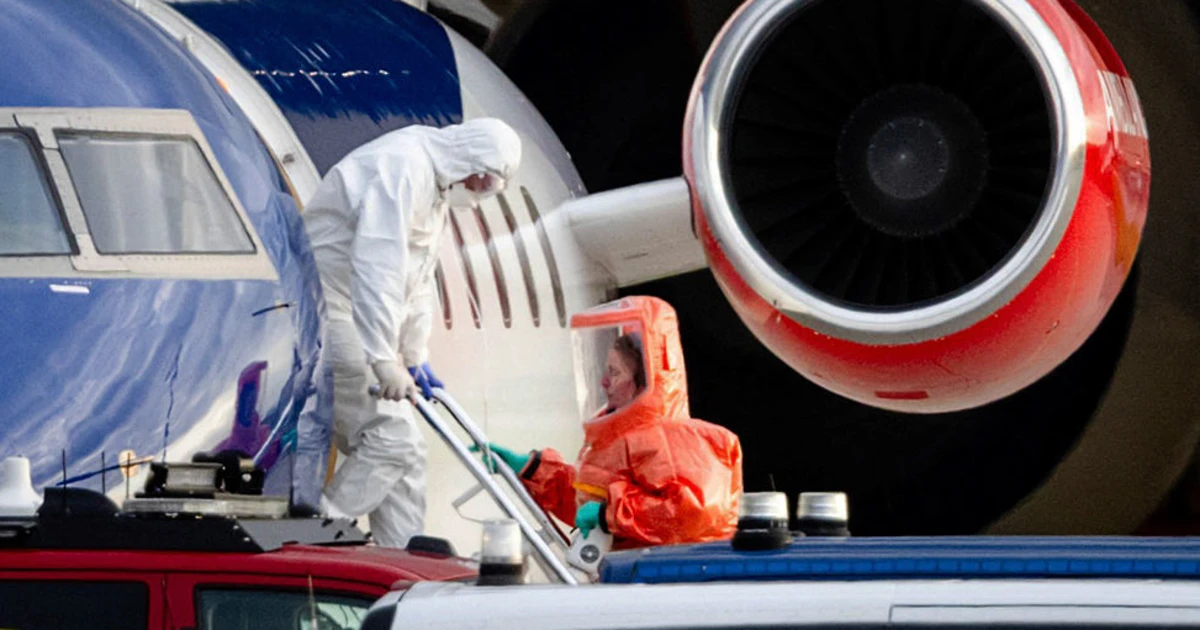
The deadly hantavirus outbreak aboard a cruise ship operated by a Dutch company, with passengers of 23 nationalities, is precisely the type of public health crisis for which the World Health Organization (WHO) was created. However, the United States officially left the WHO in January, after 78 years of membership in the organization.
As a result, health experts say, the United States may not have immediate access to surveillance data on the virus or contact tracing information for cases linked to the ship, which could help prevent new infections.
“The access we had as members and as major donors to the WHO has been lost,” said Amira Albert Roess, professor of Global Health and Epidemiology at George Mason University.
Normally, Roess noted, experts from the Centers for Disease Control and Prevention (CDC) would have been part of the teams tasked with sequencing the virus. Now, the United States may have to know the second-hand results.
When asked about these concerns, the Department of Health and Human Services referred NBC News to a statement on the CDC’s website, which states that the State Department has been in direct contact with the cruise passengers and that the Government is “working closely with our international partners to provide technical assistance and guidance to mitigate the risk.”
(What is the Andean strain of hantavirus? What you should know about the deadly type of infection linked to a cruise ship)
“The White House continues to collaborate with the CDC and the State Department to monitor and respond to the recent Andes virus outbreak,” White House spokesman Kush Desai said in a statement. “While the potential risks to the U.S. population remain low, CDC has convened leading experts on the Andes virus to collaborate in this effort to ensure the protection of Americans. The entire Administration remains vigilant.”
WHO officials said at a news conference Thursday that they were sharing information with the United States under international health standards that require countries to report public health threats of international concern.
“We maintain a very positive and regular interaction almost daily,” said Anaïs Legand, WHO technical lead for viral hemorrhagic fevers.
But Stephanie Psaki, who was global health security coordinator during the Biden Administration, noted that when the United States was a member of the WHO, it often received advance information about disease outbreaks.
“By the time the information is made public, certainly—and sometimes even through (International Health Regulation) networks—the experts at the WHO and the CDC to often they had already known her for days or weeks”said Psaki, now a senior researcher at Brown University School of Public Health.
President Donald Trump announced his intention for the United States to leave the WHO shortly after taking office last year, citing as the main reason what he described as “the organization’s mismanagement of the COVID-19 pandemic.” Until then, the United States had been one of the organization’s main donors.
With his departure, the United States suspended all funding to the WHO, withdrew its staff from WHO offices, and ended its participation in WHO committees and working groups.
Some experts are now concerned that the WHO will not be able to fully leverage the CDC’s resources and expertise to respond to the outbreak.
“Even when there are many actors involved who have the capacity and will to contain and respond to the threat, everything happens more quickly – and often more effectively – when the US government is involved,” Psaki stated.
About 150 people remain on the cruise ship, confined to their cabins and under surveillance for symptoms of the deadly virus. The ship is heading to the Canary Islands and evacuations could begin on Monday.
Three passengers have died. The first two were a Dutch couple who had visited places during a bird-watching trip in Argentina where a species of rat known to carry the Andes strain was present. A German woman subsequently died on May 2, just days after developing symptoms.
In total, five current or former passengers have been confirmed infected. Three more cases are suspected. The incubation period of the virus can last up to six weeksso even more cases could arise.
More than two dozen passengers from 12 countries disembarked from the cruise ship on April 24 in St. Helena, a British territory. Among them were six Americans, according to the cruise ship’s operating company, Oceanwide Expeditions. Some of those passengers are now in Arizona, California, Georgia and Virginia, according to authorities in those states.
As of Monday, 17 American passengers remained on board the cruise ship.
“This is a critical example of why the United States needs global public health partnerships. The WHO’s withdrawal puts the American people at greater risk and raises an important question: Are countries still sharing information with the United States quickly enough to keep us safe?” the National Public Health Coalition, a group of current and former CDC employees, said in a statement.
Hantavirus, which causes fever, fatigue, nausea and difficulty breathing, is usually contracted through contact with rodents or their urine, feces or saliva. Infections are rare – last year around 230 cases were recorded in the American continent – but the mortality rate of the virus in that region reaches 50%, according to the WHO.
The strain implicated in the cruise ship outbreak, known as the Andes strain, is transmitted primarily by the rice pygmy rat, which is found in South America. It is the only variant of the virus known to be transmissible between humans, although that is not the main route of transmission. When it spreads between people, it is usually between those who have had close, prolonged contact. The virus has no known cure, so doctors try to control the symptoms.
Psaki noted that it is unusual that the CDC has not yet held a press briefing on the outbreak.
“Does not inspire confidence It is already common knowledge that there are people who have returned to the United States before the CDC has shared any information. “That is not the order in which it should happen,” he said.
