
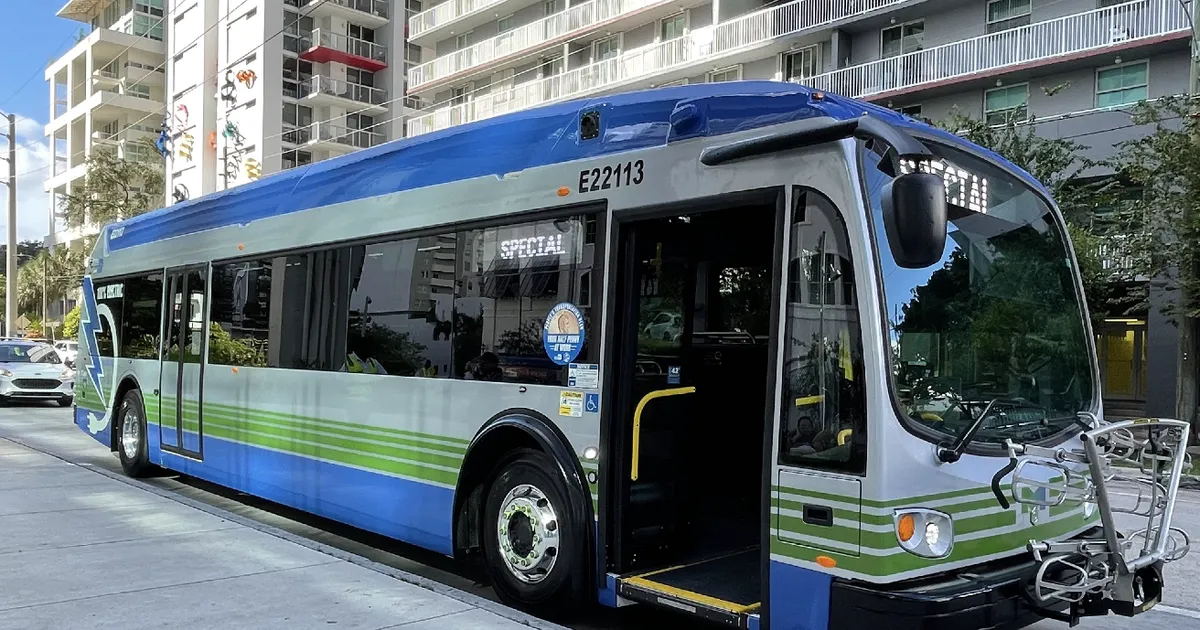
Of the 69 acquired, only six remain in operation. The other 63 are out of service long-term, as confirmed to DIARIO LAS AMÉRICAS by the Miami-Dade County Department of Transportation and Public Works (DTPW). In operational terms, more than 90% of the units are not available.
The impact is directly reflected in daily operations. In high-density areas, such as the western and southern parts of the county, bus availability defines the frequency of service and travel times. Reducing them forces us to redistribute resources in a network that already operates under pressure, in a city marked by road congestion and dependence on public transportation for thousands of residents, mostly workers.
In an interview with this medium, Stacy L. Miller. PE, director of the DTPW, explained the current status of the units and how they have been managed after being out of regular operation:
“To make room for operational buses, including new electric units and demand from the BRT system, decommissioned Proterra buses have been moved to an auxiliary lot. These buses are stored in a safe and secure facility.”
The transfer responds to an operational reorganization, but also confirms that the inactivity is not temporary and that these buses were left in conditions that did not allow their immediate use.
The origin of the problem, as detailed by the entity itself, is linked to breakdowns in critical structures.
“The first major problems were identified in early 2023, when failures were detected in the gearbox, an essential component of the transmission system. Proterra repaired approximately 17 vehicles before suspending work after filing for bankruptcy.”
From that point, the deficiencies spread to other key elements:
“Later, in 2024, intermittent failures in the battery systems began to be recorded, a situation that has continued since then.”
The combination of both factors ended up affecting the general operation of the buses:
“The main failures identified correspond to the gearboxes in the transmission system and the high-voltage batteries.”
The scenario was worsened by the bankruptcy of the original manufacturer, Proterra Inc., and the subsequent inability to sustain contracts.
“The county issued an official notice of contract termination in April 2026 following Phoenix Motors’ noncompliance,” Miller added.
During that period, furthermore, the intervention options were limited:
“Staff could not intervene directly on the buses without invalidating the guarantees in force while the contract was active.”
The agreement included a 12-year extended warranty for essential parts. However, this protection did not materialize in practice:
“Neither company has fulfilled warranty obligations related to the major failures.”
That point marks a change in the project’s impact, as the county now faces costs that were originally supposed to be covered by vendors.
The total investment in the buses was 61.8 million dollars. Added to this figure is an additional expense associated with the storage of inoperative vehicles:
“The total storage cost is approximately $500,000,” Stacy stressed.
However, he admitted that the full financial impact has not yet been defined:
“The Department of Transportation and Public Works is in the process of calculating a comprehensive estimate, considering different scenarios and the possibility of carrying out repairs through third parties.”
But the rescue faces relevant technical limitations:
“Recovery requires access to Proterra’s proprietary software, availability of parts and specialized training. In addition, the fleet was manufactured under two different designs, which limits compatibility between units.”
In parallel, local authorities evaluate possible legal actions:
“The County intends to exercise all available legal and contractual rights and remedies, and DTPW is currently collaborating with the County Attorney’s Office to determine the most appropriate course of action,” Miller said.
This issue is not unique to Miami-Dade County, but is part of a broader situation that has affected more than 130 transportation agencies across North America, underscoring the need to contextualize the case within a larger phenomenon.
Consulted by DIARIO LAS AMÉRICAS, the mayor of Miami-Dade, Daniella Levine Cava, sent a written statement on the issue in which she expressed:
“It is deeply disappointing that the manufacturer has not followed through and stood behind its product. The previous administration pursued a competitive procurement process based on the best information available at the time, in line with transportation agencies across the country. My administration’s focus now is on protecting the County’s interests, pursuing available solutions, and maintaining reliable service for our residents.”
Beyond the official explanations, the effect is operational and visible: fewer units available in a network that does not have ample margin to absorb the reduction.
Today, more than a year after they began to go out of circulation, the majority of these buses remain stopped. While elected officials evaluate repairs, litigation and alternatives, the network continues to operate with less capacity than expected in a city where public transportation has always been heavily criticized and does not offer sufficient alternatives. The question is no longer just how much was invested, but how much of that investment managed to be converted into service in a scheme that continues to operate with limitations.
KEYS TO THE CASE
- 69 buses purchased
- 63 out of service
- 6 operatives
- More than 90% of the fleet stopped
- Investment: $61.8 million
- Transmission and battery failures
- Unfulfilled guarantees
- Manufacturer bankrupt
- Storage costs: $500,000
