
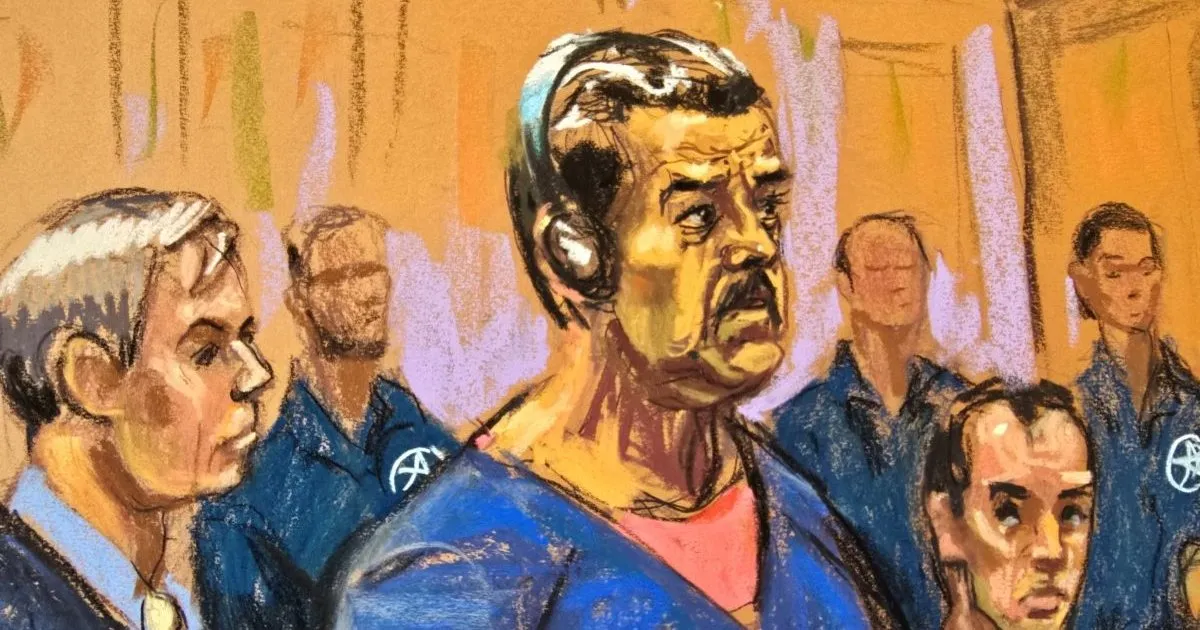
This Thursday, March 19, in a 17-page document presented to the federal court of the Southern District of New York, they state that the Federal Prosecutor’s Office itself recognizes key points for Maduro and his wife, Cilia Flores.
The lawyers maintain that according to Venezuelan law, both have the right to have the Venezuelan State cover their legal expenses, that they do not have the personal resources to pay for their defense, and that, in other cases, sanctioned third parties have been allowed to cover legal fees.
In addition, they included sworn statements from Maduro and Flores in which they claim to be unable to afford their lawyers and express their willingness to present financial evidence if the court requires it.
As is known, Maduro and Flores were captured in Venezuela on January 3, when US military forces broke into their bunker located in Fuerte Tiuna, the Venezuelan military emporium.
Maduro is accused of drug trafficking and corruption according to the Office of Foreign Assets Control (OFAC).
This same agency dependent on the United States Department blocked the use of the funds. Which prevents Maduro and his wife from hiring the lawyers of their choice according to their defenders.
The defense team argues that this restriction violates both the Sixth Amendment (guaranteeing the right to choose counsel), and due process.
He emphasizes that forcing them to accept a public defender does not solve the problem, since the constitutional right includes being able to choose legal representation.
They consider that the only valid solution is the dismissal of the case against Maduro and his wife.
This statement, filed in the federal court of the Southern District of New York, comes just a few days before his next hearing, scheduled for March 26.
special hearing
The legal team, headed by Barry Pola, also requests that in the event that the judge does not immediately dismiss the case, a special hearing be called to thoroughly review the Government’s decisions and their impact on the rights of the accused.
The lawyers point out that the intervention of the US Government has directly prevented Maduro and his wife from financing their defense with resources not linked to the crime.
Which constitutes a constitutional violation that should stop the process, the defenders argue.
The strategy began in February
This strategy by Maduro’s legal team began formally on February 26, when his team presented a motion to annul the accusation before a federal court in New York.
The legal team reasons that the blockade to finance their lawyer violates their constitutional right to choose legal representation. In that first attempt, the request maintained that OFAC prevented the use of funds from the Venezuelan government even though Maduro does not have his own resources to pay for his defense.
The defenders added that it is unviable, an adequate defense and that it violates the Sixth Amendment as well as due process.
On March 13, the Prosecutor’s Office responded to the court opposing the petition and requested its rejection.
Prosecutors argued that the financial restrictions do not constitute a violation of their rights and are not grounds to invalidate the criminal process, so the case must continue.
Chávez’s brother calls for his early release
Adán Chávez, brother of the late Hugo Chávez (1999-2013) and governor of the state of Barinas (west), demanded this Friday from the United States the “prompt release” of Nicolás Maduro and his wife, Cilia Flores, detained in New York.
Together with the Minister of the Interior, Diosdado Cabello, the governor expressed “full support” to the acting president, Delcy Rodríguez, and to the “high political and military command that is directing the country in these circumstances.”
In addition, they included sworn statements from Maduro and Flores in which they claim to be unable to afford their lawyers and express their willingness to present financial evidence if the court requires it.
This statement, filed in the federal court of the Southern District of New York, comes just a few days before his next hearing, scheduled for March 26.
