
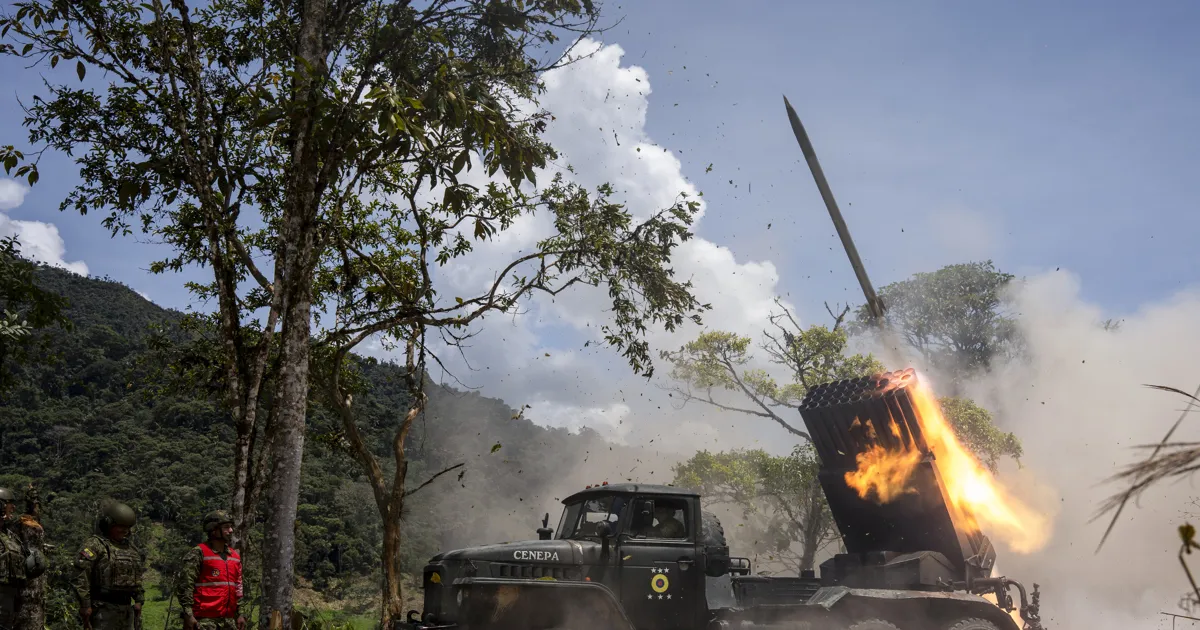
QUITO. The Ecuadorian Armed Forcesr destroyed by bombing 129 illegal mining campsl in the Podocarpus national park, one of the largest protected areas in the country, located near the border with PeruThe Government announced this Monday.
This protected area is located between the provinces of Loja and Zamora Chinchipe, on the southern border of Ecuador. Between the Andes and the Amazon.
During nine days of operations in the area, the Armed Forces also destroyed 94 mineheads and 56 crushers (grinders) used by illegal miners to extract gold in this nature reserve.
This offensive is carried out at a time when the Government of President Daniel Noboa has intensified its fight against organized crime, within the “war” it has waged against these structures for more than two years, which it has classified as “terrorists” and which are mainly dedicated to drug trafficking, illegal mining and extortion under death threats.
The military actions were concentrated in the San Luis, Dos Camas and La Aida sectors, within the Podocarpus National Park, where these organizations had installed camps, mine shafts and machinery to sustain their illicit activities.
They also seized explosives, ammunition, communication radios, satellite Internet antennas, electrical generators and various tools used to support these illicit activities.
According to the Government, the interventions affected nearly 130 hectares that had been taken by illegal mining within the National Park, which generated an economic impact estimated at approximately three million dollars for the armed groups that operated in the area.
Biodiversity
The Podocarpus National Park has an area of more than 146,000 hectares, between 900 and 3,600 meters of altitude.
It houses between 3,000 and 4,000 species of vascular plants, such as romerillo, cascarilla, pumamaqui, cedar, laurel, among the most representative; and is home to some 63 species of orchids, 25 of which are under some category of threat, according to the Ministry of the Environment.
However, inside it had been inserted illegal mining in search of gold, a business that criminal organizations have engaged in by taking advantage of the historical highs recorded for this metal internationally, with a highly polluting process that deforests forests and contaminates riverbeds with heavy metals such as mercury.
