
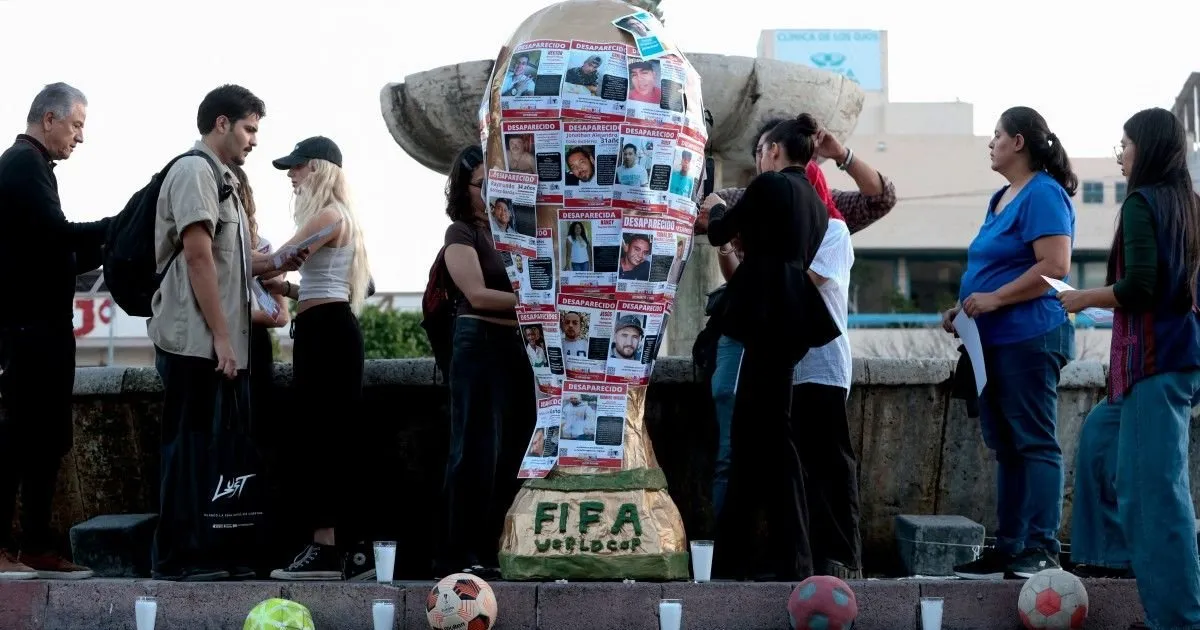
Mexico prepares to receive the FIFA World Cup 2026 along with the United States and Canada, but the recent episodes of violence in the state of Jalisco They have once again questioned the ability of some venues to host the tournament normally. Guadalajaraone of the chosen cities, is experiencing days of tension after armed clashes resulting from a military operation against organized crime.
Although federal authorities have reiterated that the tournament schedule is not in danger and that the Mexican venues remain intact, the climate of insecurity has ignited public debate about whether the country is ready to receive thousands of international visitors in the midst of a context marked by drug trafficking.
The fall of a criminal leader and the escalation of violence
The recent death of the main boss of the Jalisco New Generation Cartel (CJNG), one of the most powerful criminal groups in the country, caused a wave of clashes, blockades and burning vehicles in several areas of the state. The riots left dozens of victims and forced activities to be paralyzed for several days.
Security specialists warn that this type of operations, known as the “hit the boss” strategy, usually generate internal fights within criminal organizations or territorial disputes with rival groups. That uncertainty fuels fear that the violence could continue in the coming months, just as Mexico accelerates preparations for the World Cup.
A global event in the midst of structural problems
Beyond the immediate impact of the clashes, the situation reflects a complex reality for many residents of Guadalajara and other cities in Jalisco: poor public services, constant insecurity and the feeling that investments related to major sporting events do not always translate into benefits for the most vulnerable neighborhoods.
The tournament is presented by soccer authorities and leaders as an economic engine capable of generating billions of dollars in tourism and commercial income. However, skepticism persists about whether this boost will actually reach small businesses and areas far from the traditional tourist circuit.
Security and international perception towards the World Cup
The Mexican government insists that there are full guarantees for the celebration of the World Cup and that security will be reinforced at all venues. The visible presence of federal forces in Guadalajara seeks to convey control and stability, while renovation work on stadiums and infrastructure continues.
Still, international perception is a key factor. Some tourists have expressed concern on social media after being caught in episodes of violence, which could affect the country’s image at a strategic time to attract visitors.
Between everyday normality and uncertainty
Despite the most intense days of clashes, daily life in Guadalajara is beginning to resume its usual rhythm. Open shops, traffic in the streets and families in parks reflect a city accustomed to living with episodes of tension without completely stopping its activity.
That duality—apparent normality in the face of latent violence—sums up the challenge that Mexico faces less than two years before the 2026 World Cup: to demonstrate that it can offer a safe environment for a global event while dealing with structural problems that continue to mark the daily lives of millions of people.
